Description
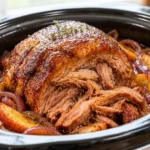
A seared pork shoulder slow-cooked on a bed of red onions and apple wedges until it’s fall-apart tender. It’s an easy, cozy dinner that cooks itself.
Ingredients
Scale
- 2 tbsp (25 g) packed light brown sugar
- 2 tsp (12 g) kosher salt
- 1 tsp (2 g) freshly ground black pepper
- 2 tsp (5 g) smoked or sweet paprika
- 1 tsp (3 g) garlic powder
- 1 tsp (1 g) dried thyme
- 1 boneless pork shoulder (pork butt), about 4 lb (1.8 kg)
- 2 tbsp (30 ml) vegetable or olive oil
- 2 large red onions (about 1 lb / 450 g total), cut into ½-inch (1.25 cm) slices
- 3 medium firm red apples, such as Honeycrisp, Gala, or Fuji (about 1½ lb / 680 g), cored and cut into 8 wedges each
- 1 cup (240 ml) apple cider or unsweetened apple juice
- 2 tbsp (30 ml) apple cider vinegar
- 4–5 sprigs fresh thyme, plus more for garnish
Instructions
- Season the pork. Pat the pork shoulder very dry with paper towels on all sides. In a small bowl, stir together the brown sugar, salt, pepper, paprika, garlic powder, and dried thyme. Rub the mixture all over the roast, pressing it into the surface and into any folds. The pork should be evenly coated with a reddish-brown, speckled layer. Don’t skip drying the meat; surface moisture turns the rub into a paste that steams instead of browning. If you have time, let the seasoned roast sit at room temperature for 20 minutes before searing.
- Sear the roast. Heat the oil in a large skillet over medium-high heat until it shimmers and moves easily across the pan. Add the pork fat-side down and sear for 3–4 minutes per side, turning with tongs, until every surface has a deep mahogany crust. You should hear a steady, strong sizzle the whole time. A common mistake is moving the meat too soon. If it sticks, it isn’t ready to turn yet. Watch the heat too: the sugar in the rub can scorch, so lower the heat slightly if the pan starts to smoke heavily.
- Deglaze the pan. Take the pork out of the skillet and set it aside on a plate. Pour the apple cider and vinegar into the hot pan and scrape up all the browned bits from the bottom with a wooden spoon. Let it bubble for about 1 minute. The liquid will turn a rich amber color and smell sweet and toasty. Those browned bits hold a lot of flavor, so don’t leave them in the pan. Don’t let the liquid boil away, though; you need nearly all of it in the slow cooker.
- Layer the onions and apples. Scatter about two-thirds of the red onion slices and half the apple wedges across the bottom of the slow cooker insert. Set the seared pork on top, fat-side up. Tuck the remaining onions, apples, and thyme sprigs around the sides of the roast, then pour the deglazing liquid around (not over) the meat. Pouring liquid directly on top washes away the crust you just built. The liquid should come only about an inch up the sides, since the apples and onions will release plenty of juice as they cook.
- Slow cook until tender. Cover and cook on LOW for 8 hours or HIGH for 5 hours. The pork is done when a fork slides in with no resistance and the meat starts pulling apart on its own, around 200–205°F (93–96°C) inside. Your kitchen will smell sweet and savory. Resist lifting the lid during cooking. Each peek lets out heat and can add 15–20 minutes to the cook time. If the roast resists the fork, give it another 30–60 minutes; it isn’t overcooked, it just needs more time.
- Shred and garnish. Turn off the slow cooker and let the pork rest in the liquid for 10–15 minutes. Then use two forks to pull one end of the roast apart into thick, juicy shreds. You can shred the whole thing or leave part of it whole for a nicer look when serving. Spoon off any fat pooled on the surface, discard the cooked thyme stems, and top with fresh thyme sprigs. Don’t drain the pot. Letting the shredded meat soak up the apple-onion juices keeps it moist.
Notes
- Trim, but not too much. Cut away thick hard fat, but keep a ¼-inch (6 mm) cap on top to baste the meat during cooking.
- Use firm apples. Soft varieties like McIntosh will collapse into sauce. Honeycrisp, Gala, Fuji, and Pink Lady keep their shape.
- Cut the onions thick. Slices about ½ inch thick soften without disappearing completely over 8 hours.
- Don’t add extra liquid. It may look dry at first, but the apples, onions, and pork release a lot of juice. Too much liquid makes the sauce thin and watery.
- Thicken the sauce if you like. Stir 1 tbsp (8 g) cornstarch into 2 tbsp (30 ml) cold water, add it to the strained juices in a saucepan, and simmer for 2 minutes until glossy.
- Make it ahead. Season the pork the night before and refrigerate it uncovered. This dry-brines the meat and seasons it all the way through.
- No skillet? Use the oven. Broil the seasoned roast 4 inches (10 cm) from the heat for 4–5 minutes per side to brown it before slow cooking.
- Check with a thermometer. For shreddable pork, aim for 200°F (93°C) or higher. At 145°F (63°C) the pork is safe to eat but still too firm to pull apart.
- Prep Time: 25 minutes
- Cook Time: 8 hours on LOW (or 5 hours on HIGH)
- Category: Dinner