Description
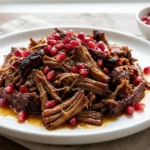
Fall-apart pork shoulder slow-cooked with pomegranate molasses, garlic and warm spices, then finished with bright pomegranate seeds. Just 15 minutes of prep for a crowd-pleasing dinner.
Ingredients
Scale
- 1 boneless pork shoulder (pork butt), about 4 lb (1.8 kg)
- 1 tsp (6 g) kosher salt, for the surface of the meat
- 8 cloves garlic (about 30 g), thinly sliced
- ⅓ cup (80 ml / about 105 g) pomegranate molasses, plus 2 tbsp (30 ml) for finishing
- 2 tbsp (25 g) packed light brown sugar
- 2 tsp (5 g) ground cumin
- 2 tsp (5 g) paprika
- 1 tsp (2 g) ground black pepper
- 1 tsp (6 g) kosher salt
- ½ tsp (1 g) ground cinnamon
- 1 cup (240 ml) low-sodium chicken broth
- ½ cup (85 g) fresh pomegranate seeds (arils)
Instructions
- Place the pork in the slow cooker. Pat the pork shoulder dry with paper towels, rub 1 tsp kosher salt over the surface and set it fat-side up in the slow cooker insert. Fat-side up means the fat melts down through the meat as it cooks. The roast should sit flat, with a little space around the sides for liquid. Don’t skip patting it dry. Surface moisture waters down the molasses and keeps it from sticking, so you lose some of the glaze later.
- Drizzle with pomegranate molasses. Pour ⅓ cup pomegranate molasses slowly over the top of the pork in thin ribbons, moving back and forth so it covers the whole surface. It should look thick and glossy, almost like dark cherry syrup, and cling to the meat instead of running straight off. Use the back of a spoon to nudge it into any crevices. A common mistake is dumping it all in one spot, where it slides down into the pot and does nothing for the crust.
- Add the garlic and spice rub. In a small bowl, stir together the brown sugar, cumin, paprika, pepper, salt and cinnamon. Scatter the sliced garlic over the glazed pork, then sprinkle the spice mixture evenly from about 8 inches (20 cm) above. Sprinkling from that height spreads it out instead of letting it clump. The molasses works like glue, so the rub should stick and look like a fine brown dusting with the garlic resting on top. Don’t pile the garlic in one place, or it’ll steam into a mushy cluster.
- Pour in the broth. Slowly pour 1 cup of broth into the pot around the base of the pork, not over the top. You want the liquid to come about one-third to halfway up the sides of the roast, and the glazed top should stay well above it. The broth will look pale gold against the dark meat. Pouring straight over the roast is the mistake to avoid here, because it rinses off the spice rub and molasses you just put on.
- Cover and slow cook. Set the lid on firmly and cook on LOW for 8 hours, or on HIGH for 5 to 6 hours. After a couple of hours the kitchen will smell of garlic, warm spices and caramelizing fruit, and you’ll see condensation on the lid. Try not to lift the lid while it cooks. Each peek lets out a lot of heat and steam and can add 15 to 20 minutes to the cooking time.
- Check for doneness. When the time is up, the roast should be deep mahogany with darker, almost charred spots where the sugars caramelized, and it’ll be sitting in amber juices. Push a fork into the thickest part and twist. The meat should give way easily and start to shred. An instant-read thermometer should read 195–205°F (90–96°C). If it resists, cover it and cook another 30 to 60 minutes, because underdone shoulder is chewy, not tender.
- Shred and plate. Use tongs to lift big pieces of pork onto a plate or cutting board. Pull them apart into chunky strands with tongs or two forks, and throw away any large pieces of fat that didn’t render. Spoon off the fat from the cooking juices, then drizzle 3 to 4 tbsp of the juices and the remaining 2 tbsp pomegranate molasses over the meat. It should look glossy and moist. Don’t shred it too fine, because chunky strands hold onto the glaze better.
- Garnish and serve. Scatter the pomegranate seeds over the shredded pork and serve right away while it’s warm and glossy. The seeds should look bright and jewel-like against the dark glaze. Add them just before serving. If they sit on hot meat too long, they lose their crunch and bleed color into the juices. Keep the rest of the cooking liquid in a small pitcher so people can add more.
Notes
- Choose shoulder, not loin. Pork shoulder (sometimes sold as Boston butt) needs long cooking to turn tender. Loin or tenderloin will dry out.
- Taste your molasses first. Brands range from very sour to quite sweet. If yours is very tart, add an extra 1 tbsp (12 g) brown sugar to the rub.
- Keep the glaze above the liquid. Liquid that goes more than halfway up the roast washes away the flavorful crust.
- Choose LOW when you can. HIGH works, but 8 hours on LOW gives you more tender, evenly cooked meat.
- For a stickier finish, move the cooked roast to a foil-lined sheet pan and broil it 4–6 inches (10–15 cm) from the heat for 3 to 4 minutes before shredding. Watch it closely.
- Reduce the juices. For a thicker sauce, simmer the skimmed cooking liquid in a saucepan for 8 to 10 minutes until it coats a spoon.
- Prep ahead. Mix the rub and slice the garlic the night before. In the morning, assembly takes 5 minutes.
- Let the pork rest briefly. Rest it for 10 minutes before shredding so the juices settle back into the meat.
- Prep Time: 15 minutes
- Cook Time: 8 hours on LOW (or 5 hours on HIGH)
- Category: Dinner