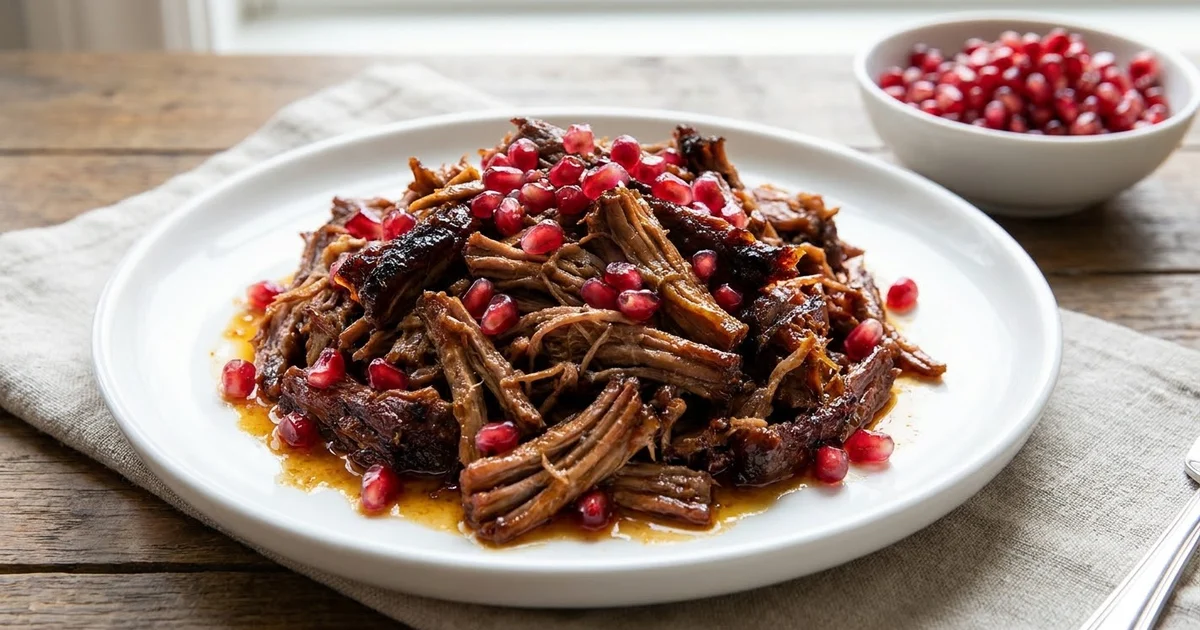
Some dinners take almost no effort and still taste like you worked on them all day. This slow cooker pomegranate pulled pork is one of them. A boneless pork shoulder gets a drizzle of pomegranate molasses, a scatter of sliced garlic, a simple spice rub and a splash of broth. Then the slow cooker does the rest.
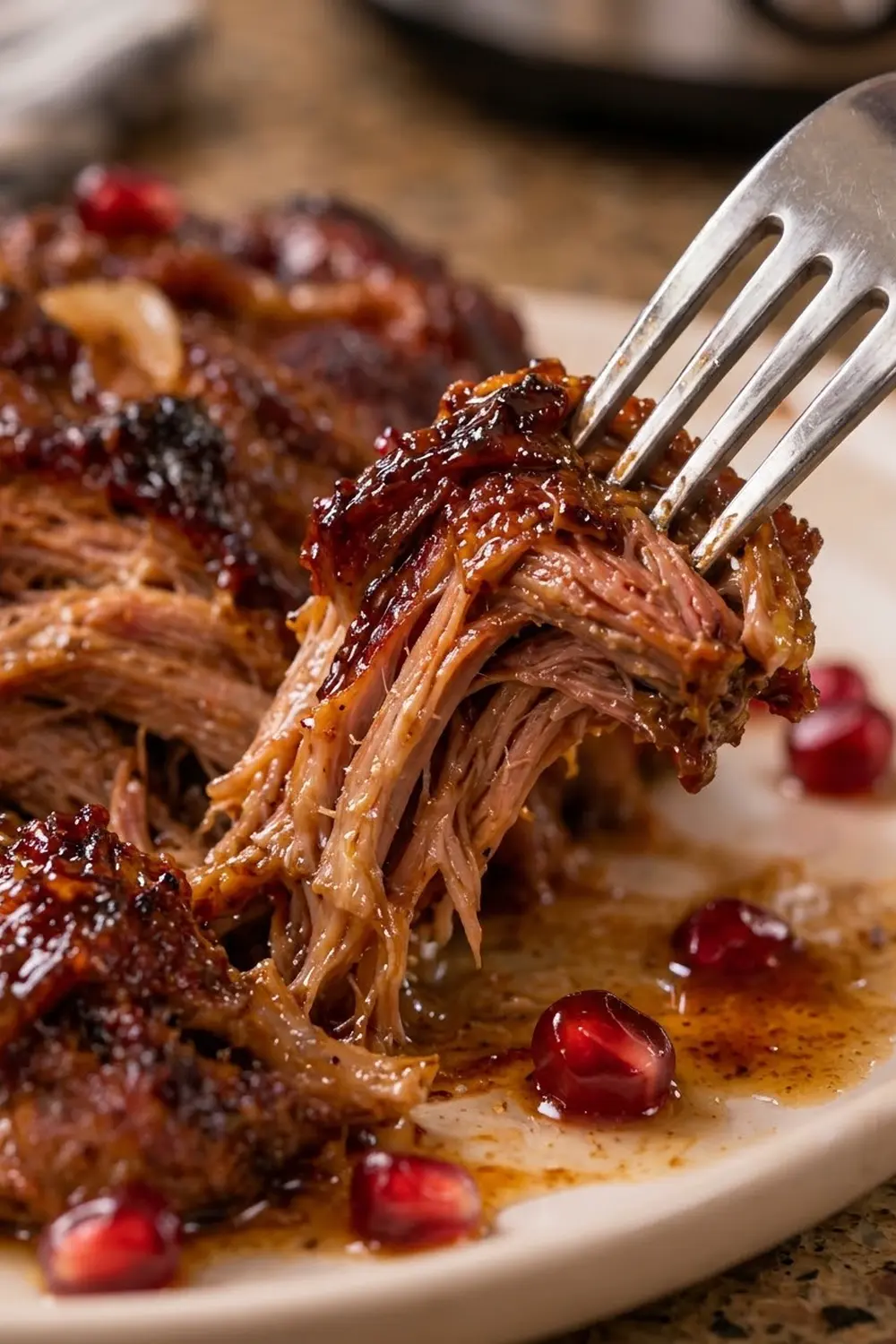
Hours later you lift the lid to a glossy, dark red roast that pulls apart with a fork. The pomegranate molasses cooks down into a sticky, tangy-sweet glaze, a little like a deeper, fruitier barbecue sauce. The garlic goes soft and mellow, the spices bring warmth, and the meat stays juicy because it has been braising in its own savory liquid. A handful of fresh pomegranate seeds on top adds crunch and a bright, tart pop.
For a home cook, this recipe is very forgiving. Pork shoulder is cheap, hard to overcook and made for long, gentle heat. The hands-on work takes about 15 minutes, there’s no searing and no fussy sauce, and you only wash one pot. It suits busy weeknights, Sunday meal prep and feeding a crowd.
It’s also naturally gluten-free and dairy-free if you check your broth label, so it works for a lot of different eaters around the same table. Pile it on rice, tuck it into buns, or serve it straight from the platter.
Why This Recipe Works
Pork shoulder is the right cut for this method. It has lots of marbling and connective tissue, which make a quick-cooked cut tough. Over 8 hours of low, moist heat that collagen melts into gelatin. The gelatin coats the meat fibers so the pork tastes rich and juicy instead of dry and stringy. A leaner cut like pork loin would turn chalky on the same schedule.
Pomegranate molasses does several jobs at once. It’s naturally tart and slightly sweet, so it cuts through the richness of the pork the way vinegar does in a barbecue sauce. Its natural sugars also cling to the top of the roast and caramelize as the liquid reduces, which gives you that dark, lacquered finish without a separate glazing step. A spoonful of brown sugar in the rub helps the color and balances the tartness.
The liquid stays deliberately modest. Just 1 cup (240 ml) of broth is enough to braise the meat without washing off the glaze, because the pork releases plenty of its own juices as it cooks. The result is a concentrated, flavorful cooking liquid that you can spoon back over the shredded meat.
Tips for Success
- Choose shoulder, not loin. Pork shoulder (sometimes sold as Boston butt) needs long cooking to turn tender. Loin or tenderloin will dry out.
- Taste your molasses first. Brands range from very sour to quite sweet. If yours is very tart, add an extra 1 tbsp (12 g) brown sugar to the rub.
- Keep the glaze above the liquid. Liquid that goes more than halfway up the roast washes away the flavorful crust.
- Choose LOW when you can. HIGH works, but 8 hours on LOW gives you more tender, evenly cooked meat.
- For a stickier finish, move the cooked roast to a foil-lined sheet pan and broil it 4–6 inches (10–15 cm) from the heat for 3 to 4 minutes before shredding. Watch it closely.
- Reduce the juices. For a thicker sauce, simmer the skimmed cooking liquid in a saucepan for 8 to 10 minutes until it coats a spoon.
- Prep ahead. Mix the rub and slice the garlic the night before. In the morning, assembly takes 5 minutes.
- Let the pork rest briefly. Rest it for 10 minutes before shredding so the juices settle back into the meat.
Variations
Smoky chipotle: Add 1 tsp chipotle chili powder to the rub and swap the regular paprika for smoked. The smoke and gentle heat go well with the tart pomegranate, and the result tastes a lot like barbecue.
Orange and pomegranate: Replace ½ cup (120 ml) of the broth with fresh orange juice and add 1 tsp grated orange zest to the rub. The citrus brightens the glaze and gives the finished pork a fresh, fragrant edge.
Onion-braised: Lay 1 large onion, thickly sliced, in the bottom of the slow cooker before you add the pork. The onion melts into the juices and makes the sauce sweeter and fuller, and the roast stays lifted slightly off the bottom.
Herb-finished: Scatter 2 tbsp chopped fresh mint or parsley over the pork along with the pomegranate seeds. Fresh herbs add color and cut the richness, which is especially nice in summer.
FAQ
Do I need to sear the pork first?
No. This recipe skips searing on purpose. The pomegranate molasses and brown sugar caramelize during the long cook, so you still get deep color and flavor. If you have time, searing adds a little extra savoriness, but you don’t need it here.
Can I use beef instead of pork?
Yes. A 4 lb (1.8 kg) beef chuck roast works well with the same glaze and rub. Cook it on LOW for 8 to 9 hours, until it shreds easily. Chuck tastes a bit beefier and richer, so you may want an extra tablespoon of molasses at the end.
Can I cook this in an Instant Pot?
You can. Cut the pork into 3 or 4 large chunks, assemble everything the same way and pressure cook on HIGH for 75 minutes with a 15-minute natural release. The top won’t caramelize as much, so a quick run under the broiler afterward helps.
Why is my pulled pork tough?
Tough shoulder is almost always undercooked, not overcooked. The collagen hasn’t broken down yet. Cover it and keep cooking in 30-minute stretches until a fork twists through it easily.
Is pomegranate pulled pork very sweet?
Not really. Pomegranate molasses tastes more tart than sweet, and there are only 2 tbsp of brown sugar spread across 8 servings. Overall it’s tangy and savory with a light fruity sweetness, closer to a good barbecue sauce than a dessert glaze.
Storage and Reheating
Let leftovers cool, then store the shredded pork in an airtight container along with a few spoonfuls of the cooking juices. It keeps in the refrigerator for up to 4 days. The juices matter, because they keep the meat from drying out. Store the pomegranate seeds separately so they stay crisp.
To reheat, put the pork and juices in a covered skillet over medium-low heat for 5 to 8 minutes, stirring now and then, until it’s hot all the way through. You can also microwave it covered in 1-minute bursts, stirring in between. If it looks dry, add 1 to 2 tbsp of broth or water.
Pulled pork freezes very well. Pack it into freezer bags with some of the juices, press out the air and freeze for up to 3 months. Thaw it overnight in the refrigerator, then reheat it in a skillet as described above. Add fresh pomegranate seeds after reheating.
Serving Suggestions
Spoon the pork over fluffy white rice or buttery mashed potatoes so they soak up the tangy juices. For something more casual, pile it into soft brioche buns with crisp coleslaw. The cool, crunchy slaw balances the rich glaze.
On the lighter side, serve it with a simple green salad in a lemony vinaigrette, or with roasted carrots. The acidity in the salad and the gentle sweetness of the carrots both pick up the pomegranate notes without fighting them.
Final Notes
This slow cooker pomegranate pulled pork takes very little work and looks great on the table: a few minutes of assembly, hours of hands-off cooking and a glossy, ruby-flecked platter at the end. Once you’ve made it, try the variations, like a smoky chipotle version or an orange-and-pomegranate twist. The basic method stays the same, so you can keep changing it up. Grab a pork shoulder, set the slow cooker in the morning, and come home to a kitchen that smells wonderful.
Print
Slow Cooker Pomegranate Pulled Pork Recipe
- Total Time: 8 hours 15 minutes
- Yield: 8 1x
Description
Fall-apart pork shoulder slow-cooked with pomegranate molasses, garlic and warm spices, then finished with bright pomegranate seeds. Just 15 minutes of prep for a crowd-pleasing dinner.
Ingredients
- 1 boneless pork shoulder (pork butt), about 4 lb (1.8 kg)
- 1 tsp (6 g) kosher salt, for the surface of the meat
- 8 cloves garlic (about 30 g), thinly sliced
- ⅓ cup (80 ml / about 105 g) pomegranate molasses, plus 2 tbsp (30 ml) for finishing
- 2 tbsp (25 g) packed light brown sugar
- 2 tsp (5 g) ground cumin
- 2 tsp (5 g) paprika
- 1 tsp (2 g) ground black pepper
- 1 tsp (6 g) kosher salt
- ½ tsp (1 g) ground cinnamon
- 1 cup (240 ml) low-sodium chicken broth
- ½ cup (85 g) fresh pomegranate seeds (arils)
Instructions
- Place the pork in the slow cooker. Pat the pork shoulder dry with paper towels, rub 1 tsp kosher salt over the surface and set it fat-side up in the slow cooker insert. Fat-side up means the fat melts down through the meat as it cooks. The roast should sit flat, with a little space around the sides for liquid. Don’t skip patting it dry. Surface moisture waters down the molasses and keeps it from sticking, so you lose some of the glaze later.
- Drizzle with pomegranate molasses. Pour ⅓ cup pomegranate molasses slowly over the top of the pork in thin ribbons, moving back and forth so it covers the whole surface. It should look thick and glossy, almost like dark cherry syrup, and cling to the meat instead of running straight off. Use the back of a spoon to nudge it into any crevices. A common mistake is dumping it all in one spot, where it slides down into the pot and does nothing for the crust.
- Add the garlic and spice rub. In a small bowl, stir together the brown sugar, cumin, paprika, pepper, salt and cinnamon. Scatter the sliced garlic over the glazed pork, then sprinkle the spice mixture evenly from about 8 inches (20 cm) above. Sprinkling from that height spreads it out instead of letting it clump. The molasses works like glue, so the rub should stick and look like a fine brown dusting with the garlic resting on top. Don’t pile the garlic in one place, or it’ll steam into a mushy cluster.
- Pour in the broth. Slowly pour 1 cup of broth into the pot around the base of the pork, not over the top. You want the liquid to come about one-third to halfway up the sides of the roast, and the glazed top should stay well above it. The broth will look pale gold against the dark meat. Pouring straight over the roast is the mistake to avoid here, because it rinses off the spice rub and molasses you just put on.
- Cover and slow cook. Set the lid on firmly and cook on LOW for 8 hours, or on HIGH for 5 to 6 hours. After a couple of hours the kitchen will smell of garlic, warm spices and caramelizing fruit, and you’ll see condensation on the lid. Try not to lift the lid while it cooks. Each peek lets out a lot of heat and steam and can add 15 to 20 minutes to the cooking time.
- Check for doneness. When the time is up, the roast should be deep mahogany with darker, almost charred spots where the sugars caramelized, and it’ll be sitting in amber juices. Push a fork into the thickest part and twist. The meat should give way easily and start to shred. An instant-read thermometer should read 195–205°F (90–96°C). If it resists, cover it and cook another 30 to 60 minutes, because underdone shoulder is chewy, not tender.
- Shred and plate. Use tongs to lift big pieces of pork onto a plate or cutting board. Pull them apart into chunky strands with tongs or two forks, and throw away any large pieces of fat that didn’t render. Spoon off the fat from the cooking juices, then drizzle 3 to 4 tbsp of the juices and the remaining 2 tbsp pomegranate molasses over the meat. It should look glossy and moist. Don’t shred it too fine, because chunky strands hold onto the glaze better.
- Garnish and serve. Scatter the pomegranate seeds over the shredded pork and serve right away while it’s warm and glossy. The seeds should look bright and jewel-like against the dark glaze. Add them just before serving. If they sit on hot meat too long, they lose their crunch and bleed color into the juices. Keep the rest of the cooking liquid in a small pitcher so people can add more.
Notes
- Choose shoulder, not loin. Pork shoulder (sometimes sold as Boston butt) needs long cooking to turn tender. Loin or tenderloin will dry out.
- Taste your molasses first. Brands range from very sour to quite sweet. If yours is very tart, add an extra 1 tbsp (12 g) brown sugar to the rub.
- Keep the glaze above the liquid. Liquid that goes more than halfway up the roast washes away the flavorful crust.
- Choose LOW when you can. HIGH works, but 8 hours on LOW gives you more tender, evenly cooked meat.
- For a stickier finish, move the cooked roast to a foil-lined sheet pan and broil it 4–6 inches (10–15 cm) from the heat for 3 to 4 minutes before shredding. Watch it closely.
- Reduce the juices. For a thicker sauce, simmer the skimmed cooking liquid in a saucepan for 8 to 10 minutes until it coats a spoon.
- Prep ahead. Mix the rub and slice the garlic the night before. In the morning, assembly takes 5 minutes.
- Let the pork rest briefly. Rest it for 10 minutes before shredding so the juices settle back into the meat.
- Prep Time: 15 minutes
- Cook Time: 8 hours on LOW (or 5 hours on HIGH)
- Category: Dinner