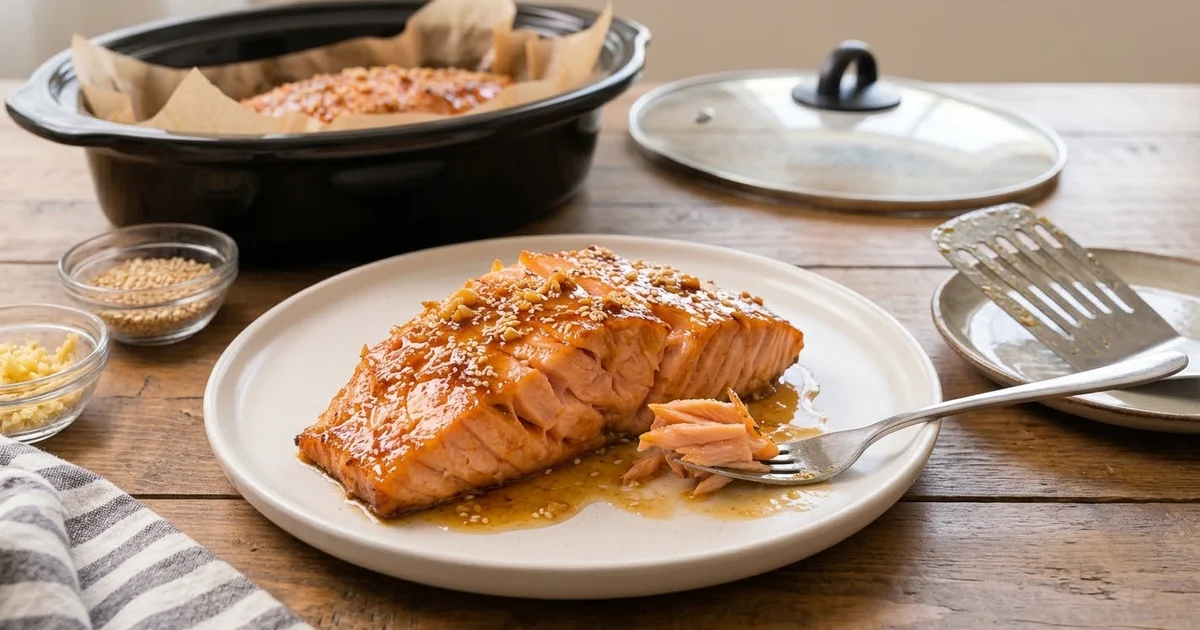
Most people don’t think of the slow cooker when they plan a salmon dinner, but this recipe may change your mind. A whole salmon fillet goes onto parchment in the crock, gets a drizzle of honey, a generous scatter of minced garlic and sesame seeds, and a pour of warm garlic butter. Then the lid goes on and gentle, steady heat does the rest.
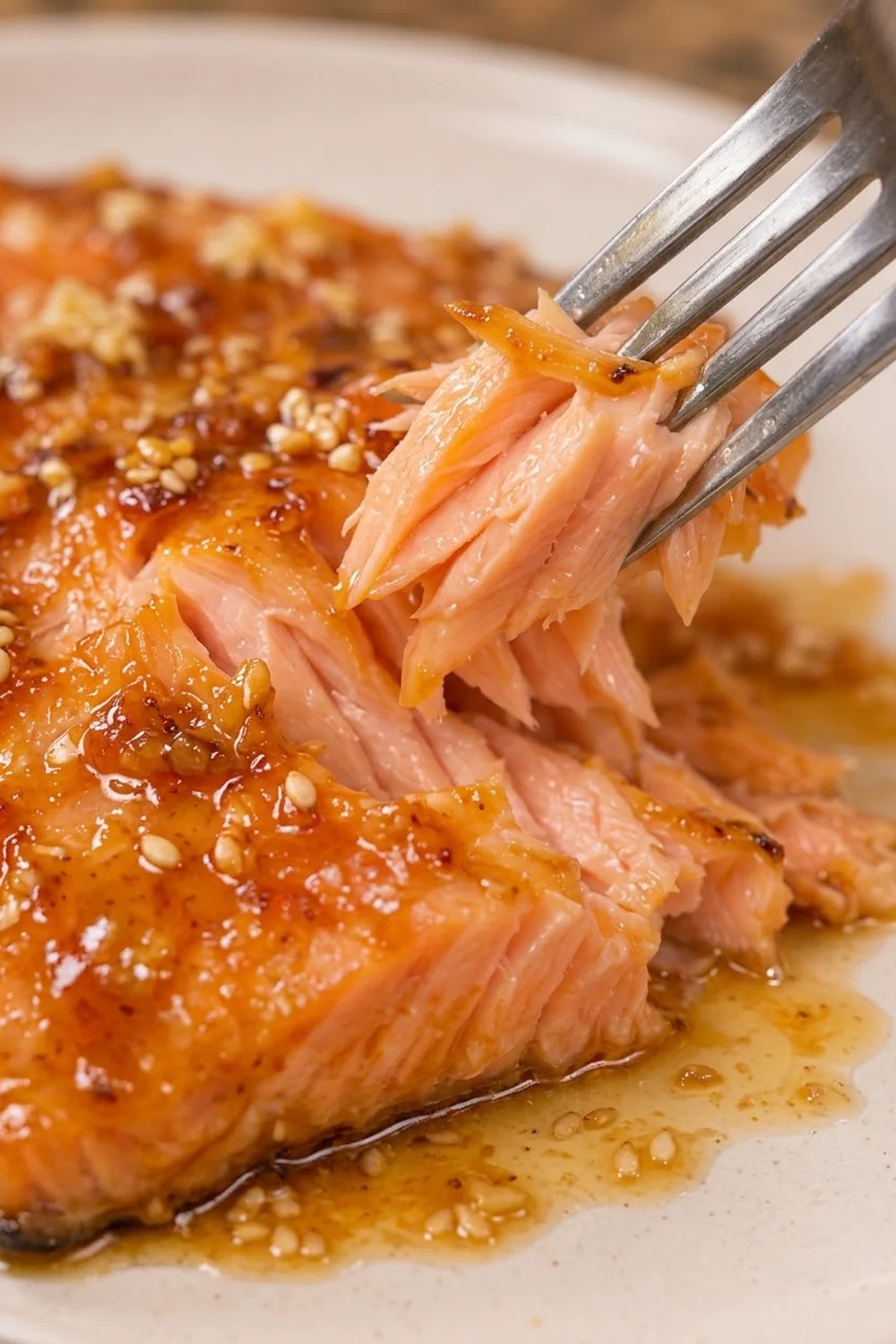
What you get is some of the most tender salmon you’ll ever make. The flesh turns soft and silky and flakes apart at the touch of a fork. The surface picks up a sticky, amber honey glaze, and the garlic mellows into something sweet and nutty. The butter and honey melt together with the fish’s own juices into a golden sauce that’s worth spooning over everything on the plate. When you lift the lid, the kitchen smells of warm honey and buttery garlic.
For home cooks, the best part is how forgiving it is. Salmon goes from perfect to dry in a minute or two in a hot oven or skillet. In a slow cooker, the low, moist heat gives you a much wider window. Prep takes about 10 minutes, and there’s almost nothing to wash up afterward because the parchment catches all the mess.
It works for busy weeknights, relaxed weekend dinners, and small gatherings where you want a whole fillet to show off. It’s naturally gluten-free, and the leftovers make easy lunches for meal prep.
Why This Recipe Works
Low, moist heat protects the fish. Salmon’s proteins tighten and squeeze out moisture quickly once they pass about 140°F (60°C). The slow cooker heats the fillet gradually, and the closed lid traps steam, so the outside doesn’t overcook before the thickest part is done. That’s why the flakes stay plump and juicy instead of chalky, and why you’ll see very little of the white albumin that seeps out of salmon cooked hard and fast.
Parchment makes everything easier. Lining the crock with parchment paper keeps the skin from sticking, holds the honey butter sauce around the fish so it bastes as it cooks, and lets you lift the whole fillet out in one piece. It also means you’ll barely have to scrub the slow cooker.
Layering the glaze builds flavor. Drizzling the honey straight onto the flesh first lets it cling and caramelize slightly against the fish. Adding the garlic and sesame seeds next means they stick to that tacky layer. Pouring the garlic butter over last keeps everything in place, and as it cooks, the butter carries the garlic flavor down into the fish while a squeeze of lemon balances the sweetness.
Tips for Success
- Pick an even fillet. If one end tapers thin, tuck it under itself so the whole piece cooks at the same rate.
- Bring the fish out early. Letting the salmon sit at room temperature for 15 minutes before cooking helps it cook more evenly.
- Know your slow cooker. Newer models often run hotter, so check at 1 hour 15 minutes the first time you make this.
- Skinless works too. Shorten the cook time by about 15 minutes, because there’s no skin layer protecting the bottom.
- Toast the sesame seeds for more flavor. Toast them in a dry skillet for 2 to 3 minutes until golden before sprinkling for a nuttier finish.
- Want a stickier glaze? Move the cooked fillet on its parchment to a sheet pan and broil 6 inches (15 cm) from the heat for 2 to 3 minutes, watching closely.
- Make it ahead. Mince the garlic and mix the butter sauce up to 1 day ahead and refrigerate. Warm the sauce gently to re-melt it before pouring.
Variations
Honey soy sesame salmon: Whisk 2 tablespoons of low-sodium soy sauce (or tamari) and 1 teaspoon of toasted sesame oil into the butter sauce, and leave out the added salt. The glaze turns deeper, darker, and more savory.
Spicy honey garlic: Add ½ teaspoon of red pepper flakes or 1 tablespoon of sriracha to the butter sauce. The heat plays nicely against the sweet honey, and the sauce takes on a rosy color.
Lemon herb version: Swap the sesame seeds for 2 tablespoons of chopped fresh dill and lay thin lemon slices over the fish before cooking. The result is brighter and lighter, and good for spring.
Ginger garlic: Add 1 tablespoon of freshly grated ginger along with the garlic. It brings a gentle warmth and a fresh, zingy aroma that suits the honey.
FAQ
Can I cook salmon on HIGH to save time?
You can, for about 45 minutes to 1 hour, but it’s not recommended. The edges cook much faster than the center, and the fish is more likely to dry out. LOW gives you the silky texture that makes this recipe worth it.
Can I use frozen salmon?
Thaw it first, overnight in the fridge or in a sealed bag under cold running water for about 30 minutes. Cooking from frozen releases a lot of water, which dilutes the glaze. It also keeps the fish in an unsafe temperature range for too long.
What internal temperature should salmon reach?
The USDA recommends 145°F (63°C). Many cooks prefer to pull salmon at 135°F (57°C) for a moister, slightly more delicate center. Either way, check the thickest part of the fillet.
Can I use individual fillets instead of a whole side?
Yes. Arrange six 5- to 6-ounce (150 to 170 g) fillets in a single layer on the parchment, with small gaps between them. Start checking for doneness at 1 hour 15 minutes, since smaller pieces cook faster.
Why is my sauce thin and watery?
Salmon releases its own juices as it cooks, so the sauce will always be looser than a pan glaze. To thicken it, pour the juices into a small saucepan and simmer for 3 to 4 minutes until syrupy, then spoon it back over the fish.
Storage and Reheating
Let leftovers cool for no more than 1 hour, then transfer the salmon and any sauce to an airtight container. It keeps in the refrigerator for up to 3 days. Store the sauce with the fish so it stays moist.
To reheat, put the salmon in a covered baking dish with a spoonful of sauce or 1 tablespoon of water. Warm it at 275°F (135°C) for 10 to 15 minutes, until just heated through. In the microwave, use 50% power in 30-second bursts. Leftovers are also good cold, flaked over salads or rice bowls.
Cooked salmon can be frozen, though the texture softens a bit. Wrap portions tightly, freeze for up to 2 months, and thaw overnight in the refrigerator before gently reheating.
Serving Suggestions
Steamed jasmine or brown rice is the classic match because it soaks up every drop of the honey garlic butter. Roasted or steamed green beans or broccoli add color and a fresh, crisp bite against the tender fish. Garlic mashed potatoes make it feel more like a comforting Sunday dinner.
For a lighter plate, serve the salmon over a crisp green salad with a simple lemon vinaigrette. The acidity balances the sweet glaze, and the warm flakes wilt the greens just slightly.
Final Notes
This slow cooker honey garlic salmon proves that hands-off cooking can still feel special. A few simple layers of honey, garlic, sesame, and butter turn one fillet into a glossy, tender centerpiece that looks impressive and takes almost no effort. Once you’ve made it, try it with different fillet sizes, add your favorite twist from the variations, and keep it in your regular rotation for the nights when you want something wholesome without standing over the stove. Grab a fork and enjoy every flaky bite.
Print
Slow Cooker Honey Garlic Salmon Recipe
- Total Time: about 2 hours
- Yield: 6 1x
Description
A whole salmon fillet slow cooked under honey, garlic, sesame seeds, and garlic butter until it’s glossy, tender, and ready to flake at the touch of a fork.
Ingredients
- 1 whole skin-on salmon fillet, about 2 lb (900 g), roughly 1 to 1½ inches thick
- 3 tbsp (63 g) honey
- 6 cloves garlic, finely minced (about 2 tbsp / 18 g)
- 1 tbsp (9 g) white sesame seeds
- 3 tbsp (42 g) unsalted butter, melted
- 1 tbsp (21 g) honey
- 2 cloves garlic, finely minced (about 2 tsp / 6 g)
- 1 tbsp (15 ml) fresh lemon juice
- ¾ tsp (4 g) fine sea salt
- ½ tsp (1 g) freshly ground black pepper
Instructions
- Line the cooker and add the salmon. Line the slow cooker insert with a large sheet of parchment, pressing it into the bottom and letting it come up the sides. Pat the salmon dry with paper towels, then lay it skin-side down in the center. The flesh should look bright and moist, not slimy, and smell clean and briny. Dry fish lets the honey cling instead of sliding off. A common mistake is skipping the parchment. Without it, the skin welds itself to the ceramic and the fillet tears when you try to lift it out.
- Drizzle the honey. Slowly drizzle the 3 tablespoons of honey over the top of the salmon in thin ribbons, moving from one end to the other. It should sit in glossy amber strands across the flesh and start to spread slowly. Hold the spoon about 6 inches (15 cm) above the fish so the stream stays thin and even. If your honey is thick or crystallized, warm it for 10 seconds in the microwave first. Cold, stiff honey drops on in blobs and leaves some areas bare and others overly sweet.
- Sprinkle the garlic and sesame seeds. Scatter the 6 cloves of minced garlic evenly over the honey-coated surface, then sprinkle the sesame seeds over the top. Use your fingertips and sprinkle from a few inches up so the pieces spread out instead of landing in clumps. The tacky honey should hold everything in place, giving you a speckled gold-and-cream topping. Avoid piling the garlic in the center. Thick clumps steam into soft, harsh patches, while a thin, even layer cooks down mellow and sweet.
- Pour on the garlic butter sauce. In a small bowl, whisk the melted butter, 1 tablespoon honey, 2 cloves minced garlic, lemon juice, salt, and pepper until it turns pale gold, creamy, and slightly thickened, about 30 seconds. Pour it slowly down the length of the fillet so it coats the top and pools around the sides. Some of it will run down onto the parchment. That’s what you want, because it becomes the basting sauce. Don’t let the melted butter cool and firm up before pouring, or it will sit in waxy clumps on the fish.
- Cover and slow cook. Set the lid firmly in place and cook on LOW for 1 hour 30 minutes to 2 hours. Through the glass, the fish will gradually turn from translucent coral to opaque pink-orange, and the sauce will start to bubble gently around the edges. Resist lifting the lid, especially in the first hour. Every peek lets out steam and can add 15 to 20 minutes to the cook time. Don’t use HIGH, because the edges will overcook before the center is done.
- Check for doneness. Start checking at 1 hour 30 minutes. The salmon is ready when the thickest part reads 135 to 145°F (57 to 63°C) on an instant-read thermometer and flakes easily when pressed with a fork. The top should look glossy and burnished, with the garlic softened to golden and the juices around the fish bubbling amber. If you see lots of white albumin beading on the surface, it’s slightly overdone, so take it out right away. Thinner fillets may finish in as little as 1 hour 15 minutes.
- Lift and plate. Turn off the slow cooker. Slide a wide spatula under the fillet, using the parchment to steady it, and lift individual portions onto warm plates. You can also lift the whole fillet out with the parchment sling onto a platter. The flesh should separate cleanly from the skin, which stays behind on the paper. Work gently: the fish is very tender at this point, and a narrow spatula or tongs will break it into pieces.
- Spoon over the juices and serve. Spoon the golden honey garlic butter left in the parchment over each portion so the top glistens. Pull the salmon apart with a fork. It should fall into large, moist, pale pink flakes with a sticky glaze on top. Taste the juices and add a pinch of salt (about ⅛ tsp) if needed. Don’t leave the salmon sitting on the warm setting, because carryover heat will keep cooking it and dry it out within 15 to 20 minutes.
Notes
- Pick an even fillet. If one end tapers thin, tuck it under itself so the whole piece cooks at the same rate.
- Bring the fish out early. Letting the salmon sit at room temperature for 15 minutes before cooking helps it cook more evenly.
- Know your slow cooker. Newer models often run hotter, so check at 1 hour 15 minutes the first time you make this.
- Skinless works too. Shorten the cook time by about 15 minutes, because there’s no skin layer protecting the bottom.
- Toast the sesame seeds for more flavor. Toast them in a dry skillet for 2 to 3 minutes until golden before sprinkling for a nuttier finish.
- Want a stickier glaze? Move the cooked fillet on its parchment to a sheet pan and broil 6 inches (15 cm) from the heat for 2 to 3 minutes, watching closely.
- Make it ahead. Mince the garlic and mix the butter sauce up to 1 day ahead and refrigerate. Warm the sauce gently to re-melt it before pouring.
- Prep Time: 10 minutes
- Cook Time: 1 hour 30 minutes to 2 hours (LOW)
- Category: Dinner