Description
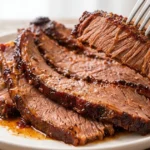
A juicy, fork-tender brisket with a sticky barbecue glaze, made in the slow cooker with just 15 minutes of hands-on time.
Ingredients
Scale
- 1 beef brisket, flat cut, about 4 lb (1.8 kg), trimmed to a ¼-inch (6 mm) fat cap
- 2 tsp kosher salt (6 g)
- 1½ tsp coarsely ground black pepper (4 g)
- 1 cup (250 ml / about 280 g) barbecue sauce, plus extra for serving if you like
- 1 tbsp paprika (7 g)
- 3 tbsp packed light brown sugar (40 g)
- 1 cup (240 ml) low-sodium beef broth
Instructions
- Season and place the brisket. Pat the brisket dry with paper towels, then rub the kosher salt and black pepper all over it, pressing the seasoning into the meat. Lay it in the slow cooker fat side up. When it’s done right, you’ll see an even speckle of pepper over the whole surface, with no bare patches. Fat side up matters, because as the fat melts it bastes the meat. A common mistake is skipping the drying step. A wet surface lets the seasoning slide off and pool in the bottom.
- Drizzle on the barbecue sauce. Pour the barbecue sauce over the top of the brisket in long lines, then spread it with the back of a spoon so the whole top and upper sides are coated. It should look glossy and deep reddish-brown, with the pepper still showing through. Don’t press too hard while spreading, or you’ll wipe the salt and pepper off. Also avoid pouring a lot of sauce down the sides into the bottom of the cooker. You want most of it on top, where it will form the glaze.
- Sprinkle on the paprika and brown sugar. Pinch the paprika and sprinkle it evenly over the sauced brisket from about 8 inches (20 cm) above, so it lands in a fine, even layer. Then scatter the brown sugar over it, breaking up any clumps with your fingers. The top should look bright red with little golden crumbs of sugar, all stuck to the sauce. Avoid dumping everything in one spot. Clumps of sugar can scorch against the hot ceramic edges and turn bitter instead of melting into a glaze.
- Pour the broth around the meat. Slowly pour the beef broth into the gap between the brisket and the side of the insert, moving around the cooker. The liquid should come about ½ inch (1 cm) up the sides of the meat and pool in the bottom, leaving the topping dry and in place. Pouring broth straight over the top is the mistake to avoid here. It rinses off the paprika and sugar you just added and leaves you with a pale, washed-out crust.
- Cover and slow cook. Set the glass lid firmly in place and cook on LOW for 8 to 10 hours. HIGH for 5 to 6 hours works if you’re short on time, but LOW gives you more tender results. After a few hours the lid will fog up, and you’ll smell sweet, beefy barbecue aromas. Resist lifting the lid to check. Every peek lets out heat and steam and can add 15 to 20 minutes to the cooking time. Make sure the lid sits flat with no gaps.
- Check for tenderness. Near the end of cooking, lift the lid and check the brisket. It should have shrunk noticeably, the top should be a dark mahogany color with a sticky, caramelized crust, and it should be sitting in plenty of rich, bubbling juices. Push a fork into the thickest part and twist gently. It should go in with almost no resistance. If it still feels tight or springy, cover it and cook for another 45 to 60 minutes. Undercooked brisket is chewy, and more time is the only fix.
- Rest and slice against the grain. Carefully lift the brisket onto a cutting board with tongs and a large fork, supporting it from underneath. Let it rest for 15 minutes so the juices settle back into the meat. Look for the long lines of muscle fiber and slice across them into ¼-inch (6 mm) slices. Each slice should hold together but feel tender. The most common mistake is slicing with the grain, which gives you stringy, chewy strips even from perfectly cooked meat.
- Spoon on the juices and serve. Arrange the slices on a platter. Skim the fat off the cooking liquid with a spoon, then ladle a few spoonfuls of the juices over the meat. The slices should look glossy, and a fork should pull a slice apart with juices dripping off. Serve with extra barbecue sauce or the remaining juices on the side. Don’t skip this step. The juices hold a lot of flavor and keep the cut surfaces from drying out on the plate.
Notes
- Buy a little extra. Brisket shrinks by 30 to 40 percent as it cooks, so a 4 lb (1.8 kg) raw brisket gives about 2½ lb (1.1 kg) of cooked meat, enough for 8 good servings.
- Trim, but not too much. Leaving a ¼-inch (6 mm) fat cap keeps the meat juicy. Trim away thicker hard fat, which won’t melt.
- Mark the grain before cooking. Cut a small notch across the grain at one corner while the brisket is raw. Once it’s covered in glaze, the grain is much harder to see.
- For a stickier crust, move the cooked brisket to a foil-lined sheet pan, brush it with 2 tbsp of the cooking juices, and broil for 2 to 3 minutes. Watch it closely so the sugar doesn’t burn.
- Make it ahead. Cook the brisket a day early, chill it whole in its juices, then slice it cold. Cold brisket slices much more neatly. Reheat the slices in the juices.
- Thicken the juices if you like. Simmer 1½ cups (360 ml) of the skimmed juices in a saucepan for 8 to 10 minutes until they’re reduced by about a third.
- Know your cooker. Newer slow cookers often run hot. If yours does, check for tenderness at 7½ hours.
- Prep Time: 15 minutes
- Cook Time: 9 hours (8–10 hours on LOW)
- Category: Dinner