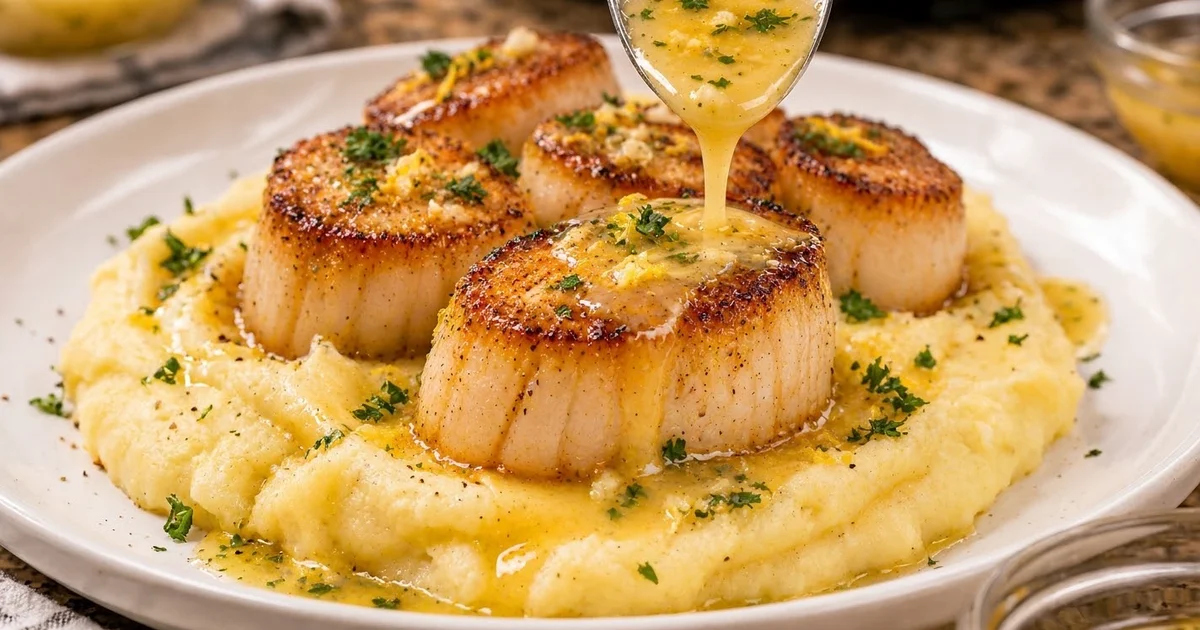
There’s something special about a plate of seared scallops. When they’re cooked right, each one has a deep golden crust on top and a sweet, tender, barely set center. In this recipe they sit on a pillow of buttery mashed potatoes, and a lemon garlic butter sauce gets spooned over everything at the end.
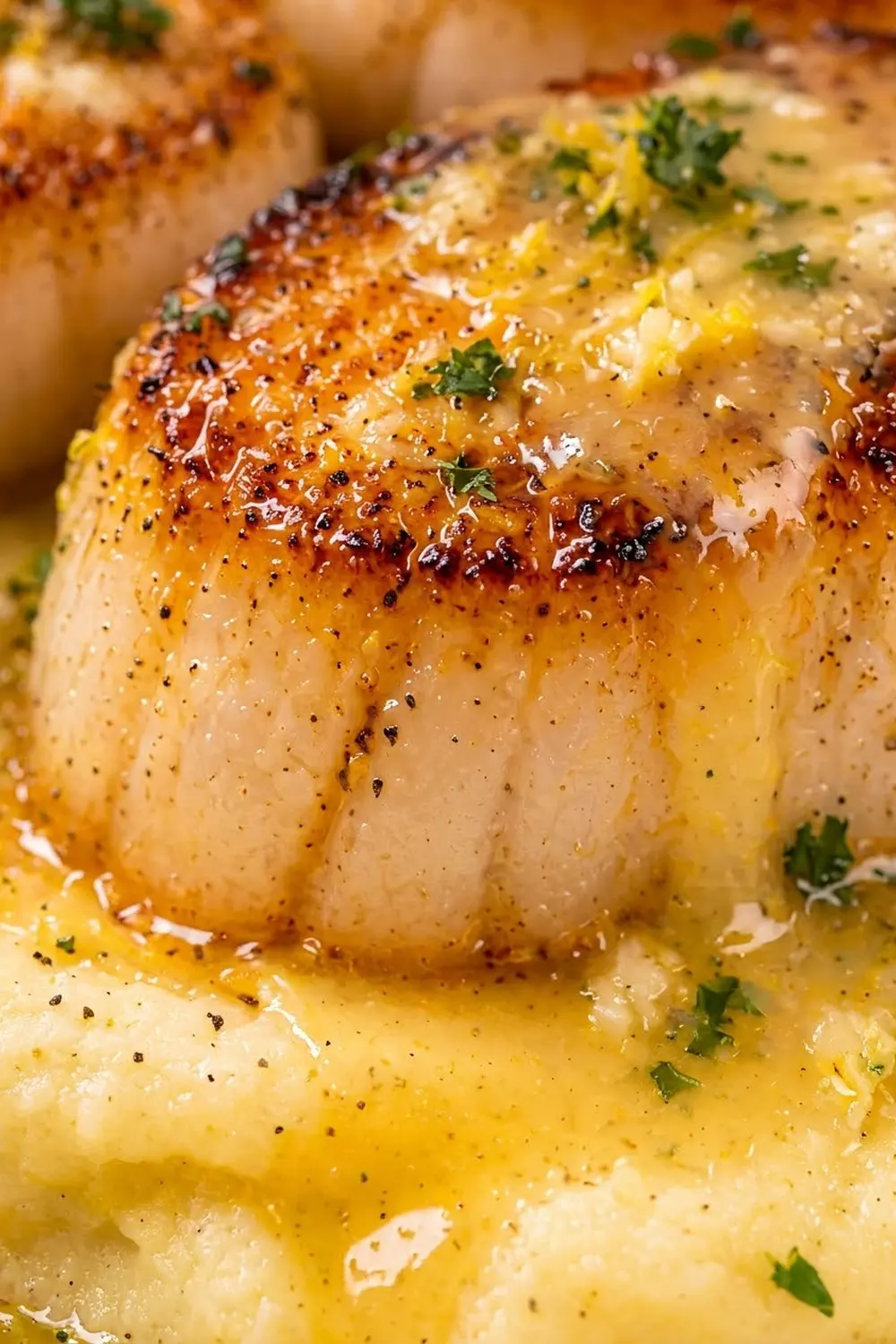
The flavor is rich but still bright. The crust tastes nutty and a little caramelized, and the inside is soft and sweet like the sea. The sauce smells of garlic and fresh lemon, and the parsley adds a clean green note. The potatoes soak up every drop of butter that runs off the scallops, so the last bite is just as good as the first.
Scallops look like restaurant food, but they’re one of the fastest proteins you can cook. They need only about 4 minutes in the pan. The real skill is just keeping them dry and leaving them alone while they sear, and you can learn that on your first try. The potatoes and sauce are simple pantry staples.
This plate works for a date night, an anniversary dinner, or any weeknight when you want something special. It’s naturally gluten-free. Since the scallops cook so quickly, it’s best for 2 to 4 people rather than a big crowd.
Why This Recipe Works
A great sear depends on dry scallops and a very hot pan. Patting the scallops dry and letting them rest uncovered for 10 minutes takes moisture off the surface, so the pan’s heat browns them instead of steaming them. Using a neutral oil with a high smoke point lets the skillet get hot enough for a crust to form in about 2 minutes. That’s fast enough that the center stays tender instead of turning rubbery.
The sauce is made in the same skillet. Melting butter over the browned bits left behind by the scallops picks up all that flavor, and the garlic only needs 30 to 45 seconds to turn fragrant without getting bitter. Lemon juice and zest cut through the butter, so the sauce tastes lively instead of heavy.
Yukon Gold potatoes give the mash its natural golden color and creamy, slightly waxy texture. Warming the milk and butter before you mix them in keeps the potatoes hot and fluffy, and the mash becomes a soft base that catches the sauce.
Tips for Success
- Buy dry-packed scallops. They should look ivory or slightly pink, not bright white, and they shouldn’t be sitting in milky liquid.
- Dry them twice. A second pat-down after resting gets rid of the moisture that rises to the surface, and that gives you a much better crust.
- Choose scallops of similar size. Scallops of the same thickness cook at the same rate, so none come out raw or overdone.
- Don’t move them while they sear. A scallop that sticks isn’t ready yet. Once the crust forms, it will release on its own.
- Make the potatoes ahead. You can make the mash up to 2 hours in advance. Keep it covered over very low heat and stir in 1 to 2 tbsp warm milk right before serving.
- Thaw frozen scallops properly. Thaw them overnight in the fridge in a covered bowl, then drain them and dry them extra thoroughly.
- Use unsalted butter. That way you control the seasoning, which matters because the scallops are already salted.
Variations
Brown butter sauce: Cook the sauce butter for 2 to 3 minutes before adding the garlic, until it smells nutty and you see amber flecks. It tastes deeper and toastier with the sweet scallops.
Cauliflower mash: For a lighter, lower-carb plate, use 2 lb (900 g) of steamed cauliflower florets instead of the potatoes and blend them with the butter and only ¼ cup (60 ml) milk. The color and texture stay close to the original.
Wine pan sauce: Before adding the butter, pour ¼ cup (60 ml) dry white wine into the hot skillet and simmer for 1 minute to scrape up the browned bits. Then continue with the sauce. The wine adds a gentle acidity and extra depth.
Herb swap: Use fresh chives or dill instead of the parsley. Chives add a mild onion note, and dill gives the sauce a fresh, slightly sweet flavor.
FAQ
How do I know when scallops are done?
The sides should look opaque from the edges in, with just a thin translucent band in the middle. The scallop should feel springy, like the fleshy part of your palm, not firm. In total, large scallops need only 3 to 3½ minutes.
Why didn’t my scallops brown?
Usually there was too much moisture, the pan wasn’t hot enough, or the pan was too crowded. Each of these traps steam around the scallops, so they turn pale and rubbery instead of golden. Dry them thoroughly, preheat the skillet well, and give each scallop space.
Can I use bay scallops?
Yes, but they’re much smaller, so they cook in about 1 minute total and won’t build the same thick crust. Sear them in a single layer and toss once. They’re good for a quicker, more casual version.
What’s the side muscle, and do I have to remove it?
It’s a small, rectangular flap on the side of the scallop that turns tough and chewy when cooked. It peels off easily with your fingers. It’s safe to eat, but taking it off makes every bite tender.
Can I make the sauce ahead?
It’s best made fresh in the scallop pan so it picks up the browned bits. If you need to, melt the butter with garlic in a small pot, add the lemon and parsley, and keep it warm for up to 30 minutes.
Storage and Reheating
Scallops are best eaten right after they’re cooked. If you have leftovers, store the scallops, mashed potatoes and sauce in separate airtight containers in the fridge for up to 2 days.
To reheat, warm the scallops gently in a skillet over low heat with 1 tsp butter for 1 to 2 minutes, just until heated through. You can also slice them cold onto a salad. Reheat the potatoes in a saucepan over low heat with 2 tbsp milk, stirring often, or microwave them in 1-minute bursts. Rewarm the sauce gently so it doesn’t separate.
The mashed potatoes freeze well for up to 2 months. Thaw them overnight in the fridge and reheat with a splash of milk. Cooked scallops don’t freeze well because their texture turns spongy, so plan to finish them within a day or two.
Serving Suggestions
Roasted asparagus or sautéed green beans add crunch and a green, slightly bitter contrast to the rich butter sauce. A simple arugula salad with lemon vinaigrette gives you a peppery, bright bite between forkfuls of creamy potatoes.
For a fuller dinner, add warm crusty bread for mopping up the extra sauce, or glazed carrots for a sweet note that matches the scallops’ natural sweetness. A crisp, chilled white wine or sparkling water with lemon finishes the meal.
Final Notes
Pan-seared scallops with lemon garlic butter sauce over mashed potatoes is proof that an impressive dinner doesn’t have to be complicated. Once you’ve learned to dry your scallops, heat your pan and leave them alone, you’ll get that golden crust every time. The potatoes and sauce are simple, comforting and quick to make. Make it for someone you love, or treat yourself on a quiet evening. Either way, I hope this becomes one of your favorite special-occasion meals.
Print
Seared Scallops with Lemon Garlic Butter Sauce and Mashed Potatoes Recipe
- Total Time: 45 minutes
- Yield: 4 1x
Description
Golden-crusted sea scallops on buttery mashed potatoes, finished with a glossy lemon garlic butter sauce. A restaurant-style dinner you can make at home in 45 minutes.
Ingredients
- 2 lb (900 g) Yukon Gold potatoes, peeled and cut into 2-inch chunks
- 1 tbsp (18 g) kosher salt, for the cooking water
- ¾ cup (180 ml) whole milk
- 4 tbsp (56 g) unsalted butter
- ½ tsp (3 g) fine salt, plus more to taste
- ¼ tsp (0.5 g) ground black pepper
- 1½ lb (680 g) large dry-packed sea scallops (16–20 scallops, U10–U12 size)
- ¾ tsp (4.5 g) fine salt
- ½ tsp (1 g) ground black pepper
- 2 tbsp (30 ml) avocado oil or other high-heat neutral oil
- 6 tbsp (84 g) unsalted butter, cut into pieces
- 4 cloves garlic, finely minced (about 4 tsp / 12 g)
- 3 tbsp (45 ml) fresh lemon juice (about 1 large lemon)
- 1 tsp (2 g) finely grated lemon zest
- 2 tbsp (8 g) fresh parsley, finely chopped, plus extra for garnish
- ⅛ tsp (0.75 g) fine salt
Instructions
- Boil the potatoes. Put the potato chunks in the saucepan, cover them with cold water by 1 inch (2.5 cm), and add 1 tbsp kosher salt. Bring to a boil over high heat, then lower to a steady simmer and cook for 15 to 18 minutes. They’re ready when a fork slides into the center of a chunk with no resistance. Starting in cold water helps them cook evenly from the outside in. A common mistake is dropping the potatoes into water that’s already boiling, which leaves the outsides mushy while the centers stay firm.
- Mash the potatoes. While the potatoes cook, warm the milk and 4 tbsp butter in a small pot or in the microwave until the butter melts, about 2 minutes. Drain the potatoes well and return them to the hot pot for 1 minute so the extra steam can escape. Mash them, then stir in the warm milk mixture, salt and pepper until the potatoes are smooth, glossy and pale gold. Cover to keep warm. Don’t use a blender or food processor, because overworking the potatoes makes them gluey.
- Dry and season the scallops. Pull off the small, tough side muscle if it’s still attached. Lay the scallops on a paper towel–lined plate, press another towel on top, and pat them firmly until the surfaces feel tacky instead of wet. Let them sit uncovered for 10 minutes, then pat them again. Season both flat sides with salt and pepper right before cooking. If you salt them too early, the salt draws moisture back to the surface and undoes your drying.
- Sear the scallops. Heat the skillet over medium-high heat for 2 minutes, then add the oil. When it shimmers and just starts to smoke, place the scallops in the pan one at a time, working clockwise, with about 1 inch (2.5 cm) between them. They should sizzle loudly. Don’t touch them for 2 minutes, until a deep golden-brown crust forms and they release easily. Crowding the pan is the most common mistake here. If they won’t all fit with space around them, cook them in two batches.
- Flip and finish. Flip each scallop with tongs or a spatula. The seared side should be evenly bronzed and speckled with pepper. Cook the second side for 1 to 1½ minutes, until the sides look opaque but the center still has a slight give when you press it gently. Move the scallops to a clean plate. Pull them a little early, because they keep cooking off the heat. Overcooked scallops shrink and turn tough and chewy.
- Make the lemon garlic butter sauce. Lower the heat to medium-low and let the skillet cool for about 30 seconds. Add the 6 tbsp butter and swirl until it melts and foams. Stir in the garlic and cook for 30 to 45 seconds, until it smells fragrant and turns pale gold. Take the pan off the heat and stir in the lemon juice, zest, parsley and salt, scraping up the browned bits. The sauce should look glossy and pale yellow. If the pan is too hot, the garlic burns and turns bitter in seconds.
- Plate and spoon over the sauce. Divide the warm mashed potatoes among four plates and spread each portion into a wide, soft mound. Arrange 4 or 5 scallops on top, golden side up. Spoon the lemon garlic butter sauce slowly over each scallop so it coats the crust and pools into the potatoes. Finish with more chopped parsley and a little extra zest. Serve right away. If the scallops sit while you finish plating, they cool quickly and the crust softens.
Notes
- Buy dry-packed scallops. They should look ivory or slightly pink, not bright white, and they shouldn’t be sitting in milky liquid.
- Dry them twice. A second pat-down after resting gets rid of the moisture that rises to the surface, and that gives you a much better crust.
- Choose scallops of similar size. Scallops of the same thickness cook at the same rate, so none come out raw or overdone.
- Don’t move them while they sear. A scallop that sticks isn’t ready yet. Once the crust forms, it will release on its own.
- Make the potatoes ahead. You can make the mash up to 2 hours in advance. Keep it covered over very low heat and stir in 1 to 2 tbsp warm milk right before serving.
- Thaw frozen scallops properly. Thaw them overnight in the fridge in a covered bowl, then drain them and dry them extra thoroughly.
- Use unsalted butter. That way you control the seasoning, which matters because the scallops are already salted.
- Prep Time: 15 minutes
- Cook Time: 30 minutes
- Category: Dinner