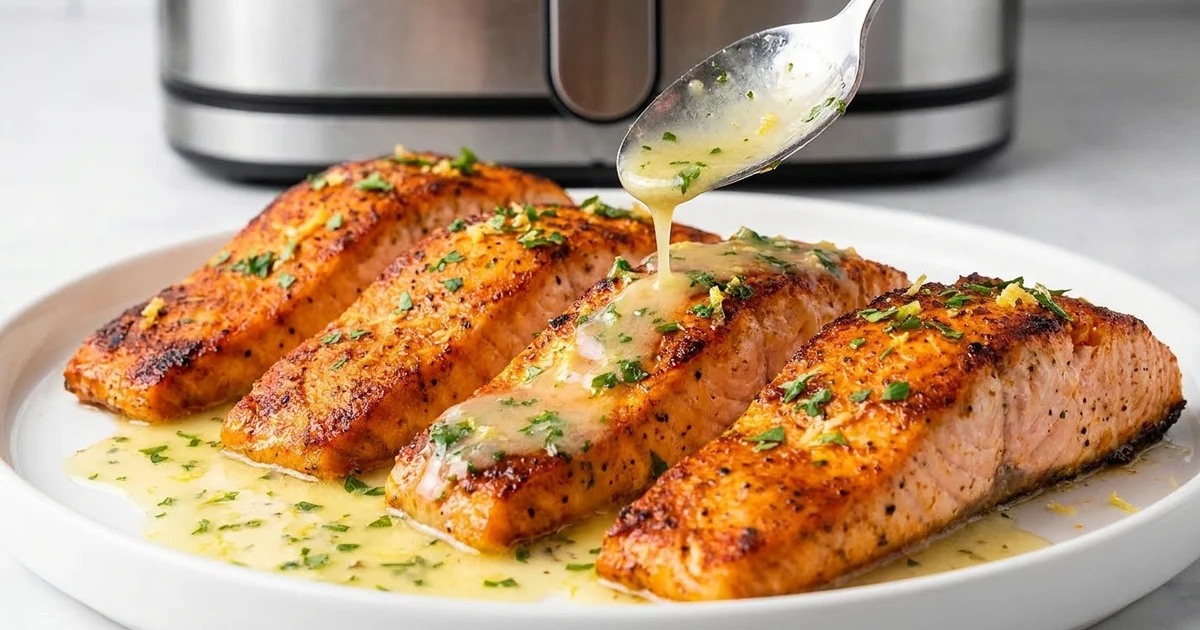
This air fryer salmon with lemon butter sauce is one of those dinners that looks like it came from a restaurant kitchen but takes less than 25 minutes at home. Thick salmon fillets get a light coat of oil and a simple spice rub, then go into the air fryer until the outside turns golden and slightly crisp at the edges. While they cook, you whisk together a quick, glossy sauce of butter, lemon, garlic, and parsley.
The first bite is all contrast. The seasoned crust is savory and a little smoky from the paprika, and underneath it the salmon is tender, moist, and flakes apart in big, juicy pieces. Then the warm lemon butter soaks in, rich and bright at once, with little bursts of fresh zest and herby parsley. The kitchen smells like browned butter and citrus by the time you sit down.
For a home cook, the air fryer does most of the work here. There’s no splattering pan, no flipping fragile fillets, and no guessing about an uneven oven. The circulating hot air browns the surface quickly while the center stays tender, and cleanup comes down to one basket and one small saucepan.
The recipe fits busy weeknights, easy date nights, or a small dinner party. It’s naturally gluten-free and low-carb, and leftover fillets keep well for lunches. If you’re feeding a crowd, cook the salmon in batches and make a double batch of sauce.
Why This Recipe Works
Dry surface, high heat. Patting the salmon completely dry is the step that makes the crust possible. Surface moisture has to evaporate before browning can start, so wet fish steams and turns pale. A dry fillet, a thin film of oil, and 400°F (200°C) air give you that deep orange-gold color with darker, caramelized edges.
A rub built for color. Smoked or sweet paprika does double duty: it adds a gentle, warm flavor and helps the fillets brown fast, so they look roasted before the inside can overcook. Garlic powder and onion powder add savory depth without burning the way fresh garlic would at this heat. A little brown sugar helps the caramelization along, and freshly cracked black pepper gives the speckled finish you see in the photo.
A sauce that stays emulsified. The butter is melted gently with garlic, then taken off the heat before the lemon juice goes in. Whisking off the heat keeps the sauce creamy and opaque instead of letting it split into greasy butter and watery juice. The zest goes in at the very end, so its fragrant oils stay fresh and punchy.
Tips for Success
- Check early. Air fryers vary a lot. Check thinner fillets at 7 minutes and thick ones at 9 minutes, since salmon goes from juicy to dry in about 2 minutes.
- Trust the thermometer. Pull the salmon at 125–130°F (52–54°C) for a tender center; carryover heat will raise it a few more degrees as it rests.
- Even out thickness. If one fillet is much thinner, tuck the thin tail end under itself so it cooks at the same rate as the others.
- Make the rub ahead. Mix a triple batch of the spice blend and keep it in a jar for up to 3 months, so weeknight prep takes seconds.
- Keep the sauce warm, not hot. If dinner is delayed, set the saucepan on the lowest heat and whisk now and then. Never let it simmer.
- No air fryer? Roast the fillets on a parchment-lined sheet pan at 425°F (220°C) for 10 to 13 minutes, then broil for 1 minute for extra color.
- Zest before juicing. It’s much easier to zest a whole lemon than a squeezed half.
- Frozen salmon works. Thaw it overnight in the fridge and dry it extra well, because thawed fish holds more surface water.
Variations
Honey garlic glaze. Mix 1 tablespoon of honey into the sauce along with the lemon juice. It turns slightly sweeter and stickier and clings to the crust beautifully, and it’s popular with kids.
Cajun spice. Swap the paprika rub for 2 teaspoons of Cajun seasoning (reduce the added salt to ½ teaspoon, since most blends are salty). The lemon butter cools the heat nicely.
Dill and caper sauce. Replace the parsley with 1 tablespoon of chopped fresh dill and add 1 tablespoon of rinsed capers to the butter. You get a briny, herby sauce that’s classic with salmon.
Parmesan crust. In the last 2 minutes of cooking, sprinkle 2 tablespoons of finely grated Parmesan over each fillet. It melts into a lacy, savory topping under the lemon butter.
FAQ
Do I need to flip the salmon in the air fryer?
No. The hot air circulates all around the fish, so the top browns while the bottom cooks through. Flipping also risks breaking the fillets and smearing the crust. Leave them alone and they’ll come out intact.
How do I know when salmon is done without a thermometer?
Press the thickest part gently with a fork. It should just start to separate into flakes, and the center should look barely translucent. If it flakes all the way through with white beads of protein on the surface, it’s well-done and starting to dry out.
Can I use salted butter for the sauce?
Yes, just leave out the ⅛ teaspoon of salt in the sauce and taste before serving. Salted butter brands vary in saltiness, so add more only if the sauce needs it. The seasoned crust already adds plenty of salt.
Why did my lemon butter sauce separate?
Usually the sauce got too hot after the lemon juice went in, or it sat over direct heat too long. Take the pan off the heat, add a teaspoon of cold water, and whisk hard; it should come back together within seconds. Next time, add the lemon off the heat.
Can I cook salmon from frozen in the air fryer?
You can, but the results are less even. Cook at 390°F (198°C) for about 7 minutes, brush with oil, add the rub, then cook another 6 to 8 minutes. Thawed fish browns better and gives you more control.
Storage and Reheating
Let leftover salmon cool, then store it in an airtight container in the fridge for up to 3 days. Keep the sauce in a separate small container. It will firm up as the butter cools, which is completely normal.
To reheat, put the salmon in the air fryer at 300°F (150°C) for 3 to 4 minutes, just until warmed through; higher heat will dry it out. You can also warm it covered in a 275°F (135°C) oven for about 10 minutes. Rewarm the sauce gently in a small pan over low heat, whisking until it turns smooth again, or microwave it in 10-second bursts. Leftovers are also good cold, flaked over a salad.
Cooked salmon can be frozen in airtight bags for up to 2 months, though the texture gets a little softer. Thaw it overnight in the fridge before reheating. The sauce can be frozen too, but it’s so quick to make that fresh is usually better.
Serving Suggestions
Roasted asparagus or green beans are a natural pairing, since any extra lemon butter makes an instant dressing for them. Fluffy white rice or a simple rice pilaf soaks up the sauce that pools on the plate, so nothing goes to waste.
For something heartier, serve the salmon with garlic mashed potatoes, whose creaminess balances the bright lemon. On lighter nights, a crisp green salad with a simple vinaigrette keeps the meal fresh and cuts through the richness of the butter.
Final Notes
This air fryer salmon with lemon butter sauce shows how a few small, deliberate steps can make an ordinary weeknight dinner feel special. Dry the fish well, give it hot air and space, pull it while the center is still juicy, and finish it with a warm sauce made off the heat. Once you’ve made it a couple of times, you’ll know your air fryer’s timing and could make it from memory. Keep the spice rub in your pantry and a lemon in the fridge, and a beautiful plate of golden salmon is never more than 25 minutes away.
Print
Air Fryer Salmon with Lemon Butter Sauce Recipe
- Total Time: 22 minutes
- Yield: 4 1x
Description
Juicy salmon fillets with a golden, paprika-seasoned crust, finished with a silky lemon butter sauce. Ready in about 22 minutes with almost no cleanup.
Ingredients
- 4 skinless salmon fillets, about 6 oz (170 g) each and 1 to 1¼ inches (2.5–3 cm) thick
- 1 tbsp (15 ml) olive oil or avocado oil
- 1½ tsp paprika (sweet or smoked)
- 1 tsp garlic powder
- ½ tsp onion powder
- 1 tsp light brown sugar
- 1 tsp kosher salt (about 3 g)
- ½ tsp freshly ground black pepper
- 4 tbsp (56 g) unsalted butter
- 2 cloves garlic, finely minced (about 2 tsp)
- 2 tbsp (30 ml) fresh lemon juice (from about 1 lemon)
- 1 tsp finely grated lemon zest
- 1 tbsp (15 ml) water or low-sodium chicken broth
- 1 tbsp finely chopped fresh parsley, plus extra for garnish
- ⅛ tsp kosher salt (a small pinch)
Instructions
- Dry and season the salmon. Take the fillets out of the fridge about 10 minutes before cooking and press them firmly on all sides with paper towels until the surface feels tacky rather than wet. In a small bowl, stir together the paprika, garlic powder, onion powder, brown sugar, salt, and pepper. Brush or rub the oil over the tops and sides of each fillet, then sprinkle the rub on evenly and press it lightly into the flesh. You should see a thin, even, rusty-orange coating. A common mistake is skipping the drying step, which leaves the spices pasty and keeps the crust from forming.
- Preheat the air fryer. Set the air fryer to 400°F (200°C) and let it run empty for 3 to 5 minutes. Preheating matters because the fish starts browning as soon as it touches hot air, instead of slowly warming up and releasing moisture. Lightly oil the basket or rub it with a paper towel dipped in oil so the fillets release cleanly. Don’t use aerosol cooking spray directly on a nonstick basket, since it can wear down the coating over time.
- Air fry the salmon. Lay the fillets in the basket in a single layer with at least ½ inch (1 cm) between them, seasoned side up. Cook for 8 to 11 minutes depending on thickness, without flipping. You’ll hear a gentle sizzle and smell toasted paprika after about 6 minutes. The fish is done when the top is deep golden-orange with darker edges and the thickest part reads 125–130°F (52–54°C) for moist, slightly translucent salmon, or 140°F (60°C) for fully opaque fish. Don’t crowd the basket, because steam makes the fillets pale.
- Make the lemon butter sauce. While the salmon cooks, melt the butter in a small saucepan over medium-low heat. Add the minced garlic and stir for 45 to 60 seconds, until it smells fragrant and sweet but hasn’t browned. Take the pan off the heat, then whisk in the lemon juice, water or broth, and salt until the sauce looks creamy and pale yellow. Stir in the zest and parsley. The most common mistake here is boiling the sauce after adding the lemon, which separates it into an oily layer. If that happens, whisk in 1 teaspoon of cold water off the heat to bring it back together.
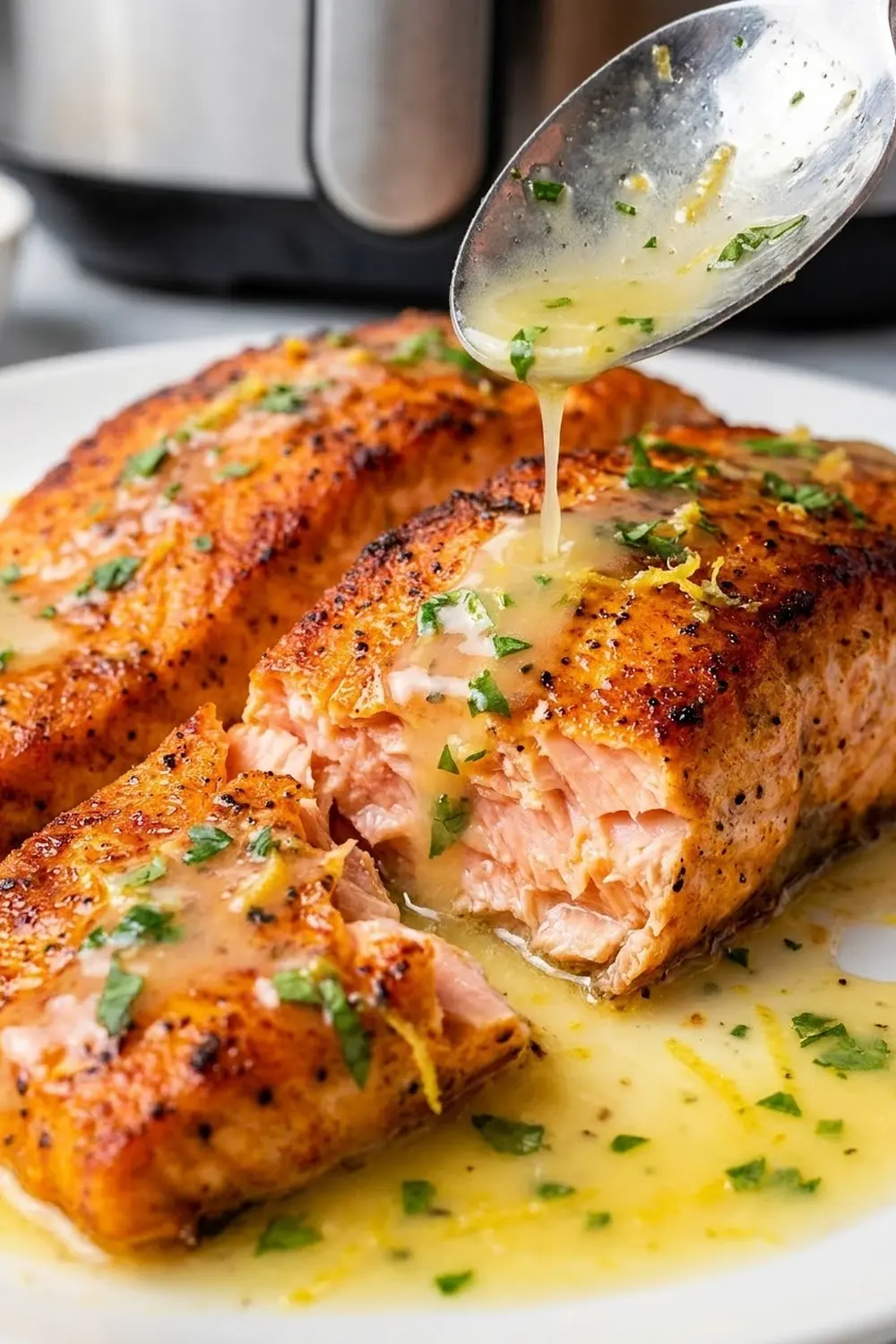
- Rest and plate the fillets. Use a thin spatula to move the salmon onto a warm serving plate. Arrange the fillets in an overlapping row, browned side up, so the crust shows. Let them rest for 2 to 3 minutes; the inside will cook a few degrees more and the juices will settle. If you want to show off the flaky pink inside, cut one or two fillets in half crosswise with a sharp knife. Avoid stacking the fillets right on top of each other, because trapped steam softens the crust you just built.
- Spoon on the sauce and garnish. Give the sauce a quick whisk and spoon it slowly over each fillet, letting it run down the sides and pool on the plate. You want a glossy coating with flecks of green parsley and yellow zest clinging to the crust. Finish with a little more chopped parsley and a few extra shreds of zest. Serve right away while the sauce is warm and fluid. Don’t pour all the sauce on long before serving, because the butter will start to firm up as it cools.
Notes
- Check early. Air fryers vary a lot. Check thinner fillets at 7 minutes and thick ones at 9 minutes, since salmon goes from juicy to dry in about 2 minutes.
- Trust the thermometer. Pull the salmon at 125–130°F (52–54°C) for a tender center; carryover heat will raise it a few more degrees as it rests.
- Even out thickness. If one fillet is much thinner, tuck the thin tail end under itself so it cooks at the same rate as the others.
- Make the rub ahead. Mix a triple batch of the spice blend and keep it in a jar for up to 3 months, so weeknight prep takes seconds.
- Keep the sauce warm, not hot. If dinner is delayed, set the saucepan on the lowest heat and whisk now and then. Never let it simmer.
- No air fryer? Roast the fillets on a parchment-lined sheet pan at 425°F (220°C) for 10 to 13 minutes, then broil for 1 minute for extra color.
- Zest before juicing. It’s much easier to zest a whole lemon than a squeezed half.
- Frozen salmon works. Thaw it overnight in the fridge and dry it extra well, because thawed fish holds more surface water.
- Prep Time: 10 minutes
- Cook Time: 12 minutes
- Category: Dinner