Description
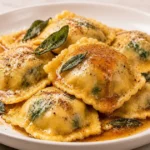
Tender spinach ravioli coated in glossy brown butter with crisp sage leaves and Parmesan. It’s an elegant dinner that’s ready in just 20 minutes.
Ingredients
Scale
- 24 oz (680 g) fresh spinach-and-ricotta ravioli (refrigerated, store-bought)
- 1 tbsp (18 g) kosher salt, for the pasta water
- 1/4 cup (60 ml) reserved pasta water
- 1/2 cup (113 g) unsalted butter, cut into tablespoons
- 16 to 20 fresh sage leaves (about 1/4 oz or 7 g)
- 1/4 tsp (1.5 g) fine sea salt
- 1/2 tsp (1 g) freshly cracked black pepper, divided
- 1/2 cup (40 g) finely grated Parmesan cheese
Instructions
- Boil the ravioli. Bring 4 quarts (3.8 L) of water to a rolling boil, then stir in 1 tablespoon of kosher salt. Gently lower the ravioli in and stir once so they don’t stick to the bottom. Cook fresh ravioli for 3 to 4 minutes, until they float and the pasta at the crimped edges feels tender when you pinch it. Before you drain, scoop out 1/4 cup of the starchy water. A common mistake is a hard, violent boil once the ravioli are in, which can burst them. Lower the heat to a steady simmer.
- Drain gently. Lift the cooked ravioli out with a slotted spoon or spider and set them on a plate or tray in a single layer. They should look plump and pale golden, with the green filling faintly visible through the dough. Don’t rinse them. Rinsing washes away the surface starch that helps the sauce stick. If you stack hot ravioli in a heap, they’ll glue together, so keep them spread out while you make the sauce, which only takes a few minutes.
- Melt the butter. Put the butter pieces in a cold 12-inch skillet over medium heat. As they melt, the butter will foam and sputter while the water cooks off, and you’ll hear a lively crackle. Swirl the pan now and then so it heats evenly. This stage takes about 2 minutes. Don’t turn the heat to high to speed it up. Butter goes from browned to burnt in seconds, and medium heat gives you room to react.
- Fry the sage and brown the butter. Once the foam starts to settle, add the sage leaves in a single layer. They’ll sizzle right away and turn darker green and translucent. Keep swirling for another 2 to 3 minutes, until the butter is amber-brown with toasted specks on the bottom and smells nutty, like toffee. The sage should feel crisp when you nudge it. Take the pan off the heat as soon as you reach that color, because it keeps cooking. Black specks and a bitter smell mean it went too far.
- Season and loosen the sauce. Off the heat, stir in 1/4 teaspoon of sea salt and half of the black pepper. Carefully add 2 to 3 tablespoons of the reserved pasta water. It will bubble up hard, so stand back. Swirl the pan until the butter and water come together into a glossy, slightly thicker sauce. If you skip the pasta water, the sauce stays thin and greasy and slides off the pasta instead of coating it.
- Coat the ravioli. Return the skillet to low heat and gently slide in the ravioli. Spoon the brown butter over them and tilt the pan to coat each piece, about 1 minute, until they’re glossy and warmed through. Add a splash more pasta water if the sauce looks tight. Don’t stir with tongs or toss hard. The pasta is delicate, and basting with a spoon keeps every square whole.
- Plate, drizzle and finish. Arrange the ravioli in shallow bowls. Spoon the rest of the brown butter over the top, letting it run down the ridges and pool in the bowl. Tuck the crisp sage leaves on top. Sprinkle the Parmesan over the ravioli while they’re hot so it softens, then add the rest of the black pepper. Serve right away. Brown butter sauce tastes best hot, and it firms up if the bowls sit too long.
Notes
- Use a light-colored pan. Judging color is the hardest part of browning butter, and stainless steel makes it easy.
- Dry the sage leaves. Pat them completely dry before frying. Water on the leaves makes the butter spit and stops them from crisping.
- Have everything ready first. Brown butter moves fast. Grate the cheese and drain the ravioli before you start the sauce.
- Trust your nose. The moment the butter smells nutty, take it off the heat. Smell often tells you it’s done before color does.
- Don’t overcrowd the pot. If your pot is smaller than 6 quarts, cook the ravioli in two batches.
- Save extra pasta water. Keep a little more than you think you’ll need in case the sauce gets too thick.
- Warm the bowls. Rinsing the serving bowls with hot water keeps the butter glossy longer at the table.
- Prep Time: 5 minutes
- Cook Time: 15 minutes
- Category: Dinner