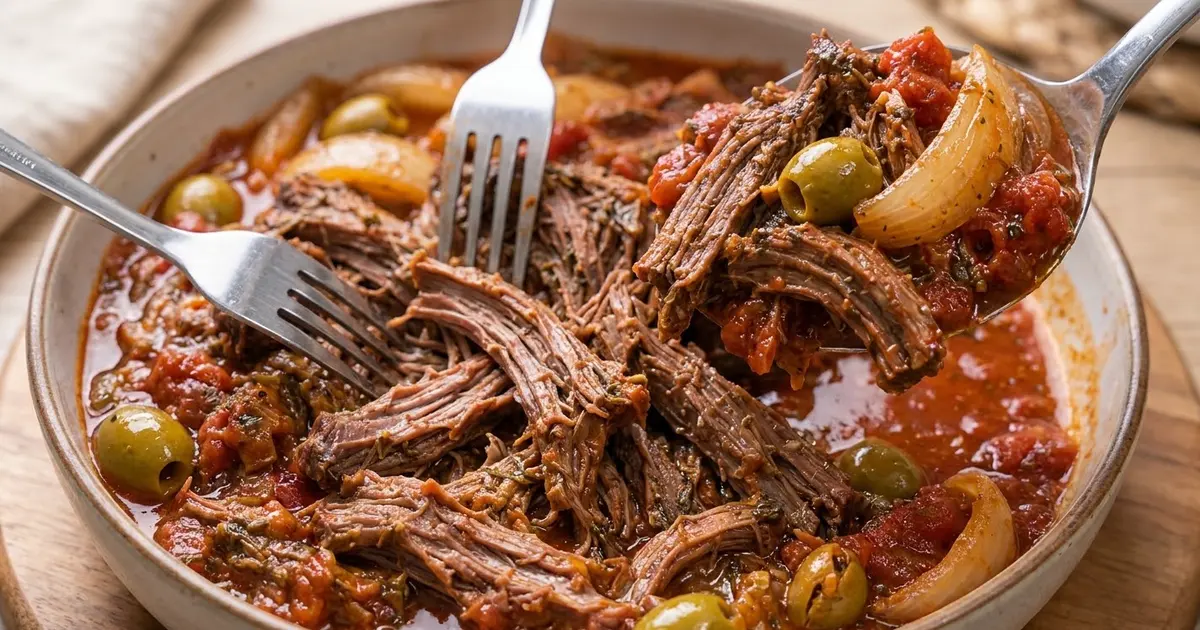
Some dinners take almost no effort from you, and this is one of them. You put a beef chuck roast in the slow cooker and pour crushed tomatoes and broth over it. Add garlic and dried herbs, tuck in onion wedges and green olives, put the lid on and walk away. Hours later you have tender beef that pulls apart with two forks, in a rich tomato sauce that tastes like it took all day. It did, but you weren’t the one doing the work.
The beef is melt-in-your-mouth soft, with long, juicy strands that soak up the sauce. The tomatoes cook down into something deep and slightly sweet. The onions go silky and golden, and the green olives add briny, salty bites that keep each forkful interesting. As it cooks, your kitchen will smell of garlic, herbs and slow-braised beef.
For home cooks, this recipe is very forgiving. There’s no searing, no sautéing and no need to stand at the stove. A chuck roast is affordable and hard to overcook in a slow cooker, so a little extra time won’t hurt it. If you can open a can and slice an onion, you can make this.
It’s great for busy weeknights, Sunday suppers and meal prep, because the flavor gets even better the next day. It feeds a crowd easily and is naturally gluten-free and dairy-free when your broth is certified gluten-free. Spoon it over rice, mashed potatoes or pasta, or pile it onto crusty rolls.
Why This Recipe Works
Chuck roast is made for slow cooking. Chuck comes from the hard-working shoulder, so it’s full of connective tissue and marbling, which you can see in the raw roast. Over long, gentle heat, that collagen melts into gelatin. The gelatin coats the meat fibers and thickens the sauce, so the beef shreds easily and stays moist. A lean cut like round would just go dry and stringy.
The right amount of liquid. A 28-ounce (794 g) can of crushed tomatoes plus 1 cup of broth comes about halfway up the roast. That’s enough to braise it, but not so much that the flavor gets watered down. The beef also releases juices as it cooks, so starting with less liquid gives you a concentrated sauce rather than soup.
Layering adds flavor without extra work. The garlic and dried herbs sit right on top of the meat, so their flavor works down into the roast as it cooks. The onions and olives go around the edges, where they gently soften in the sauce. The olives add salt and tang that cut through the richness of the beef, so the dish never tastes flat or heavy.
Tips for Success
- Don’t trim all the fat before cooking. The marbling is what makes chuck tender, so remove large hard pieces after cooking instead.
- Go easy on salt at first. Olives and broth both add salt, so season the beef lightly and adjust at the end.
- LOW gives the best texture. HIGH works when you’re short on time, but the long LOW cook gives silkier, more evenly tender meat.
- Skim the fat if needed. If a layer of orange fat floats on top after cooking, spoon it off or blot it with a paper towel before shredding.
- Prep the night before. Cut the onions, mince the garlic and mix the tomatoes and broth. Store them in the fridge, then just put everything together in the morning.
- No slow cooker? Use the oven. Put everything in a covered Dutch oven at 300°F (150°C) for about 3½ to 4 hours, until the meat is fork-tender.
- Use pitted olives. Whole olives with pits are easy to miss in shredded meat and can crack a tooth.
Variations
Spicy kick: Add ½ tsp red pepper flakes with the dried herbs, or tuck one or two whole dried chiles in with the onions. The heat builds slowly over the long cook without overpowering the beef.
Peppers and onions: Add one or two bell peppers, cut into thick strips, along with the onions. They soften into the sauce and add a little sweetness and color.
Red wine braise: Replace the beef broth with 1 cup (240 ml) of dry red wine. The wine gives the sauce more depth and a slightly tangy, rounded finish.
Kalamata swap: Use pitted Kalamata olives instead of green ones for a deeper, fruitier brininess and darker color. Use a slightly smaller amount, about ¾ cup, because they have a stronger flavor.
FAQ
Do I need to sear the beef first?
No. This recipe skips searing on purpose and still develops plenty of color and flavor over the long cook. If you have 10 extra minutes, browning the roast in a hot skillet first adds a deeper flavor, but it’s optional.
Can I use frozen beef?
It’s best to thaw it first. A frozen roast spends too long in the temperature danger zone in a slow cooker and cooks unevenly. Thaw it in the fridge for 24 to 48 hours before cooking.
How do I know when it’s done?
Go by texture rather than the clock. The beef is ready when a fork twists into it easily and the meat falls into strands. Internally it will be well past 200°F (93°C), which is the point where collagen has fully broken down.
My sauce is too watery. What do I do?
Some roasts release more liquid than others. After shredding, take the lid off and cook on HIGH for 20 to 30 minutes so it can reduce. You can also stir in 1 tbsp of tomato paste to thicken it quickly.
Can I make this with a smaller roast?
Yes. For a 2 lb (900 g) roast, cut the other ingredients by about a third and check it about an hour earlier. Keep the liquid at least a third of the way up the meat.
Storage and Reheating
Let leftovers cool, then store the beef together with its sauce in airtight containers in the fridge for up to 4 days. Keeping the meat in the sauce stops it from drying out, and the flavors keep developing, so day-two leftovers are often even better.
To reheat, warm portions in a covered saucepan over medium-low heat for 8 to 10 minutes, stirring now and then and adding 1 to 2 tbsp of water or broth if it looks thick. In the microwave, heat covered at 70 percent power in 1-minute bursts, stirring between each, until it’s steaming hot all the way through.
This freezes very well. Portion it into freezer bags or containers, leaving a little room for expansion, and freeze for up to 3 months. Thaw overnight in the fridge, then reheat as above. The onions will be a bit softer after freezing, but the beef and sauce hold up perfectly.
Serving Suggestions
Creamy mashed potatoes or soft polenta are classic partners, because they soak up every drop of the tomato sauce. Wide egg noodles or rigatoni also work well, since the sauce clings to them and the shreds of beef get caught in the pasta.
For something lighter, serve it over steamed white or brown rice with a crisp green salad dressed in a sharp vinaigrette to cut the richness. Crusty rolls also make great sandwiches with the beef, so nothing is left in the pot.
Final Notes
This slow cooker shredded beef is the kind of recipe you’ll come back to again and again. It takes about 15 minutes of hands-on work and turns an affordable cut into a cozy, comforting dinner. Once you’ve made it the basic way, try the variations or make it your own with your favorite sides. However you serve it, the house will smell amazing and you’ll have dinner ready with very little effort. Enjoy every tender, saucy bite.
Print
Slow Cooker Shredded Beef with Tomatoes and Olives Recipe
- Total Time: about 8 hours 15 minutes
- Yield: 8 1x
Description
A chuck roast slow-cooks in a rich tomato sauce with onions and green olives until it falls apart. Just 15 minutes of prep for a cozy, crowd-pleasing dinner.
Ingredients
- 1 boneless beef chuck roast, 3 lb (about 1.4 kg)
- 1½ tsp kosher salt (about 4.5 g)
- 1 tsp freshly ground black pepper (about 2 g)
- 1 can (28 oz / 794 g) crushed tomatoes
- 1 cup (240 ml) beef broth
- 6 cloves garlic, minced (about 2 tbsp / 18 g)
- 2 tsp dried oregano (about 2 g)
- 1 tsp dried thyme (about 1 g)
- 2 medium yellow or white onions (about 1 lb / 450 g), cut into thick wedges
- 1 cup (about 150 g) pitted green olives, drained
Instructions
- Add the meat. Pat the chuck roast dry with paper towels and season it all over with the salt and pepper. Place it in the center of the slow cooker insert, fat cap facing up if it has one. The roast should sit flat with a little space around the edges for vegetables. Don’t squeeze in a roast that’s too big for your cooker. If it touches the sides all the way around, cut it into two large pieces so the heat can circulate and everything cooks evenly.
- Add the sauce. Stir the crushed tomatoes and beef broth together in a measuring cup or bowl, then pour the mixture evenly over the roast. Most of the top should be coated in red, and the liquid should come about halfway up the sides of the meat. Resist adding extra liquid “just in case.” The roast will release plenty of its own juices, and too much liquid makes a thin, bland sauce that takes ages to reduce afterward.
- Add the seasoning. Sprinkle the minced garlic, dried oregano and dried thyme over the top of the roast and into the sauce around it. You’ll smell the garlic right away, and the green flecks of herbs should be spread across the surface. Scatter them evenly instead of dumping them in one spot, because a pile of dried herbs can taste dusty and bitter in that area. Crumbling the herbs between your fingers as you go wakes up their oils.
- Add the vegetables. Tuck the onion wedges and green olives around the roast, pressing them partly into the sauce. They should form a ring around the meat, with the onions standing cut-side up or on their sides. Keep them mostly around the edges rather than piled on top of the beef. That way the onions braise in the liquid and turn soft and sweet. Onions sitting high and dry above the sauce can stay crunchy and pale.
- Cover and cook. Put the lid on firmly and cook on LOW for 8 to 9 hours or on HIGH for 5 to 6 hours. After a few hours, condensation will bead on the lid and the kitchen will smell of garlic and tomatoes. The most common mistake is lifting the lid to check. Each peek lets out heat and steam and can add 15 to 20 minutes to the cooking time, so leave it closed until the minimum time is up.
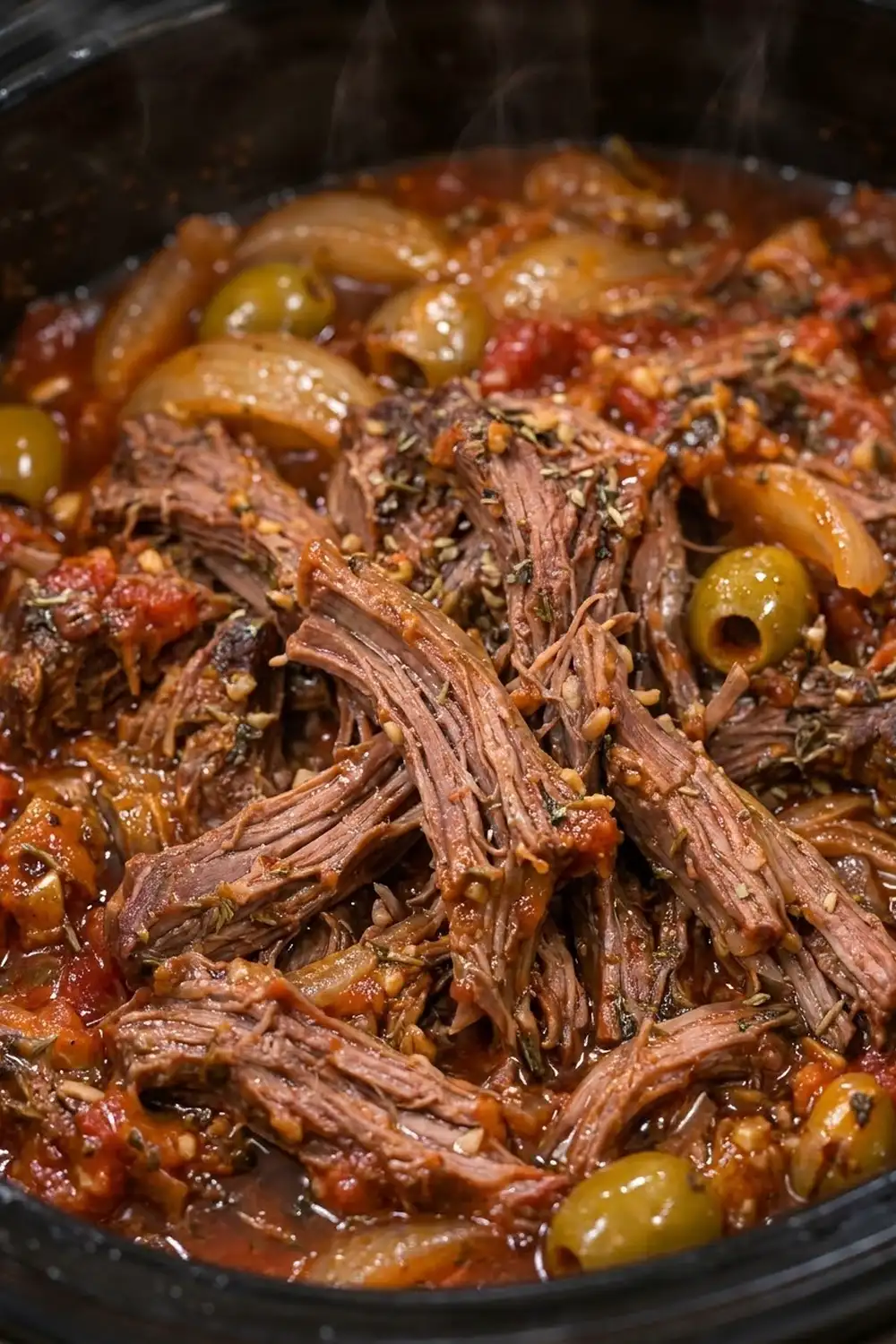
- Reveal the dinner. When the time is up, remove the lid, letting the steam roll away from you. The roast should be a deep, dark brown, surrounded by a thick, glossy red sauce with soft golden onions and plump olives. Test it with a fork. It should slide in with no resistance and the meat should start falling apart. If it still feels tight or springy, cover it again and cook for another 45 to 60 minutes. Tough chuck just needs more time.
- Pull it apart. Use two forks to shred the beef right in the cooker. Hold the meat with one fork and pull with the other, going with the grain to make long strands. Remove and discard any large pieces of fat or gristle as you go. Stir the shredded meat gently through the sauce so every strand gets coated. Don’t over-shred it into mush; chunky strands look better and hold the sauce. Taste the sauce and add salt only if it needs it, since the olives already add salt.
- Ready to serve. Let the shredded beef sit in the sauce for 5 to 10 minutes with the cooker on WARM. The meat will soak up more of the liquid and the sauce will thicken slightly. Then use a large spoon to scoop out beef, onions, olives and sauce together, so every plate gets a bit of everything. If the sauce looks thin, take the lid off and cook on HIGH for 20 to 30 minutes to reduce it before serving.
Notes
- Don’t trim all the fat before cooking. The marbling is what makes chuck tender, so remove large hard pieces after cooking instead.
- Go easy on salt at first. Olives and broth both add salt, so season the beef lightly and adjust at the end.
- LOW gives the best texture. HIGH works when you’re short on time, but the long LOW cook gives silkier, more evenly tender meat.
- Skim the fat if needed. If a layer of orange fat floats on top after cooking, spoon it off or blot it with a paper towel before shredding.
- Prep the night before. Cut the onions, mince the garlic and mix the tomatoes and broth. Store them in the fridge, then just put everything together in the morning.
- No slow cooker? Use the oven. Put everything in a covered Dutch oven at 300°F (150°C) for about 3½ to 4 hours, until the meat is fork-tender.
- Use pitted olives. Whole olives with pits are easy to miss in shredded meat and can crack a tooth.
- Prep Time: 15 minutes
- Cook Time: 8 to 9 hours on LOW (or 5 to 6 hours on HIGH)
- Category: Dinner