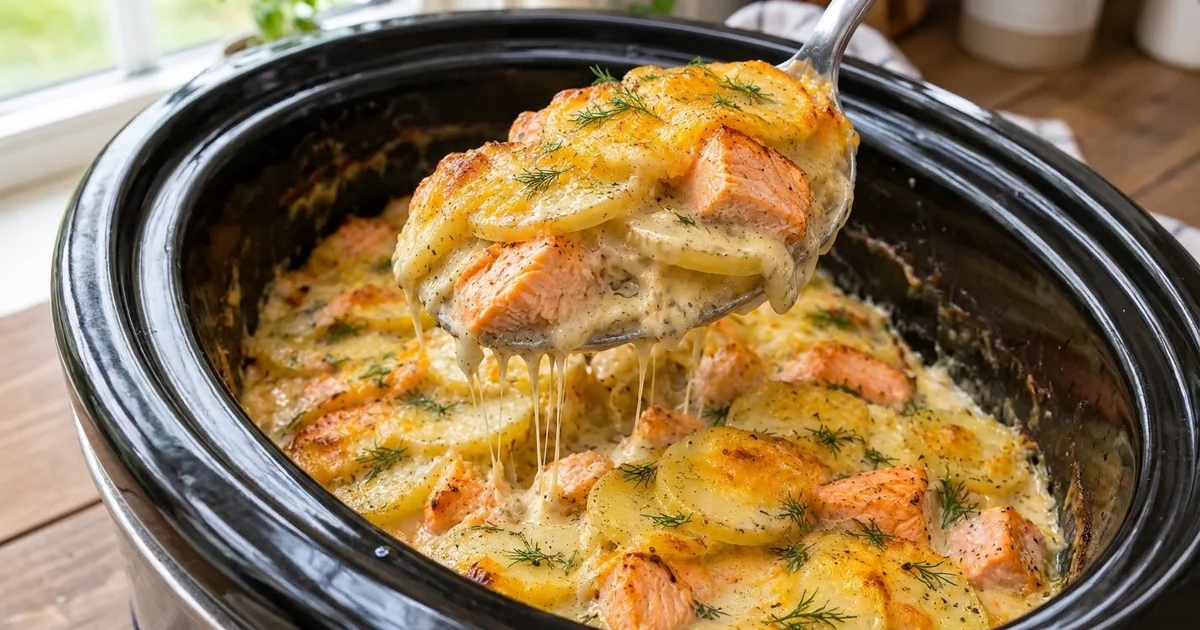
This dish combines two comfort foods in one pot. Tender rounds of potato cook slowly in a peppery cream sauce. Then chunks of salmon go in and the whole thing gets a thick layer of melted cheese. It’s cooked and served in the slow cooker, so it’s as easy to make as it is filling.
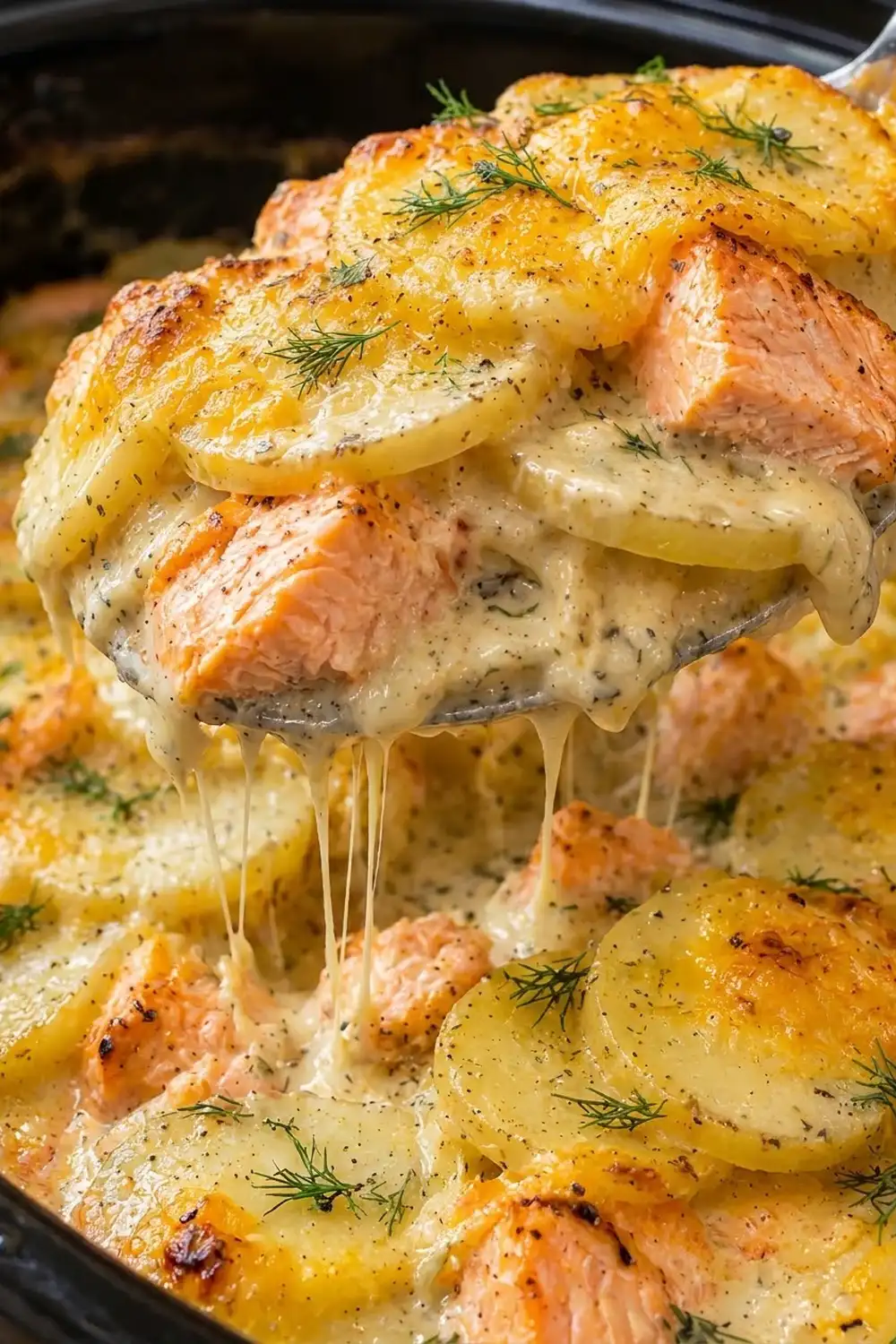
Lifting the lid, you smell warm butter, sharp cheddar and the clean scent of fresh dill. The potatoes are soft enough to cut with a spoon but still hold their shape. The salmon stays moist and flakes into large pink pieces. Each spoonful pulls long strings of cheese, and the sauce coats everything in a silky, savory layer.
Scalloped potatoes made in the oven need attention, and salmon can be hard to time. The slow cooker solves both problems. The potatoes cook gently for most of the time, and the salmon goes in near the end so it doesn’t dry out. Your hands-on work is about 25 minutes. After that you’re mostly waiting.
This is a good dish for a relaxed Sunday dinner, a casual get-together or a weekend meal-prep session. It’s naturally hearty and doesn’t need much on the side. It’s also an easy way to get people who say they don’t like fish to give salmon a try.
Why This Recipe Works
The sauce is cooked before it goes into the slow cooker. A quick butter-and-flour roux, whisked with milk and cream, gives you a stable sauce that won’t break or turn grainy over several hours. If you pour raw dairy over potatoes in a slow cooker, it often curdles. The flour also thickens the starchy liquid the potatoes release, so the result is creamy instead of watery.
The salmon goes in late. Salmon cooks much faster than potatoes. If you add it at the start, it turns chalky and stringy. Tucking 1½-inch chunks between the softened potato layers for the last 45 minutes cooks them gently in the hot sauce, so they come out moist and just opaque.
Two cheeses do two jobs. Sharp cheddar brings flavor and the golden-orange color on top. Mozzarella brings the stretch you see when the spoon pulls away. A paper towel under the lid catches condensation so the cheese melts smoothly and doesn’t get soggy.
Tips for Success
- Slice the potatoes evenly. Even thickness affects the final texture more than anything else. Use a mandoline with a guard if you have one.
- Check the potatoes early the first time. Slow cookers heat differently, so check at 2½ hours. Older cookers may need the full 3½ hours.
- Brown the cheese more if you like. If your insert is oven-safe, put it under the broiler for 2–3 minutes after cooking for deeper golden spots.
- Don’t overload the cooker. Keep it no more than two-thirds full so it heats evenly and doesn’t bubble over.
- Use fresh salmon or thawed frozen salmon. Thaw frozen fillets overnight in the fridge and pat them dry. Extra water will thin the sauce.
- Prep ahead. Slice the potatoes and keep them covered in cold water for up to 1 day. Drain and pat them very dry before layering, and keep the sauce refrigerated separately.
- Season the sauce with confidence. Potatoes absorb a lot of salt. Taste the sauce before layering. It should taste slightly over-seasoned at that point.
Variations
Smoked salmon version: Replace the fresh salmon with 8 oz (225 g) hot-smoked salmon, flaked, and add it with the cheese. It brings a deeper, smoky flavor. Cut the salt in the sauce to ½ teaspoon, because smoked fish is already salty.
Lemon-garlic: Stir 2 minced garlic cloves into the butter before adding the flour. Add 1 teaspoon lemon zest to the finished sauce. The garlic deepens the flavor and the lemon brightens the richness.
Spinach and salmon: Layer 3 cups (90 g) baby spinach between the potato layers. It wilts down to almost nothing and adds color and a mild earthy flavor without changing the cooking time.
Gruyère topping: Replace the mozzarella with Gruyère for a nuttier, more grown-up flavor. You’ll get a bit less stretch and a deeper golden crust.
FAQ
Can I put the salmon in at the beginning?
It’s not recommended. Salmon cooked for 3 or more hours turns dry, crumbly and strongly fishy. Adding it for the last 45 minutes keeps it moist and tender while the potatoes get the long cooking they need.
Why is my sauce watery?
Usually the potatoes were rinsed, or the slow cooker gathered condensation without a towel under the lid. Waxy potatoes give off less starch too. Letting the casserole rest uncovered for 10–15 minutes after cooking thickens the sauce noticeably.
Can I make this in the oven instead?
Yes. Layer everything in a greased 9×13-inch baking dish, cover it with foil and bake at 375°F (190°C) for 50 minutes. Then tuck in the salmon, add the cheese and bake uncovered for another 20–25 minutes, until golden and bubbling.
Do I need to peel the potatoes?
No. Scrubbed Yukon Gold skins are thin and soften completely. Peeling gives a smoother, more classic scalloped look, so it’s up to you.
Can I make this gluten-free?
Replace the all-purpose flour with 2 tablespoons cornstarch whisked into the cold milk before heating. The sauce will be a little glossier but just as creamy. Check that your cheeses are certified gluten-free.
Storage and Reheating
Let leftovers cool to room temperature, but for no more than 2 hours. Transfer them to an airtight container and refrigerate. They keep for up to 3 days. Seafood shouldn’t be kept longer than that, so plan to eat leftovers soon.
To reheat, portion servings into a microwave-safe dish, cover loosely and heat at 70% power for 2–3 minutes, stirring gently halfway through. To reheat in the oven, cover with foil and bake at 325°F (165°C) for 20–25 minutes. Add 1–2 tablespoons milk if the sauce has thickened too much.
Freezing isn’t ideal. Cream sauces can turn grainy, and potatoes become slightly mealy after thawing. If you do freeze it, wrap individual portions tightly for up to 1 month. Thaw overnight in the refrigerator before reheating gently in the oven.
Serving Suggestions
A crisp green salad with a simple lemon vinaigrette is the best partner here. The acidity balances the cream and cheese. Lightly steamed green beans or roasted asparagus add freshness and a bit of crunch.
For a heartier spread, serve it with crusty bread for scooping up the extra sauce. A quick cucumber salad with vinegar and a little fresh dill echoes the garnish and keeps the meal light.
Final Notes
This casserole is easy to make and comforting to eat. Cheesy, golden scalloped potatoes and tender salmon come together in one pot with very little effort. The key points are to slice the potatoes evenly, make a proper sauce and add the salmon at the very end. Once you’ve made it, you’ll know how your slow cooker behaves and can adjust the timing with confidence. Serve it straight from the pot with plenty of fresh dill. Enjoy!
Print
Slow Cooker Cheesy Salmon Scalloped Potatoes Recipe
- Total Time: 4 hours 10 minutes
- Yield: 6 1x
Description
Tender potato layers, juicy salmon and a golden, stretchy cheese topping all cook together in your slow cooker. It’s a comforting one-pot dinner that takes about 25 minutes of hands-on work.
Ingredients
- 2½ lb (1.1 kg) Yukon Gold potatoes, peeled or scrubbed, sliced ⅛ inch (3 mm) thick
- 1 tsp (6 g) kosher salt
- 4 tbsp (56 g) unsalted butter, plus 1 tsp for greasing
- ¼ cup (32 g) all-purpose flour
- 2 cups (480 ml) whole milk
- ½ cup (120 ml) heavy cream
- 1 tsp (6 g) kosher salt
- ¾ tsp (2 g) freshly ground black pepper
- 1 tsp (1 g) dried dill
- 1½ lb (680 g) skinless salmon fillet, cut into 1½-inch (4 cm) chunks
- ¼ tsp (1.5 g) kosher salt
- 1½ cups (170 g) shredded sharp cheddar cheese
- 1 cup (113 g) shredded low-moisture mozzarella
- 2 tbsp (6 g) fresh dill sprigs, for garnish
Instructions
- Slice and season the potatoes. Slice the potatoes into even ⅛-inch (3 mm) rounds and put them in a large bowl. Toss with 1 teaspoon salt. Grease the slow cooker insert with 1 teaspoon butter, covering the sides as well as the bottom, since the cheese will bake onto them. The slices should be thin enough to bend slightly but not paper-thin, or they’ll turn to mush. Don’t rinse them after slicing. The surface starch helps thicken the sauce. The most common mistake here is uneven slicing, which leaves some slices raw while others fall apart.
- Make the cream sauce. Melt 4 tablespoons butter in a saucepan over medium heat. Whisk in the flour and cook for 1 minute, until it bubbles and smells lightly toasty but hasn’t browned. Slowly pour in the milk while whisking, then the cream. Simmer for 3–4 minutes, whisking often, until the sauce coats the back of a spoon. Stir in the salt, pepper and dried dill. Don’t pour the cold milk in all at once, or lumps will form that are hard to whisk out.
- Layer the potatoes and sauce. Arrange one-third of the potato slices in overlapping rows, like shingles, across the bottom of the cooker. Spoon about one-third of the sauce over them. Repeat twice more, finishing with sauce so the top layer is covered. Press down gently so the slices settle into the liquid. Any potatoes left uncovered at the top may darken and stay firm, so make sure every slice is coated before you close the lid.
- Slow-cook the potatoes. Put a paper towel over the top of the insert and set the lid on it. Cook on HIGH for 3 hours, or on LOW for 5½–6 hours. The potatoes are ready when a paring knife slides through the center with only slight resistance and the sauce is bubbling around the edges. Don’t lift the lid to check before the 2½-hour mark. Each peek lets out heat and can add 15–20 minutes to the cooking time.
- Tuck in the salmon. Season the salmon chunks with ¼ teaspoon salt. Push them down between the potato slices, spacing them evenly so each serving gets several pieces. Partially bury each chunk in the sauce. This keeps the salmon moist and lets it cook evenly. Don’t stir. The potatoes are tender now and will break apart. Leave about ½ inch between the chunks so heat can reach all of them.
- Add the cheese and finish cooking. Mix the cheddar and mozzarella together and spread them evenly over the top, all the way to the edges. Replace the paper towel and lid, and cook on HIGH for 40–45 minutes more. It’s done when the cheese is fully melted, golden at the edges and bubbling, and the salmon flakes easily and looks opaque pink in the center (145°F/63°C). If you skip the towel, condensation will drip onto the cheese and leave watery spots.
- Garnish and serve. Turn off the slow cooker, take off the lid and let the casserole rest for 10 minutes. This gives the sauce time to thicken so portions hold together. Scatter fresh dill sprigs over the top. To serve, push a large metal spoon straight down to the bottom and lift out full layers of potato, salmon and stretchy cheese. If you serve it right away, the sauce will run and the layers will slide apart on the plate.
Notes
- Slice the potatoes evenly. Even thickness affects the final texture more than anything else. Use a mandoline with a guard if you have one.
- Check the potatoes early the first time. Slow cookers heat differently, so check at 2½ hours. Older cookers may need the full 3½ hours.
- Brown the cheese more if you like. If your insert is oven-safe, put it under the broiler for 2–3 minutes after cooking for deeper golden spots.
- Don’t overload the cooker. Keep it no more than two-thirds full so it heats evenly and doesn’t bubble over.
- Use fresh salmon or thawed frozen salmon. Thaw frozen fillets overnight in the fridge and pat them dry. Extra water will thin the sauce.
- Prep ahead. Slice the potatoes and keep them covered in cold water for up to 1 day. Drain and pat them very dry before layering, and keep the sauce refrigerated separately.
- Season the sauce with confidence. Potatoes absorb a lot of salt. Taste the sauce before layering. It should taste slightly over-seasoned at that point.
- Prep Time: 25 minutes
- Cook Time: 3 hours 45 minutes
- Category: Dinner