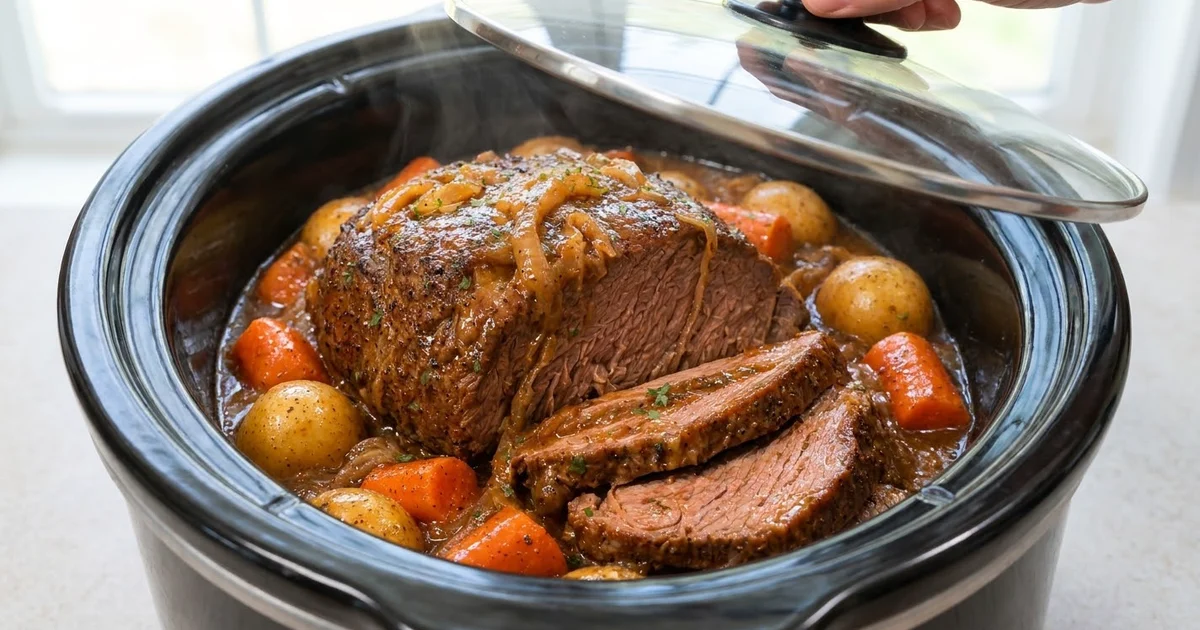
There’s a moment every pot roast cook knows well. You lift the slow cooker lid after hours of waiting, steam rolls out, and there it is: a deeply browned beef roast sitting in rich gravy, surrounded by tender potatoes and carrots. This is that recipe. It’s a classic, no-frills pot roast made in a slow cooker, and it’s comfort food at its most reliable.
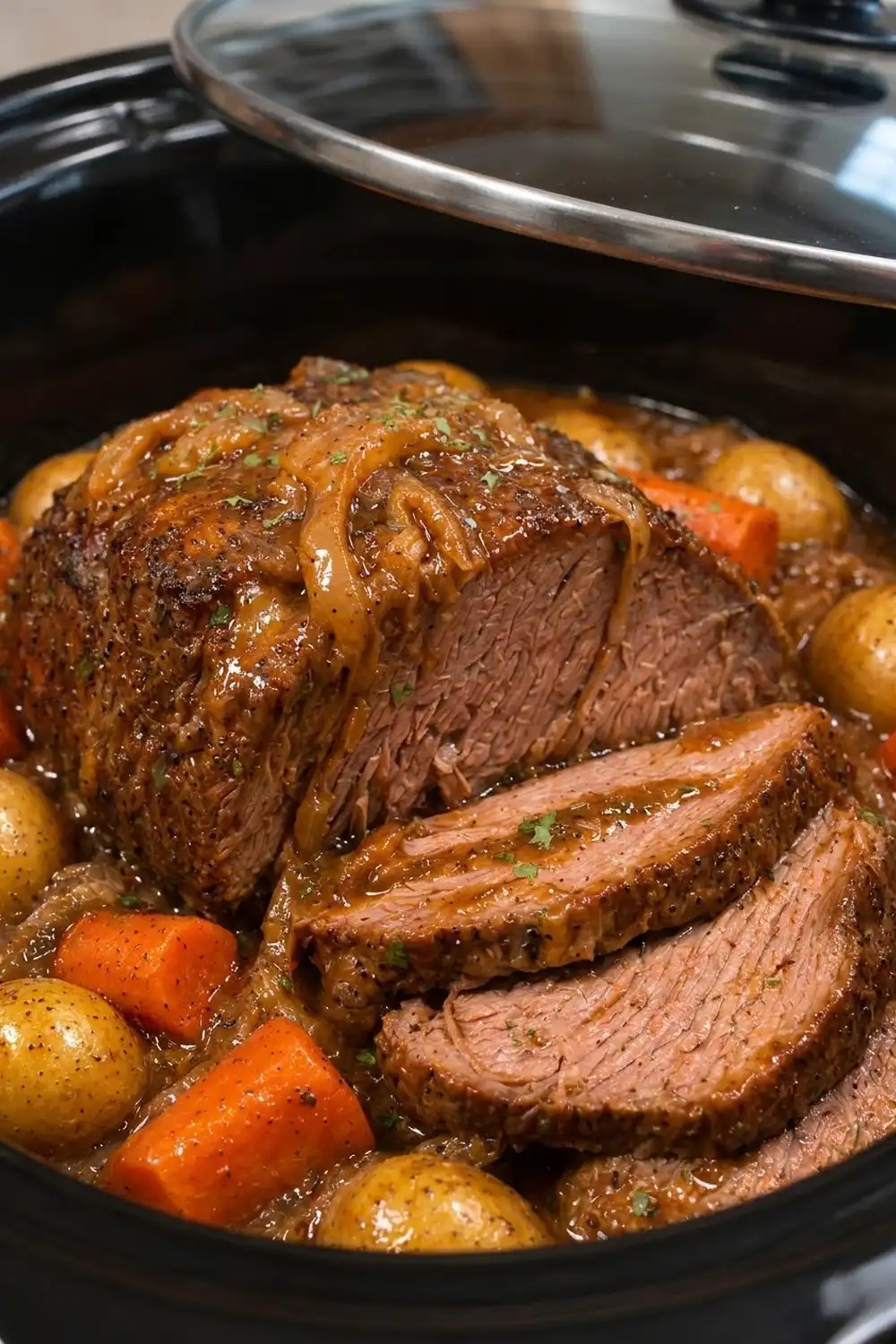
The flavor is savory and beefy, with sweetness from slow-cooked onions and carrots. The seared crust adds a toasty, peppery edge, while the meat inside turns so tender it slices like butter, or falls apart if you push it a little further. The gravy is silky and glossy, soaking into the baby potatoes until they taste like they were made for it. And the aroma that fills your kitchen all afternoon is half the reason to make it.
For home cooks, this is about as forgiving as dinner gets. Fifteen or twenty minutes of active work in the morning, then the slow cooker does everything else. Chuck roast is affordable, and the long cook turns a tough, budget cut into something that tastes like a special occasion.
It works for busy weeknights when you want dinner waiting at the door, for Sunday family meals, and for meal prep, since leftovers make great sandwiches and bowls. It’s naturally dairy-free, and it’s easy to make gluten-free with one small swap.
Why This Recipe Works
The biggest difference between a flat, gray pot roast and a great one is searing. Browning the roast in a hot skillet before it goes into the slow cooker builds a dark, flavorful crust through the Maillard reaction. A slow cooker never gets hot enough to do this on its own, so those 10 minutes at the stove pay off in deeper flavor in both the meat and the gravy.
Chuck roast is the right cut for the job. It’s full of connective tissue and marbling, which would be chewy if cooked quickly. Over 8 low hours, that collagen melts into gelatin, keeping the meat moist and giving the cooking liquid a naturally rich, glossy body. Leaner cuts like round roast tend to dry out and turn stringy here.
Finally, cooking the onions in the same skillet after searing, then dusting them with flour and deglazing with broth, does two jobs at once. It lifts all the browned bits from the pan into the gravy, and the flour thickens the liquid as it cooks, so you end up with real gravy, not thin broth, without any extra steps at the end.
Tips for Success
- Don’t trim all the fat. Remove only thick, hard pieces on the outside; the internal marbling is what keeps the roast juicy.
- Choose LOW when you can. HIGH works, but the 8-hour LOW setting gives noticeably more tender, evenly cooked meat.
- Prep the night before. Season the roast and chop the vegetables, then refrigerate them separately overnight. In the morning, just sear, deglaze, and start cooking.
- Thicken more if you like. For a thicker gravy, whisk 1 tbsp cornstarch with 2 tbsp cold water, stir it into the liquid, and cook uncovered on HIGH for 15 minutes.
- Skim the fat. Before serving, tilt the cooker slightly and spoon off any pooled fat from the surface for a cleaner-tasting gravy.
- Taste at the end. Season the gravy with an extra ¼–½ tsp salt only after cooking, since the liquid concentrates over time.
- No skillet? Use your cooker. Many multicookers have a sear or sauté function that works well for browning the roast and onions in the same insert.
Variations
Red wine pot roast: Replace 1 cup (240 ml) of the beef broth with a dry red wine like Cabernet or Merlot. Add it to the skillet first and let it bubble for 2 minutes before adding the broth. It gives the gravy a deeper color and a slightly tangy richness.
Root vegetable medley: Swap half the potatoes for 2 parsnips and 1 small turnip, cut into 2-inch chunks. They add an earthy, gently sweet flavor and turn tender in the same cooking time.
Mushroom and onion: Add 8 oz (225 g) of quartered cremini mushrooms to the skillet with the onions. They release moisture and soak up the gravy, adding a meaty, savory depth that pairs beautifully with the beef.
Herb-forward: Tuck 3 fresh rosemary sprigs and 4 fresh thyme sprigs around the roast in place of the dried thyme, and finish with fresh chopped parsley instead of dried. Remove the woody stems before serving.
FAQ
Do I really have to sear the roast?
You can skip it and still get tender meat, but you’ll lose a lot of flavor and color. The searing step creates the browned crust and pan drippings that make the gravy rich. If you’re short on time, it’s the one step worth keeping.
Can I put a frozen roast in the slow cooker?
It’s not recommended. A frozen roast spends too long in the temperature range where bacteria grow, and it won’t sear properly either. Thaw it in the refrigerator for 24–48 hours first.
Why is my pot roast tough?
Almost always, it needs more time. Chuck roast goes through a firm stage before the collagen fully breaks down and turns tender. Give it another 30–60 minutes on LOW and test again with a fork.
Can I use a different cut of beef?
Brisket flat and bottom round both work, but chuck is the most forgiving and the juiciest. Round roast is leaner, so check it an hour early and slice it thinly against the grain to keep it tender.
Will the vegetables get mushy after 8 hours?
Not if you keep them large. Whole baby potatoes and 2-inch carrot chunks hold their shape over a long cook. Small dice or thin slices are what turn soft and fall apart.
Storage and Reheating
Let leftovers cool for no more than 2 hours, then store the meat, vegetables, and gravy together in airtight containers. Keeping the beef submerged in the gravy stops it from drying out. Refrigerated, it keeps well for 3–4 days.
To reheat, warm portions in a covered saucepan over medium-low heat for 8–10 minutes, stirring gently, until heated through. In the microwave, cover the dish and heat in 1-minute bursts at 70 percent power. Add a splash of broth if the gravy has thickened too much in the fridge.
Pot roast freezes well for up to 3 months, though potatoes can turn slightly grainy after thawing. For best results, freeze the meat, carrots, and gravy together and make fresh potatoes later. Thaw overnight in the refrigerator before reheating.
Serving Suggestions
Pot roast is a full meal on its own, but a few sides make it even better. A slice of crusty bread or a warm dinner roll is a must for mopping up the gravy. A crisp green salad with a light vinaigrette cuts through the richness and adds freshness to the plate.
Steamed green beans or roasted broccoli bring color and a little crunch that balances the soft, slow-cooked vegetables. If you’re feeding big appetites, spoon the beef and gravy over creamy mashed potatoes or buttered egg noodles to stretch the meal further.
Final Notes
This slow cooker pot roast is one of those recipes that earns a permanent spot in your rotation. It asks for very little: a good sear, a quick pan gravy, and patience. In return, you get fork-tender beef, flavorful vegetables, and a kitchen that smells wonderful all day. Make it on a cold weekend, a busy weeknight, or any time you want dinner to feel like a warm hug. And when you lift that lid at the end, take a second to enjoy the moment before everyone crowds in with their plates.
Print
Slow Cooker Pot Roast with Potatoes and Carrots Recipe
- Total Time: 8 hours 25 minutes
- Yield: 6 1x
Description
Fork-tender seared chuck roast slow-cooked with baby potatoes, carrots, and a rich onion gravy. Fifteen minutes of prep, then the slow cooker does the rest.
Ingredients
- 1 boneless beef chuck roast, about 3 lb (1.36 kg)
- 2 tsp kosher salt (about 12 g)
- 1½ tsp freshly ground black pepper
- 1 tsp garlic powder
- 2 tbsp vegetable or canola oil (30 ml)
- 1½ lb baby gold potatoes (680 g), left whole, about 16–18 potatoes
- 4 medium carrots (about 1 lb / 450 g), peeled and cut into 2-inch chunks
- 2 medium yellow onions (about 400 g total), halved and thinly sliced
- 3 tbsp all-purpose flour (24 g)
- 2 cups low-sodium beef broth (480 ml)
- 1 tbsp Worcestershire sauce (15 ml)
- 2 cloves garlic, minced (about 2 tsp)
- 1 tsp dried thyme
- 1 tbsp dried parsley, for garnish
Instructions
- Season the roast. Pat the chuck roast completely dry with paper towels on all sides. Mix the salt, pepper, and garlic powder in a small bowl, then rub it evenly over every surface, pressing it in so it sticks. Let the roast sit while you prep the vegetables, about 10–15 minutes, to take the chill off. The surface should look evenly coated with visible flecks of pepper. The most common mistake here is skipping the drying step; a wet roast steams in the pan instead of browning, and the seasoning slides right off.
- Sear the roast. Heat the oil in a large skillet over medium-high heat until it shimmers, about 2 minutes. Lay the roast in the pan away from you and leave it alone for 4–5 minutes, until a deep brown crust forms and it releases easily. Turn and sear the other side and the edges, about 10–12 minutes total. You should hear a steady, loud sizzle the entire time. Don’t flip too early; if the meat sticks, it isn’t ready. Transfer the browned roast to a plate.
- Arrange the vegetables. While the roast rests, scatter the whole baby potatoes and carrot chunks across the bottom and around the edges of the slow cooker insert. Leave an open space in the center for the roast. The vegetables act as a rack that lifts the meat slightly and lets them sit in the cooking liquid, so they absorb flavor. Avoid piling them all on top of the meat; they need to sit in the liquid to cook through evenly, otherwise you’ll get firm, underdone potatoes.
- Cook the onions and build the gravy. Reduce the skillet heat to medium. Add the sliced onions to the drippings and cook, stirring, for 5–6 minutes, until soft and golden at the edges. Stir in the garlic and thyme for 30 seconds until fragrant. Sprinkle the flour over the onions and stir for 1 minute. Pour in the broth and Worcestershire, scraping the pan bottom firmly. The liquid will turn a rich brown and thicken slightly within 2 minutes. Don’t leave browned bits stuck behind; they’re the best part of the gravy.
- Assemble and slow cook. Nestle the seared roast into the center of the slow cooker, then pour the onion gravy over the top so the onions drape across the meat and the liquid runs down around the vegetables. Cover with the lid and cook on LOW for 8 hours or HIGH for 5 hours. Resist lifting the lid during cooking; each peek lets out heat and steam and can add 15–20 minutes to the cook time. The liquid will come about halfway up the vegetables, which is exactly right.
- Check for doneness. Once the time is up, lift the lid. The roast should look dark and glossy, the onions soft and translucent, and the gravy bubbling gently. Insert a fork into the thickest part and twist it slightly. It should slide in with almost no resistance, and the meat should begin pulling apart. Pierce a potato and a carrot too; both should be tender all the way through. If the roast still feels tough, cover and cook another 30–60 minutes. Tough chuck usually means undercooked, not overcooked.
- Slice and serve. Carefully lift the roast onto a cutting board and let it rest for 10 minutes. Slice it against the grain into ½-inch (1.25 cm) slices, then return the slices to the slow cooker, fanning them in next to the remaining roast so they soak in the gravy. Sprinkle the dried parsley over everything. The slices should look moist with a pink-brown interior and a dark edge. Cutting with the grain is the classic mistake here; it leaves long, chewy fibers even on perfectly cooked meat.
Notes
- Don’t trim all the fat. Remove only thick, hard pieces on the outside; the internal marbling is what keeps the roast juicy.
- Choose LOW when you can. HIGH works, but the 8-hour LOW setting gives noticeably more tender, evenly cooked meat.
- Prep the night before. Season the roast and chop the vegetables, then refrigerate them separately overnight. In the morning, just sear, deglaze, and start cooking.
- Thicken more if you like. For a thicker gravy, whisk 1 tbsp cornstarch with 2 tbsp cold water, stir it into the liquid, and cook uncovered on HIGH for 15 minutes.
- Skim the fat. Before serving, tilt the cooker slightly and spoon off any pooled fat from the surface for a cleaner-tasting gravy.
- Taste at the end. Season the gravy with an extra ¼–½ tsp salt only after cooking, since the liquid concentrates over time.
- No skillet? Use your cooker. Many multicookers have a sear or sauté function that works well for browning the roast and onions in the same insert.
- Prep Time: 25 minutes
- Cook Time: 8 hours on LOW (or 5 hours on HIGH)
- Category: Dinner