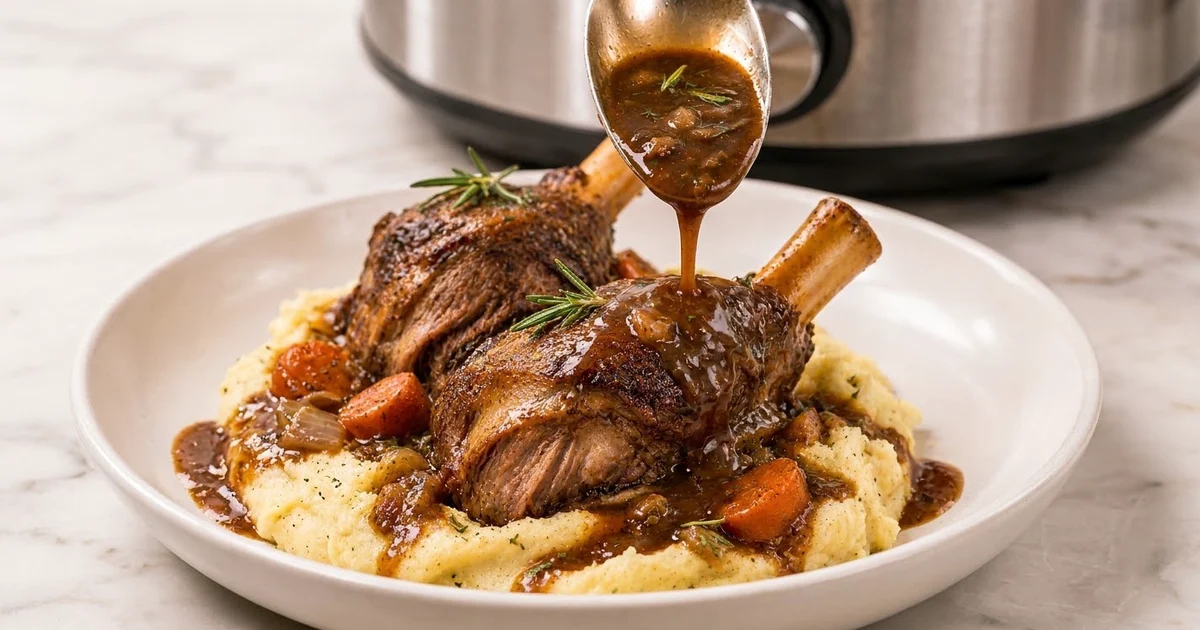
Slow cooker lamb shanks are a cozy, special-occasion meal that mostly cooks itself. Bone-in shanks are seared until deeply browned, then braised for hours with onions, carrots, garlic, rosemary and broth. By the end, the meat is so tender it slides off the bone. The braising liquid becomes a rich, glossy gravy that you spoon over everything.
The first thing you’ll notice is the smell: savory lamb, sweet onion and woodsy rosemary filling the kitchen all afternoon. The meat is silky and juicy, and the browned outside adds a little caramelized depth. Served over buttery mashed potatoes, the gravy pools into every swirl. It’s comfort food with a little elegance.
For home cooks, this recipe is forgiving. Shanks are a tough, inexpensive cut that needs long, gentle cooking, so the slow cooker is the perfect tool for it. You do about 30 minutes of active work in the morning, and the machine handles the rest. You can’t really overcook them on low, and that takes the stress out of a dinner party.
This is a great Sunday supper, a holiday main for a small group, or a make-ahead meal for busy weeks. It’s naturally dairy-free until the mashed potatoes, and it’s easy to make gluten-free with a cornstarch-thickened gravy.
Why This Recipe Works
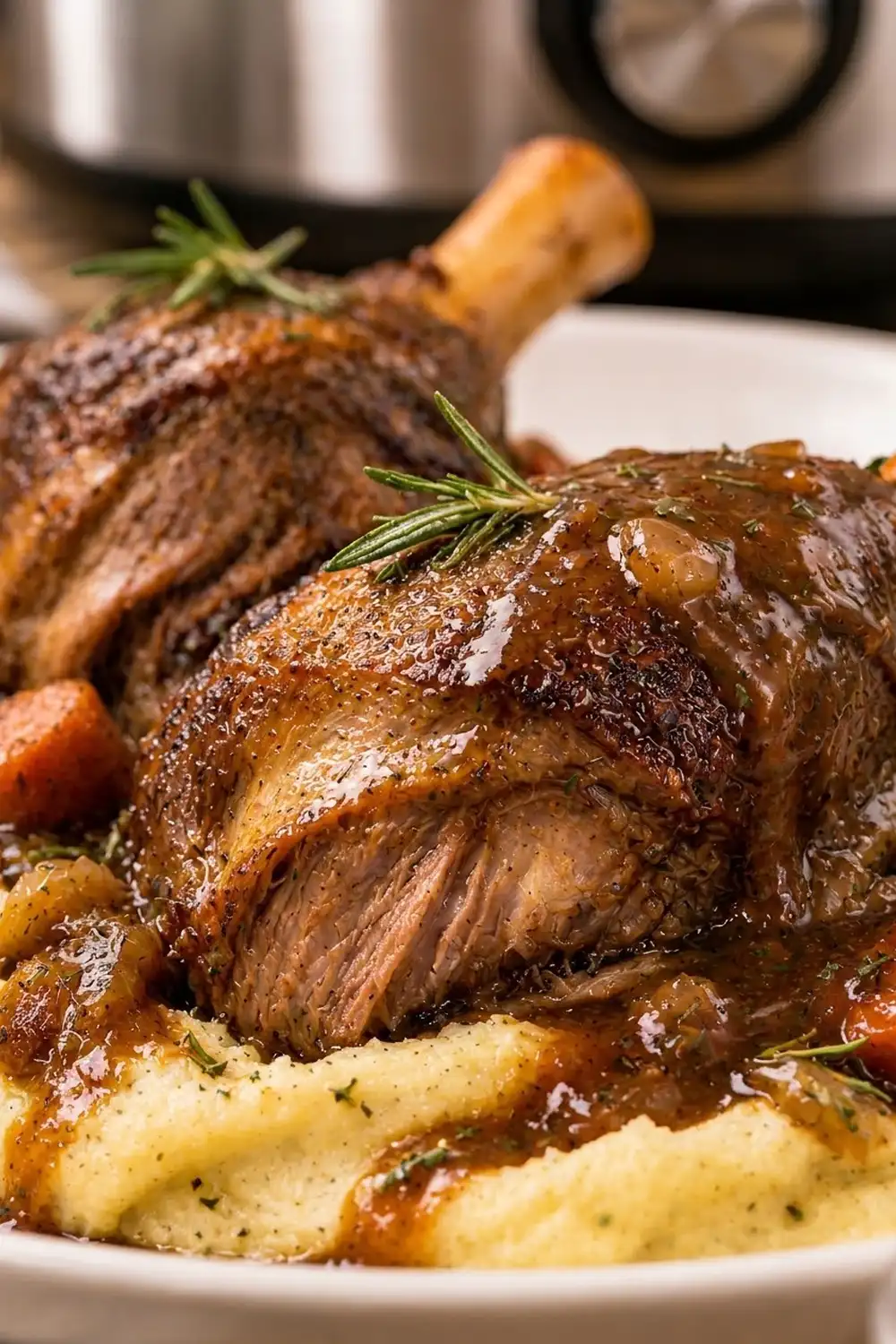
Searing first builds flavor. The slow cooker can’t brown meat on its own. A hard sear in a hot skillet triggers the Maillard reaction, which creates the dark, savory crust you can see on the finished shanks. Those browned bits left in the pan get scraped up with broth and go straight into the cooker, so none of that flavor is lost.
Low, slow, moist heat breaks down collagen. Lamb shanks are full of connective tissue. After hours at a gentle simmer, that tissue melts into gelatin. This makes the meat tender and gives the gravy its body and shine. Cooking on low for 8 hours gives the most tender result. High heat works, but the meat can end up a little stringier.
Finishing the gravy separately makes it glossy. Slow cookers trap moisture, so the braising liquid comes out thin. Skimming off the fat, reducing the liquid in a saucepan and thickening it with a cornstarch slurry turns it into a spoon-coating gravy without any floury taste.
Tips for Success
- Trim the silverskin. Remove any thick, shiny membrane from the shanks before seasoning. It tightens during cooking and can curl the meat.
- Sear in batches without rushing. Even, deep browning gives you better flavor than a quick, patchy sear.
- Don’t skip skimming. Lamb releases a lot of fat, and gravy that isn’t skimmed tastes greasy. If you have time, chill the liquid briefly so the fat firms up and lifts off easily.
- Make it ahead. Braise the shanks a day early and refrigerate them in their liquid. The fat solidifies on top for easy removal, and the flavor improves overnight.
- Warm the milk for the mash. Cold milk cools the potatoes and keeps the butter from blending in smoothly.
- Check doneness with a fork, not a clock. Slow cookers vary a lot, so the meat should be pulling away from the bone before you call it done.
- No slow cooker? Braise covered in a Dutch oven at 325°F (165°C) for 2½–3 hours.
Variations
Red wine braise: Swap 1 cup (240 ml) of the broth for a dry red wine like Cabernet or Merlot, and simmer it in the skillet for 2 minutes when you deglaze. The wine adds a deeper color and a gentle, fruity acidity.
Tomato-rich gravy: Stir 2 tbsp tomato paste into the onions before adding the garlic and let it darken for a minute. The gravy gets a richer, slightly sweet tomato depth and a more reddish-brown color.
Root vegetable mash: Replace half the potatoes with parsnips or celery root and boil them together. You’ll get a lighter mash with an earthy sweetness that’s lovely with lamb.
Herb swap: Use fresh thyme sprigs instead of rosemary, or a few bay leaves along with it. Thyme is softer and more savory, while bay adds a subtle background note.
FAQ
Can I put the lamb shanks in raw without searing?
Technically yes, and they’ll still get tender. But you’ll lose most of the deep, roasted flavor and the brown color in both the meat and the gravy. Searing takes just 25 minutes and is the step most worth keeping.
How do I know when lamb shanks are done?
They’re done when the meat has shrunk back to expose more bone and pulls apart easily with a fork. The internal temperature is usually well above 190°F (88°C), which is the range where collagen fully breaks down. If the meat resists or feels springy, it simply needs more time.
Why is my gravy thin?
Slow cookers don’t let liquid evaporate, so the braising liquid always comes out thin. That’s why reducing it on the stove and adding cornstarch matters. If it’s still loose, mix another 1 tsp cornstarch with 1 tbsp cold water and simmer it in.
Can I use a smaller slow cooker?
A 4-quart cooker can fit 2–3 shanks standing upright. For 4 shanks, you really need 6 quarts so they cook evenly in the liquid. If the shanks are tightly packed, rotate them once halfway through cooking.
Is lamb shank gamey?
Shanks have a fuller flavor than lamb chops, but the long braise with onions, garlic and rosemary mellows it a lot. Trimming excess fat and skimming the gravy well also keeps the flavor clean and savory.
Storage and Reheating
Let any leftovers cool, then store the shanks and gravy together in an airtight container in the fridge for up to 4 days. Keeping the meat covered in gravy stops it from drying out. Store the mashed potatoes separately for up to 4 days.
To reheat, warm the shanks and gravy in a covered saucepan over medium-low heat for 15–20 minutes, turning the meat once, until it’s hot all the way through. You can also bake them covered at 325°F (165°C) for about 25 minutes. Reheat the mashed potatoes on the stove with 2–3 tbsp milk, stirring often.
The braised shanks freeze very well in their gravy for up to 3 months. Thaw them overnight in the fridge, then reheat as above. Mashed potatoes can be frozen too, though their texture gets slightly grainier. Beat in a little extra butter after reheating to smooth them out.
Serving Suggestions
Creamy mashed potatoes are the classic base because they soak up every drop of gravy. To add some freshness, serve simple steamed green beans or sautéed spinach with a squeeze of lemon. The bright greens cut through the richness of the lamb.
Crusty bread is great for mopping up the plate, and a crisp green salad with a sharp vinaigrette balances the heavy, savory braise. Roasted Brussels sprouts are another good choice, since their caramelized edges echo the seared crust on the shanks.
Final Notes
Slow cooker lamb shanks look impressive, but they’re mostly patience: a good sear, a scraped-up pan and a long, quiet braise. The reward is tender meat falling off the bone, sweet braised carrots and a glossy rosemary gravy over a pillow of buttery mashed potatoes. Make it for a chilly weekend, a holiday dinner or anyone you want to spoil a little. Once you’ve made it, it will likely become a go-to whenever you want something truly comforting.
Print
Slow Cooker Lamb Shanks with Gravy Recipe
- Total Time: about 8 hours 30 minutes
- Yield: 4 (1 shank each) 1x
Description
Seared, then braised low and slow with carrots, onions and rosemary, these lamb shanks turn meltingly tender. Serve them in a glossy gravy over buttery mashed potatoes.
Ingredients
- 4 bone-in lamb shanks (about 1 lb / 450 g each, 4 lb / 1.8 kg total)
- 1½ tsp kosher salt (9 g)
- 1 tsp black pepper (2 g)
- 3 tbsp all-purpose flour (24 g), for dredging
- 2 tbsp olive oil (30 ml)
- 2 medium yellow onions (about 300 g), cut into 1-inch chunks
- 3 medium carrots (about 250 g), sliced into ¾-inch coins
- 5 garlic cloves, smashed
- 2 cups low-sodium beef broth (480 ml)
- 1 tbsp Worcestershire sauce (15 ml)
- 3 sprigs fresh rosemary, plus extra for garnish
- 2 tbsp cornstarch (16 g) mixed with 3 tbsp cold water (45 ml)
- ½ tsp salt (3 g), or to taste
- 2 lb Yukon Gold potatoes (900 g), peeled and cut into 2-inch chunks
- 4 tbsp unsalted butter (56 g)
- ¾ cup whole milk (180 ml), warmed
- 1 tsp kosher salt (6 g), plus more for the cooking water
- ¼ tsp black pepper (0.5 g)
Instructions
- Season and dredge the shanks. Pat the shanks very dry with paper towels. Then season them all over with 1½ tsp salt and 1 tsp pepper. Roll each one lightly in the 3 tbsp flour and shake off the excess so only a thin, dusty coat is left. Done right, the surface looks matte and evenly coated, with no wet patches or clumps. A common mistake is skipping the drying step. Surface moisture turns to steam in the pan, and the meat goes gray instead of brown.
- Sear the shanks until deeply browned. Heat the 2 tbsp olive oil in the skillet over medium-high heat until it shimmers. Add two shanks at a time and sear for 3–4 minutes per side, turning with tongs until they’re browned all over (about 12 minutes per batch). You should hear a steady, lively sizzle and see a mahogany crust like the one in the photo. Don’t crowd the pan. Four shanks at once drop the temperature, and the meat steams instead of searing. Move the browned shanks to the slow cooker.
- Soften the onions and deglaze. Lower the heat to medium and add the onions to the same skillet. Cook for 4–5 minutes, until they’re lightly golden at the edges. Add the garlic and cook for 30 seconds, until it smells fragrant. Pour in the broth and Worcestershire, then scrape up every browned bit stuck to the pan. The liquid should turn a rich amber color. Don’t leave that fond behind: it’s the backbone of the gravy’s flavor, and skipping this step makes the sauce taste flat.
- Load the slow cooker. Scatter the carrot coins around the shanks and tuck in the rosemary sprigs. Pour the onion and broth mixture over everything. The liquid should come about halfway up the meat, not cover it. Leaving the tops exposed helps the browned crust survive the braise. Don’t add extra water to “be safe.” The shanks and vegetables release a lot of their own juice, and too much liquid makes the gravy watery.
- Braise low and slow. Cover and cook on low for 8 hours or on high for 5 hours, until the meat is pulling back from the bone and a fork twists in with almost no resistance. The kitchen will smell deeply savory and herbal. Try not to lift the lid during the first several hours. Each peek lets out heat and can add 15–20 minutes to the cooking time. If the meat still feels firm when you test it, give it another 30–60 minutes.
- Make the mashed potatoes. About 40 minutes before serving, put the potatoes in a large pot, cover them with cold water by 1 inch and add 1 tbsp salt. Bring to a boil, then simmer for 15–18 minutes, until a knife slides through with no resistance. Drain well, return them to the hot pot for 1 minute to steam dry, then mash with the butter, warm milk, 1 tsp salt and the pepper. Mash by hand. A blender or food processor overworks the starch and makes the potatoes gluey.
- Finish the gravy. Carefully lift the shanks and carrots onto a plate and tent them with foil. Discard the rosemary stems. Pour the cooking liquid and onions into the saucepan and skim off the fat that rises to the top with a large spoon. Bring it to a simmer and reduce for 5 minutes. Then whisk in the cornstarch slurry and simmer for 1–2 minutes, until the gravy turns glossy and coats the back of a spoon. Taste and add up to ½ tsp salt. If you pour the slurry into liquid that isn’t simmering, it won’t thicken properly.
- Plate and spoon over the gravy. Spread a generous bed of mashed potatoes in each shallow bowl. Set a shank on top with the bone angled up, then arrange the carrots around it. Spoon the hot gravy and onions over the meat so it runs down into the potatoes, just like in the photo. Garnish with a small sprig of fresh rosemary. Serve right away while everything is steaming. The gravy thickens on the plate as it cools.
Notes
- Trim the silverskin. Remove any thick, shiny membrane from the shanks before seasoning. It tightens during cooking and can curl the meat.
- Sear in batches without rushing. Even, deep browning gives you better flavor than a quick, patchy sear.
- Don’t skip skimming. Lamb releases a lot of fat, and gravy that isn’t skimmed tastes greasy. If you have time, chill the liquid briefly so the fat firms up and lifts off easily.
- Make it ahead. Braise the shanks a day early and refrigerate them in their liquid. The fat solidifies on top for easy removal, and the flavor improves overnight.
- Warm the milk for the mash. Cold milk cools the potatoes and keeps the butter from blending in smoothly.
- Check doneness with a fork, not a clock. Slow cookers vary a lot, so the meat should be pulling away from the bone before you call it done.
- No slow cooker? Braise covered in a Dutch oven at 325°F (165°C) for 2½–3 hours.
- Prep Time: 30 minutes
- Cook Time: 8 hours (low) or 5 hours (high)
- Category: Dinner