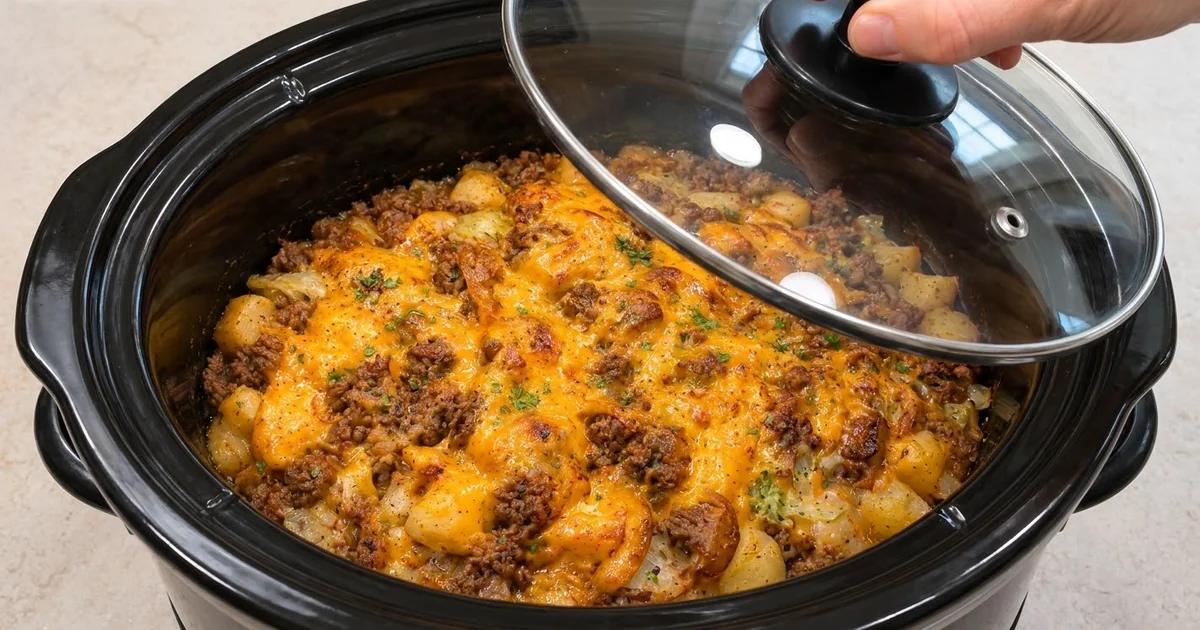
This slow cooker ground beef, cabbage and potato casserole is simple comfort food. Browned ground beef, tender cubes of potato and soft cabbage cook together until everything is tender and full of flavor. Then a thick layer of sharp cheddar melts over the top. It’s a one-pot meal you can scoop straight from the crock.
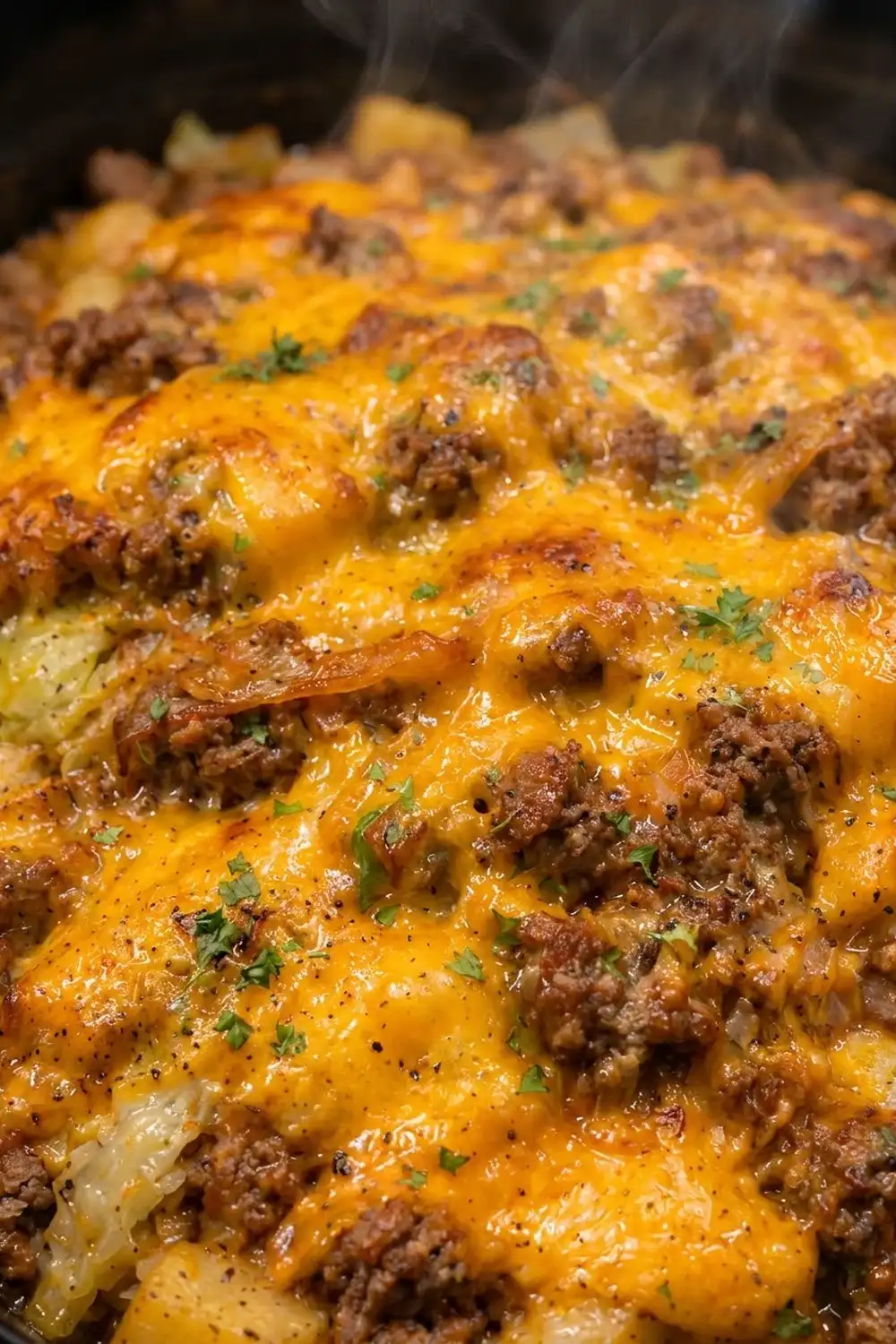
When you lift the lid, you’ll smell savory beef, sweet cooked cabbage and melted cheese. The potatoes turn creamy inside but keep their shape. The cabbage goes silky and slightly sweet. The beef soaks up the broth, and the cheese adds a rich, slightly tangy finish. Fresh parsley and black pepper on top add a little brightness.
This is a good recipe for busy home cooks. You only need about 20 minutes of hands-on work: brown the beef, chop the vegetables and layer everything in. The slow cooker does the rest. The ingredients are cheap and easy to find, and cabbage and potatoes stretch a pound and a half of beef into six filling servings.
It works well on weeknights, because you can start it in the morning and come home to dinner. It’s also good for meal prep, since it reheats nicely. It’s naturally gluten-free as long as your broth is certified gluten-free, so it suits mixed crowds and potlucks.
Why This Recipe Works
Browning the beef first makes a big difference. Raw ground beef in a slow cooker turns out gray and steamed, and it releases grease into the pot. When you sear it in a skillet first, you get browned, crusty bits with deep savory flavor, and you can drain off the extra fat before it ever reaches the potatoes. That one step is the difference between a bland casserole and a rich one.
Layering in the right order helps everything cook evenly. Potatoes take the longest, so they go on the bottom, where they sit in the broth and get the most heat. The cabbage goes in the middle and wilts down as it steams, and the beef goes on top so its juices drip down through the vegetables. With only one cup of broth, the vegetables steam instead of boil, so the dish stays thick and spoonable rather than soupy.
Adding the cheese at the end keeps it creamy. If the cheddar cooked for six hours, it would turn greasy and rubbery. Scattered over the hot casserole in the last 10 minutes and covered with the lid, it melts into a smooth, glossy layer with a few browned edges from the hot sides of the crock.
Tips for Success
- Cut the cabbage big enough. Pieces smaller than 1 inch turn to mush over six hours, so keep them chunky.
- Use a towel under the lid if it gets watery. If your slow cooker builds up a lot of condensation, lay a clean kitchen towel under the lid for the last hour to catch the drips.
- Don’t overfill. Keep the crock no more than two-thirds full so it heats evenly. Use a 6-quart cooker if you double any ingredient.
- Prep ahead. You can brown the beef and chop the vegetables the night before. Refrigerate them separately and layer everything in the morning. Add 30 minutes to the LOW cooking time since the ingredients start cold.
- Taste before adding the cheese. Cheddar is salty, so check the seasoning first and add up to ¼ tsp more salt only if it’s needed.
- Brown the top under the broiler. If your crock insert is oven-safe, broil it for 2 to 3 minutes to get more browned spots on the cheese.
- Swap the slow cooker for the oven. Layer everything in a covered 9×13-inch baking dish and bake at 350°F (175°C) for 75 minutes. Uncover, add the cheese and bake for 10 minutes more.
Variations
Smoky bacon version: Cook 6 slices of chopped bacon before the beef and brown the beef in a little of the bacon fat. Sprinkle the crispy bacon over the cheese at the end. It adds a smoky, salty crunch that works well with the cabbage.
Sausage swap: Replace half the beef with 12 oz (340 g) of mild Italian or smoked sausage. The sausage brings its own seasoning, so cut the salt in the beef step to ½ tsp.
Creamy version: Stir 4 oz (113 g) of softened cream cheese into the casserole before adding the cheddar. It makes the sauce silky and rich, a bit like a cheesy potato bake.
Spicy version: Use pepper jack instead of cheddar and add ½ tsp red pepper flakes with the onions. The heat balances the sweetness of the cabbage without overpowering it.
FAQ
Can I put raw ground beef straight into the slow cooker?
Technically yes, but it isn’t recommended. Raw beef cooks into gray clumps, releases a lot of fat, and never develops the browned flavor that makes this dish good. The 10 minutes it takes to brown it is the most important part of the recipe.
Why is my casserole watery?
Cabbage releases a lot of moisture as it cooks, so extra liquid usually means too much broth or a lot of condensation. Next time, use only the 1 cup of broth, or try the towel trick from the tips. To fix a batch that’s already watery, cook it uncovered on HIGH for 20 to 30 minutes before adding the cheese.
Do I need to peel the potatoes?
No. Yukon Gold skins are thin and soften completely, and they add a bit of color and texture. Just scrub them well. If you use russets, you may want to peel them, since their skins are thicker.
Can I use bagged coleslaw mix instead of fresh cabbage?
Yes. A 14-oz (400 g) bag works, but the shreds are finer and will get softer. Add it on top of the potatoes as written, and expect the cabbage to almost melt into the dish. Some coleslaw mixes include carrot, which adds a little sweetness and color.
Can I make this low-carb?
Leave out the potatoes and add another 1 lb (450 g) of cabbage or cauliflower florets. Cut the cooking time to about 4½ hours on LOW so the vegetables don’t fall apart.
Storage and Reheating
Let leftovers cool for no more than 2 hours, then move them to airtight containers. The casserole keeps in the refrigerator for up to 4 days, and the flavors actually get better on the second day.
To reheat, microwave single portions covered for 2 to 3 minutes, stirring halfway through. For larger amounts, warm the casserole in a covered dish at 350°F (175°C) for 20 to 25 minutes, until it’s hot in the center. You can add a fresh sprinkle of cheddar for the last 5 minutes.
It freezes reasonably well for up to 3 months, although the potatoes get a little softer after thawing. Freeze it in portions in freezer-safe containers, thaw overnight in the refrigerator, and reheat as above. Avoid thawing it on the counter.
Serving Suggestions
Serve this casserole with warm crusty bread or buttered dinner rolls for soaking up the savory juices. A crisp green salad with a sharp vinaigrette is a nice contrast to the rich cheese. If you want more vegetables, roasted green beans or steamed broccoli add color and a fresh crunch.
A spoonful of sour cream on top adds a cool, tangy contrast to the hot, cheesy casserole. Dill pickles on the side also help cut through the richness.
Final Notes
This casserole proves that a handful of everyday ingredients can make a satisfying dinner. Brown the beef well, layer the vegetables in order and wait until the end to add the cheese. Those three things give you tender potatoes, sweet cabbage and a glossy layer of melted cheddar. Once you’ve made it the basic way, try one of the variations, or keep it plain for an easy family dinner.
Print
Slow Cooker Ground Beef, Cabbage and Potato Casserole Recipe
- Total Time: about 6 hours 30 minutes
- Yield: 6 1x
Description
Browned ground beef, tender potatoes and soft cabbage cook low and slow, then get a thick layer of melted cheddar. An easy, filling one-pot dinner.
Ingredients
- 1½ lb (680 g) ground beef, 85% lean
- 1 tbsp (15 ml) vegetable or olive oil
- 1 medium yellow onion (about 1½ cups / 200 g), diced
- 3 garlic cloves, minced (about 1 tbsp)
- 1 tsp (6 g) kosher salt
- ½ tsp freshly ground black pepper
- 1½ lb (680 g) Yukon Gold potatoes (about 4 medium), cut into ¾-inch cubes (about 4 cups)
- ½ medium head green cabbage (about 1½ lb / 680 g), cored and chopped into 1-inch pieces (about 6 cups)
- 1 cup (240 ml) low-sodium beef broth
- ½ tsp (3 g) kosher salt
- 2 cups (8 oz / 226 g) shredded sharp cheddar cheese
- 2 tbsp chopped fresh parsley
- ¼ tsp cracked black pepper
Instructions
- Prep the vegetables. Scrub the potatoes and cut them into even ¾-inch cubes; you can leave the skin on for texture. Cut the cabbage half through the core, cut out the hard core and chop the leaves into 1-inch pieces. Dice the onion and mince the garlic. Keeping the potato cubes the same size matters because they all need to finish cooking at the same time. A common mistake is leaving a few big chunks, which will still be firm in the middle when the rest of the casserole is done.
- Brown the beef. Heat the oil in the skillet over medium-high heat until it shimmers. Add the beef, press it into an even layer and leave it alone for 3 to 4 minutes, until the bottom is deeply browned and smells nutty. Break it into bite-size crumbles and cook for another 3 minutes. Stir in the onion, garlic, 1 tsp salt and ½ tsp pepper, and cook for 3 minutes, until the onion softens. Don’t stir the beef constantly at first, or it will steam and turn gray instead of browning.
- Drain the fat. Tilt the skillet and spoon off the extra grease, or lift the beef out with a slotted spoon. You should keep about 1 tablespoon of fat for flavor and get rid of the rest. The beef should look browned and crumbly, not sitting in a shiny pool of liquid. If you skip this step, the fat will collect at the bottom of the slow cooker, make the potatoes greasy and leave an oily film on the cheese.
- Layer the slow cooker. Spread the potato cubes in an even layer across the bottom of the crock and sprinkle them with ½ tsp salt. Pile the chopped cabbage on top. It will look like far too much, but it wilts to about a third of its volume. Spoon the beef mixture evenly over the cabbage. Pour the broth around the edges so it runs down to the potatoes. Don’t stir everything together; the layers are what help each ingredient cook properly.
- Slow cook. Cover and cook on LOW for 6 hours or on HIGH for 3½ hours. The casserole is ready when a fork slides easily into a potato cube from the bottom layer, the cabbage is soft and translucent, and the kitchen smells savory and slightly sweet. Gently stir once to mix the layers. Try not to lift the lid during cooking, since each peek lets out steam and can add 15 to 20 minutes to the cooking time.
- Add the cheese and melt it. Smooth the top with a spoon and scatter the cheddar evenly to the edges. Put the lid back on and cook on HIGH for 10 minutes. The cheese is done when it’s fully melted, glossy and bubbling a little, with a few golden spots near the hot edges of the crock. Avoid stirring the cheese in, which makes the dish heavy and stringy; leave it as a melted layer on top.
- Garnish and serve. Lift off the lid, keeping it level so condensation doesn’t drip onto the cheese. Sprinkle the parsley and cracked black pepper over the top. Let the casserole stand uncovered for 5 minutes so the juices settle. Then scoop down to the bottom so each serving gets potatoes, cabbage, beef and cheese. If you serve it right away, the liquid will pool on the plate, so the short rest is worth it.
Notes
- Cut the cabbage big enough. Pieces smaller than 1 inch turn to mush over six hours, so keep them chunky.
- Use a towel under the lid if it gets watery. If your slow cooker builds up a lot of condensation, lay a clean kitchen towel under the lid for the last hour to catch the drips.
- Don’t overfill. Keep the crock no more than two-thirds full so it heats evenly. Use a 6-quart cooker if you double any ingredient.
- Prep ahead. You can brown the beef and chop the vegetables the night before. Refrigerate them separately and layer everything in the morning. Add 30 minutes to the LOW cooking time since the ingredients start cold.
- Taste before adding the cheese. Cheddar is salty, so check the seasoning first and add up to ¼ tsp more salt only if it’s needed.
- Brown the top under the broiler. If your crock insert is oven-safe, broil it for 2 to 3 minutes to get more browned spots on the cheese.
- Swap the slow cooker for the oven. Layer everything in a covered 9×13-inch baking dish and bake at 350°F (175°C) for 75 minutes. Uncover, add the cheese and bake for 10 minutes more.
- Prep Time: 20 minutes
- Cook Time: 6 hours on LOW (or 3½ hours on HIGH), plus 10 minutes to melt the cheese
- Category: Dinner