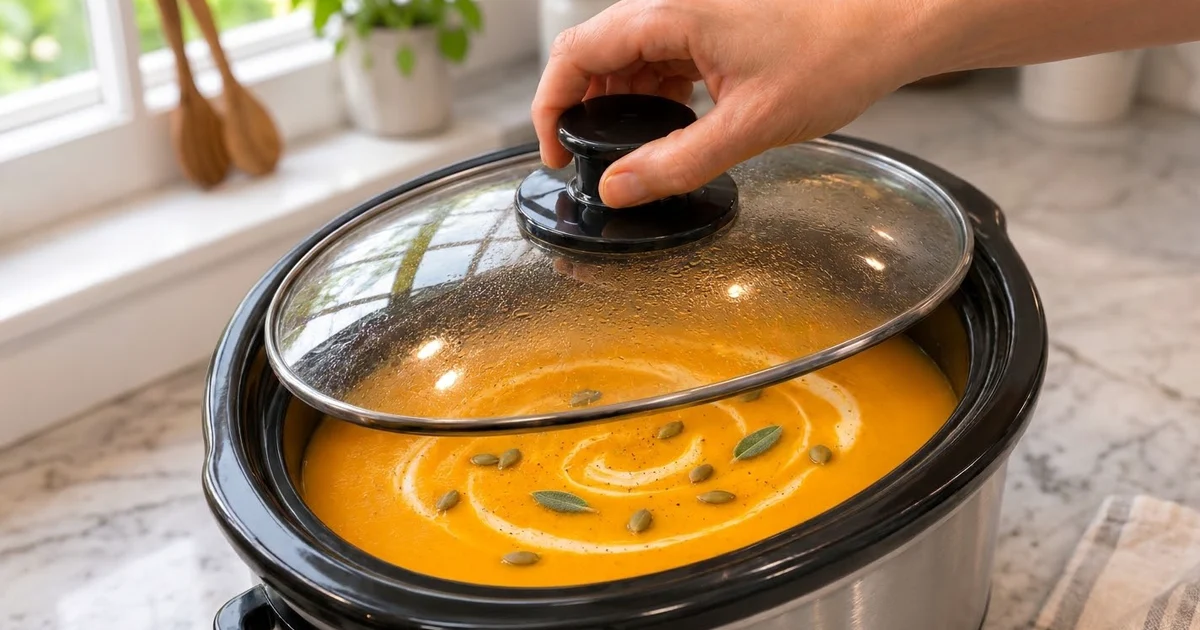
There’s something quietly magical about lifting the lid on a slow cooker and finding a pot of glowing, golden soup waiting for you. This slow cooker butternut squash soup is about as simple as comfort food gets. Cubed squash, onion, garlic and broth cook low and slow until they’re spoon-tender. Then everything gets blended into a silky purée and finished with a swirl of cream, a scattering of pepitas and a few fresh sage leaves.
The flavor is gently sweet and nutty, with a savory backbone from the onion and garlic and a soft, earthy note from the sage. The texture is the real star: thick, smooth and velvety, like it came from a restaurant kitchen. The toasted pumpkin seeds on top add a welcome crunch, and the cream ribbon makes each spoonful a little richer.
For home cooks, this recipe is a dream. Prep takes about 20 minutes, and the slow cooker handles the rest while you work, run errands or just relax. You don’t need to stir, babysit a burner or worry about scorching.
It’s a good fit for busy weeknights, Sunday meal prep and casual gatherings. It’s naturally gluten-free, and it’s easy to make vegetarian or vegan with a couple of simple swaps. One batch feeds six generously and reheats beautifully all week.
Why This Recipe Works
Low, slow heat brings out the squash’s sweetness. Gentle cooking over several hours breaks down the squash’s starches into natural sugars and softens its fibers completely. The result blends into a perfectly smooth purée without any stringiness. Because the slow cooker never boils hard, the vegetables don’t scorch on the bottom or turn bitter.
A careful liquid ratio keeps the soup thick, not watery. Slow cookers barely let any moisture evaporate, which is why so many slow cooker soups come out thin. This recipe uses just 4 cups of broth for about 3 pounds of squash, enough to cook everything evenly but not so much that the flavor gets diluted. You can always thin the soup after blending, but you can’t easily thicken it.
Cream goes in at the end, not the beginning. Dairy can curdle or separate during hours of heat, so the cream is stirred in after blending and swirled over the top just before serving. A tablespoon of butter added at the start gives the onions a rich base. A small pinch of nutmeg rounds out the squash’s sweetness without tasting like a spice blend.
Tips for Success
- Microwave the squash before peeling. Pierce the whole squash a few times and microwave it for 2 to 3 minutes. The skin softens just enough to make peeling and cutting much easier.
- Scoop out every bit of the stringy pulp. The fibrous strands around the seeds can make the soup feel stringy, so scrape the cavity clean with a metal spoon.
- Season at the end. Squash varies in sweetness, and broth varies in saltiness, so do your final seasoning after blending, when you can taste the finished soup.
- Use a countertop blender carefully. Fill it no more than halfway, remove the center cap from the lid, and cover the opening with a folded towel so steam can escape.
- Prep the night before. Cube the squash and chop the onion, then refrigerate them in the crock insert. In the morning, add the broth and turn it on.
- Warm the cream first if you want. Bring the cream to room temperature, or microwave it for 15 seconds, so it blends in smoothly and doesn’t cool the soup.
- Toast the pepitas yourself. Raw seeds toasted in a dry pan for 3 to 4 minutes, until they puff and pop, taste much nuttier than pre-toasted ones.
Variations
Apple and squash. Add 1 peeled, chopped Honeycrisp or Gala apple along with the squash. It brings a light, fruity tartness that balances the squash’s sweetness, and it blends right in without changing the texture.
Coconut curry twist. Add 1 tablespoon of curry powder and 1 teaspoon of grated fresh ginger at the start. Swap the heavy cream for full-fat coconut milk. Drizzle a little coconut milk on top and finish with cilantro instead of sage for a warmer, spicier bowl.
Roasted garlic and brown butter. Use a whole head of roasted garlic instead of the raw cloves, and drizzle 2 tablespoons of browned butter over the top along with the cream swirl. You’ll get a deeper, toastier flavor that feels a little more special.
Smoky and spicy. Add ½ teaspoon of smoked paprika and a pinch (about ⅛ teaspoon) of cayenne with the other seasonings. The smoke and heat play nicely against the sweet squash, and crumbled crispy bacon makes a great extra garnish.
FAQ
Can I use frozen butternut squash?
Yes. Use about 2½ lb (1.1 kg) of frozen cubes straight from the freezer, no thawing needed. Frozen squash releases more water, so cut the broth back to 3½ cups. You can add more after blending if the soup is too thick.
How do I make this soup vegan?
Use vegetable broth, replace the butter with 1 tablespoon of olive oil, and swap the heavy cream for full-fat coconut milk or unsweetened cashew cream. The texture stays just as silky, and the pepita and sage garnish works exactly the same.
Why is my soup stringy or grainy?
Usually the squash wasn’t cooked long enough, or some of the fibrous pulp got left in. Cook the soup another 30 to 60 minutes, then blend again for a full 2 to 3 minutes. A high-powered countertop blender gives the smoothest result if the problem keeps happening.
Can I cook this on the stovetop instead?
Absolutely. Melt the butter in a large Dutch oven and soften the onion and garlic for 5 minutes. Then add the squash, broth, sage and seasonings. Simmer, covered, for 25 to 30 minutes until the squash is tender, then blend and finish as written.
Can I use pumpkin or another squash?
Kabocha, sugar pumpkin or red kuri squash all work in the same amounts. Kabocha comes out a little drier and sweeter, so you may need an extra ½ cup of broth. The color and texture will stay close to the original.
Storage and Reheating
Let the soup cool for about 30 minutes, then move it to airtight containers and refrigerate. It keeps well for up to 5 days, and the flavor actually gets better after a day. Store the pepitas separately at room temperature so they stay crunchy.
To reheat, warm the soup in a saucepan over medium-low heat for 8 to 10 minutes, stirring often. You can also microwave individual portions in 1-minute bursts, stirring between each. The soup thickens as it sits, so stir in 2 to 4 tablespoons of broth or water to bring it back to a smooth, pourable texture.
This soup freezes very well for up to 3 months. For the best texture, freeze it before adding the cream. Leave about 1 inch of headspace in each container. Thaw overnight in the fridge, reheat gently, then stir in the cream and add the garnishes fresh.
Serving Suggestions
A thick slice of crusty sourdough or a warm baguette is the classic partner, perfect for dragging through the last bit of soup in the bowl. For something more filling, try a grilled cheese sandwich made with sharp cheddar. Its salty, gooey richness is a great match for the soup’s gentle sweetness.
To keep things lighter, add a crisp green salad with apples and a tangy vinaigrette. The acidity cuts through the creaminess nicely. For a holiday spread, serve small cups of the soup as a starter before roast chicken or turkey.

Final Notes
This slow cooker butternut squash soup is proof that some of the coziest meals take the least effort. Spend a few minutes peeling and chopping, let the slow cooker do the work, and you’ll come home to a pot of silky golden soup that tastes like you fussed over it all day. Make it your own with the variations, keep a few portions in the freezer for chilly evenings, and don’t skip the cream swirl and pepitas. They’re the small finishing touches that make each bowl feel special. Enjoy every spoonful!
Print
Slow Cooker Butternut Squash Soup Recipe
- Total Time: 6 hours 20 minutes
- Yield: 6 (about 1⅓ cups each) 1x
Description
Silky, golden butternut squash soup made hands-off in the slow cooker, finished with a swirl of cream, crunchy pepitas and fresh sage.
Ingredients
- 1 large butternut squash (about 3 lb / 1.4 kg whole), peeled, seeded and cut into 1-inch cubes (about 8 cups / 1.1 kg prepared)
- 1 medium yellow onion (about 200 g), roughly chopped
- 3 cloves garlic, smashed
- 4 cups (950 ml) low-sodium chicken or vegetable broth
- 1 tablespoon (14 g) unsalted butter
- 2 sprigs fresh sage
- 1¼ teaspoons fine sea salt, plus more to taste
- ½ teaspoon freshly ground black pepper
- ⅛ teaspoon ground nutmeg (a small pinch)
- ½ cup (120 ml) heavy cream, divided (6 tablespoons to stir in, 2 tablespoons to swirl)
- ¼ cup (35 g) toasted pepitas (green pumpkin seeds)
- 8 to 12 small fresh sage leaves
- A few grinds of black pepper (about ⅛ teaspoon)
Instructions
- Load the slow cooker. Add the cubed squash, chopped onion and smashed garlic to the crock and spread them into a fairly even layer. Tuck the sage sprigs in among the vegetables, dot the butter over the top, and sprinkle in the salt, pepper and nutmeg. Try to cut the cubes about the same size, roughly 1 inch, so they all soften at the same rate. A common mistake is leaving a few oversized chunks, which stay firm after the rest have turned soft. Those firm pieces leave lumps in the finished purée.
- Add the broth and cover. Pour in the broth. It should come about three-quarters of the way up the vegetables, not cover them completely. That’s normal, since the squash releases moisture as it cooks. Set the glass lid firmly in place. You’ll see condensation start to bead on the inside of the lid within the first hour, which tells you it’s heating properly. Don’t add extra liquid “just in case.” Slow cookers trap steam, and too much broth now means a thin soup later.
- Slow-cook until very tender. Cook on LOW for 6 hours or on HIGH for 3½ to 4 hours. Resist lifting the lid while it cooks, because each peek lets out heat and can add 15 to 20 minutes to the cooking time. When it’s done, your kitchen will smell sweet and savory, and the squash will be deep orange. A cube should collapse easily when you press it against the side of the crock with a spoon. If it still pushes back, cover and cook another 30 minutes.
- Remove the sage and blend. Lift the lid away from you so the steam doesn’t hit your face, and fish out the sage stems. Put the immersion blender all the way into the soup, keeping the blade fully under the surface, then switch it on. Blend for 2 to 3 minutes, moving it around the crock, until the soup is completely smooth and glossy with no flecks of onion. The most common mistake here is lifting the running blender above the surface, which sprays hot soup everywhere.
- Stir in the cream and adjust. Turn the slow cooker to WARM. Stir in 6 tablespoons of cream until the color shifts to a softer golden-orange. Taste, and add salt in ¼-teaspoon amounts until the squash flavor really comes through. Most batches need ¼ to ½ teaspoon more. If the soup looks too thick to pour from a ladle, add warm broth 2 tablespoons at a time. Don’t over-thin it. It should coat the back of a spoon in a thick, even layer.
- Swirl and garnish. Drizzle the remaining 2 tablespoons of cream over the surface in a loose spiral. Then drag a spoon or skewer through it once or twice to make soft ribbons like the ones in the photo. Scatter the pepitas and sage leaves over the top and finish with a few grinds of black pepper. Serve straight from the crock or ladle into bowls. Avoid stirring after the swirl goes on. Even one extra pass blends the cream in and the pattern disappears.
Notes
- Microwave the squash before peeling. Pierce the whole squash a few times and microwave it for 2 to 3 minutes. The skin softens just enough to make peeling and cutting much easier.
- Scoop out every bit of the stringy pulp. The fibrous strands around the seeds can make the soup feel stringy, so scrape the cavity clean with a metal spoon.
- Season at the end. Squash varies in sweetness, and broth varies in saltiness, so do your final seasoning after blending, when you can taste the finished soup.
- Use a countertop blender carefully. Fill it no more than halfway, remove the center cap from the lid, and cover the opening with a folded towel so steam can escape.
- Prep the night before. Cube the squash and chop the onion, then refrigerate them in the crock insert. In the morning, add the broth and turn it on.
- Warm the cream first if you want. Bring the cream to room temperature, or microwave it for 15 seconds, so it blends in smoothly and doesn’t cool the soup.
- Toast the pepitas yourself. Raw seeds toasted in a dry pan for 3 to 4 minutes, until they puff and pop, taste much nuttier than pre-toasted ones.
- Prep Time: 20 minutes
- Cook Time: 6 hours on LOW (or 3½ to 4 hours on HIGH)
- Category: Soups