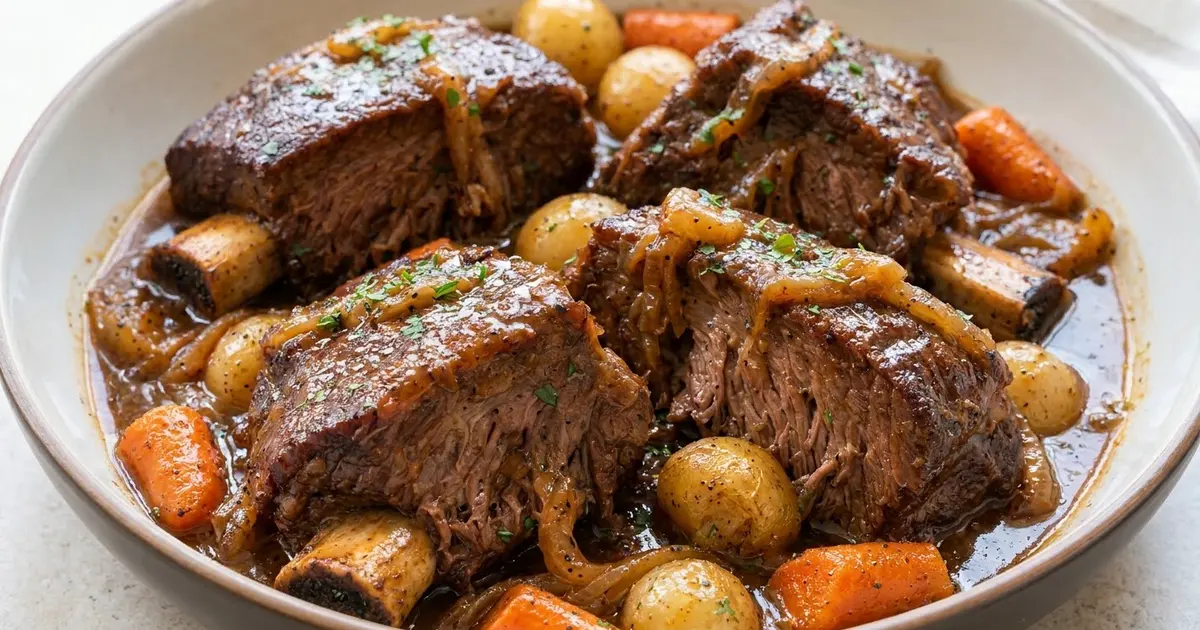
Few dinners feel as comforting as lifting the lid on a slow cooker full of beef short ribs that have braised all day. This recipe gives you meaty, bone-in short ribs cooked low and slow with baby potatoes, carrots and sliced onions. Everything finishes in a rich brown gravy that’s good enough to eat with a spoon.
The flavor is deep, beefy and savory. The seared crust on the ribs adds a roasted, slightly caramelized note. The onions melt into sweet, jammy ribbons, and the gravy turns thick and glossy. Your kitchen will smell wonderful for hours. When it’s done, the meat is so tender that it slides off the bone with a fork.
For home cooks, this is one of the easiest ways to make a dish that looks impressive. About 25 minutes of hands-on work in the morning gets you a finished dinner by evening, with the meat, vegetables and sauce all in one pot. You don’t have to babysit a stovetop or worry about scorching.
It works well for slow Sunday suppers and cold weeknights, and it’s a good way to feed guests without much stress. It’s also naturally gluten-free if you thicken the gravy with cornstarch, as written here. Leftovers reheat beautifully, so it’s a strong choice for meal prep too.
Why This Recipe Works
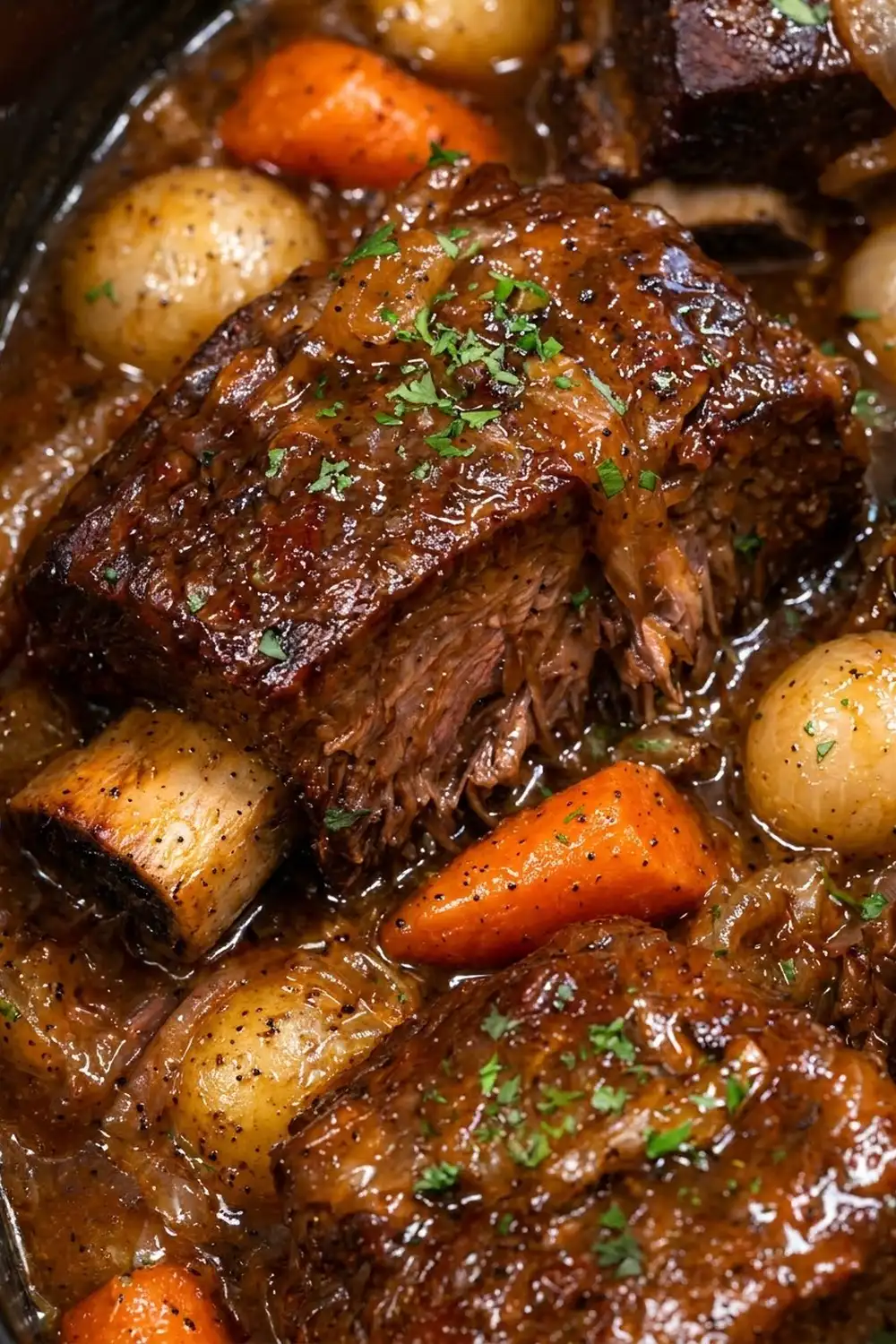
Searing first builds the flavor. A slow cooker can’t brown meat, so the ribs get a hard sear in a hot skillet before they go in. That browning (the Maillard reaction) creates the deep, roasted flavor and the dark crust you can see on the finished ribs. Skip it and the beef tastes flat and stewed.
Bone-in short ribs are made for braising. Short ribs are full of collagen and marbling. Over eight hours at low heat, the collagen melts into gelatin. That gives the meat a silky texture and the gravy a rich body. The bones add even more flavor and help the ribs hold their shape until you serve them.
A small amount of liquid concentrates the sauce. The ribs release a lot of juice as they cook, so you only need about 2 cups of broth. The tomato paste and Worcestershire sauce add savory depth. A cornstarch slurry stirred in near the end turns the liquid into a glossy gravy that coats everything.
Tips for Success
- Skim the fat. Short ribs release a good amount of fat. Before thickening, tilt the insert slightly and spoon off the clear layer that pools on top.
- Choose meaty ribs. Look for pieces with a thick layer of meat above the bone and moderate marbling. Very fatty ribs shrink a lot as they cook.
- Cut carrots large. Pieces at least 2 inches (5 cm) long stay intact over 8 hours. Small coins turn mushy.
- Prep the night before. Sear the ribs, cook the onion mixture and refrigerate both separately overnight. In the morning, just assemble and switch on the cooker.
- Don’t rush with HIGH. The HIGH setting works, but LOW gives you the most tender, evenly cooked meat.
- Check the potatoes first. If your cooker runs hot, the potatoes may finish before the ribs. Larger potatoes can be halved so everything cooks evenly.
- Make it in a Dutch oven. No slow cooker? Braise the covered pot in a 300°F (150°C) oven for 3 to 3½ hours.
Variations
Red wine braise: Replace 1 cup (240 ml) of the broth with a dry red wine such as Cabernet or Merlot. Simmer it in the skillet for 2 minutes before pouring it over the ribs. The gravy turns deeper and slightly tangy.
Mushroom and pearl onion: Swap the sliced onions for 1 cup (150 g) of peeled pearl onions and add 8 oz (225 g) of halved cremini mushrooms. Both pick up the gravy beautifully and add an earthy flavor.
Sweet and smoky: Stir 1 tbsp (15 g) brown sugar and 1 tsp smoked paprika into the braising liquid for a gently sweet, smoky gravy that’s a little closer to barbecue.
Root vegetable medley: Replace half the potatoes with chunks of parsnip or turnip for a slightly sweeter, peppery mix that’s ideal for winter.
FAQ
Do I really need to sear the short ribs?
Technically the ribs will cook through without it, but you’ll lose most of the flavor and color. Searing creates the dark crust and savory depth that make this dish taste rich and not boiled. The 10–15 minutes it takes is the best-spent time in the whole recipe.
Can I use boneless short ribs?
Yes. Use about 3 lb (1.35 kg) of boneless short ribs, since there’s no bone weight to account for. Cook them for 7 hours on LOW. They’ll still be tender, though the gravy will have a little less body without the bones.
Why are my short ribs tough?
Tough short ribs almost always need more time, not less. The collagen has to fully break down before the meat turns tender. Keep cooking on LOW and check every 30–45 minutes until a fork slides in easily.
Can I put frozen short ribs in the slow cooker?
It isn’t recommended. Frozen meat spends too long in the temperature danger zone and can’t be seared properly. Thaw the ribs in the refrigerator for 24–48 hours first.
How do I know when the dish is done?
The meat should be pulling away from the bones and should shred easily with a fork. If you want to use a thermometer, aim for an internal temperature of around 200–205°F (93–96°C). That’s when the connective tissue has fully broken down.
Storage and Reheating
Let any leftovers cool for no more than 2 hours. Then move the ribs, vegetables and gravy to an airtight container and refrigerate for up to 4 days. Once chilled, the fat hardens on the surface and is easy to lift off.
To reheat, put the ribs and gravy in a covered saucepan over medium-low heat for 10–15 minutes, until steaming hot. Add a splash of broth if the sauce has thickened too much. You can also microwave single portions, covered, for 2–3 minutes, stirring halfway through.
The ribs and gravy freeze well for up to 3 months. Potatoes get grainy after freezing, so freeze them separately or leave them out. Thaw overnight in the refrigerator, then reheat gently on the stovetop.
Serving Suggestions
This is a complete meal in one pot, but a few sides round it out nicely. Crusty bread or warm dinner rolls are great for soaking up every drop of the gravy. A crisp green salad with a sharp vinaigrette cuts through the richness of the beef.
If you’re feeding big appetites, serve the ribs over creamy mashed potatoes or buttered egg noodles to stretch the gravy further. Simple steamed green beans add a fresh, bright crunch and some color next to the deep brown braise.
Final Notes
These slow cooker beef short ribs show that some of the most satisfying dinners take very little effort. A good sear, a few pantry staples and a long, gentle braise give you tender beef, soft vegetables and a gravy rich enough to make dinner feel special. Make it once on a chilly weekend and it may well become a regular part of your cold-weather cooking. Enjoy every forkful.
Print
Slow Cooker Beef Short Ribs with Potatoes and Carrots Recipe
- Total Time: 8 hours 25 minutes
- Yield: 4 1x
Description
Fall-off-the-bone beef short ribs braised all day with baby potatoes, carrots and onions in a glossy brown gravy. A cozy, hands-off dinner that’s ready when you are.
Ingredients
- 4 lb (1.8 kg) bone-in beef short ribs, English cut (about 4 large pieces)
- 2 tsp (12 g) kosher salt
- 1½ tsp (4 g) freshly ground black pepper
- 2 tbsp (30 ml) vegetable or avocado oil
- 1 lb (450 g) baby potatoes, left whole (about 16 small potatoes)
- 4 medium carrots (about 300 g), peeled and cut into 2-inch (5 cm) pieces
- 2 medium yellow onions (about 400 g), halved and thinly sliced
- 4 cloves garlic, minced (about 1½ tbsp)
- 2 tbsp (32 g) tomato paste
- 2 cups (480 ml) low-sodium beef broth
- 2 tbsp (30 ml) Worcestershire sauce
- 1 tsp (1 g) dried thyme
- 2 bay leaves
- 2 tbsp (16 g) cornstarch mixed with 3 tbsp (45 ml) cold water
- 2 tbsp (8 g) fresh parsley, finely chopped, for garnish
Instructions
- Season the short ribs. Pat the ribs very dry with paper towels, then season every side with the 2 tsp salt and 1½ tsp pepper, pressing the seasoning into the meat. Let them sit at room temperature for 15 minutes while you prep the vegetables. The surface should look dry and evenly speckled. This step matters because moisture is the enemy of browning. Wet meat steams in the pan instead of searing. A common mistake is seasoning only the top. The sides and bone ends need salt too.
- Sear the ribs until deeply browned. Heat the oil in a large skillet over medium-high heat until it shimmers, about 2 minutes. Add the ribs meat-side down in batches, leaving space between them, and sear for 3–4 minutes per side. You should hear a steady, loud sizzle and see a dark mahogany crust form. If the ribs stick, they aren’t ready to turn yet, so wait another 30 seconds. Don’t crowd the pan. Too many pieces at once drop the temperature, and the meat turns gray instead of brown. Move the seared ribs to the slow cooker.
- Soften the onions and build the base. Lower the heat to medium and add the sliced onions to the drippings in the skillet. Cook for 5–6 minutes, stirring often, until they’re soft and turning golden at the edges. Stir in the garlic and tomato paste and cook for 1 minute, until the paste darkens to a rusty brick red and smells sweet. Pour in the broth and Worcestershire, scraping up every browned bit from the bottom of the pan. Those bits carry a lot of flavor, so don’t leave them behind.
- Assemble the slow cooker. Arrange the seared ribs in a single layer, bone-side up if possible. Tuck the baby potatoes and carrot pieces into the gaps around and between them. Sprinkle the thyme over everything, add the bay leaves, then pour the onion and broth mixture over the top. The liquid should come about halfway up the ribs, not cover them. A common mistake is adding extra broth “just in case.” The meat releases plenty of juice, and too much liquid dilutes the gravy.
- Cover and cook low and slow. Put the lid on and cook on LOW for 8 hours or HIGH for 5 hours. The ribs are done when the meat is pulling away from the bones and a fork slides in with almost no resistance. The potatoes and carrots should be tender all the way through. Try not to lift the lid during cooking. Each peek lets out heat and steam and can add 15–20 minutes to the cooking time. Trust the process.
- Thicken the gravy. About 20 minutes before serving, remove the bay leaves. Whisk the cornstarch and cold water into a smooth slurry, then gently stir it into the liquid around the ribs. Turn the cooker to HIGH, cover again and cook for 15–20 minutes, until the sauce is glossy and thick enough to coat a spoon. Always mix cornstarch with cold water first. Adding it dry straight into hot liquid makes stubborn lumps.
- Garnish and serve. Lift the lid, taste the gravy and add more salt if it needs it, usually ¼–½ tsp. Scatter the chopped parsley over the ribs and vegetables. Serve each person one rib with a share of the potatoes and carrots, and spoon plenty of gravy and onions over the top. The meat will be very tender, so use a wide spatula or large spoon to lift each rib. Tongs can pull the meat right off the bone.
Notes
- Skim the fat. Short ribs release a good amount of fat. Before thickening, tilt the insert slightly and spoon off the clear layer that pools on top.
- Choose meaty ribs. Look for pieces with a thick layer of meat above the bone and moderate marbling. Very fatty ribs shrink a lot as they cook.
- Cut carrots large. Pieces at least 2 inches (5 cm) long stay intact over 8 hours. Small coins turn mushy.
- Prep the night before. Sear the ribs, cook the onion mixture and refrigerate both separately overnight. In the morning, just assemble and switch on the cooker.
- Don’t rush with HIGH. The HIGH setting works, but LOW gives you the most tender, evenly cooked meat.
- Check the potatoes first. If your cooker runs hot, the potatoes may finish before the ribs. Larger potatoes can be halved so everything cooks evenly.
- Make it in a Dutch oven. No slow cooker? Braise the covered pot in a 300°F (150°C) oven for 3 to 3½ hours.
- Prep Time: 25 minutes
- Cook Time: 8 hours on LOW (or 5 hours on HIGH)
- Category: Dinner