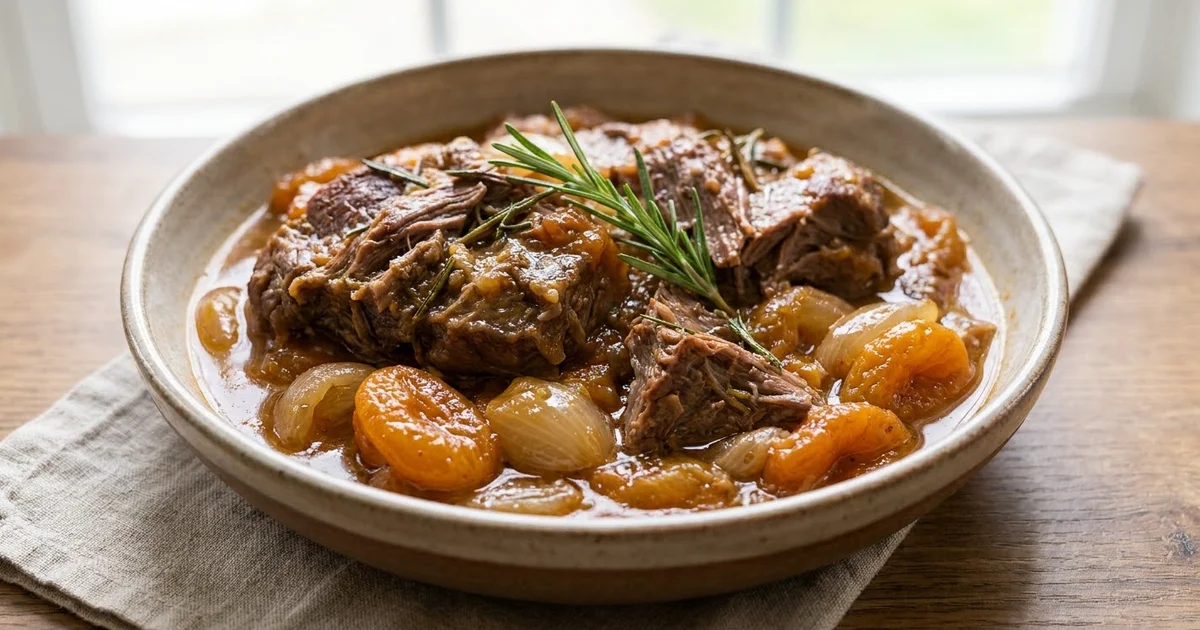
This slow cooker apricot beef roast is a simple braise. A whole chuck roast, a golden broth, garlic, fresh rosemary, halved shallots and dried apricots all go into one pot. Eight hours later, the beef shreds easily with a fork and the sauce has turned rich and amber.
The flavor is savory with a gentle sweetness. The beef is deeply meaty and juicy. The apricots plump up in the broth and turn jammy, with a bright, slightly tart edge that keeps the dish from tasting heavy. The shallots melt down until they’re silky and mellow, and the rosemary and garlic make the whole kitchen smell wonderful by mid-afternoon.
For a home cook, there isn’t much to dislike here. You don’t sear anything, there’s no stovetop step, and the hands-on time is about 15 minutes. You layer the ingredients, put the lid on, and walk away. An inexpensive, tough cut of beef ends up tasting like something you worked hard on.
It works for busy weeknights (start it before work), Sunday dinners, meal prep and feeding a crowd. It’s naturally gluten-free and dairy-free as long as you check your broth label, so it suits a lot of tables without any adjustments.
Why This Recipe Works
Chuck roast is the right cut for this job. It has lots of marbling and connective tissue, and both break down during a long, gentle cook. The collagen turns into gelatin, which keeps the shredded beef moist and gives the sauce body without any flour or cornstarch. A leaner cut like round roast would turn dry and stringy.
Dried apricots work better than fresh fruit in a slow cooker. They hold their shape through hours of cooking while soaking up the broth and releasing natural sugar and acidity into it. That small amount of tartness balances the richness of the beef. A spoonful of honey and a splash of cider vinegar in the broth build on that same sweet-tart balance.
The ingredients go in layers for a reason. With the broth poured over the roast first, the meat sits in liquid and the seasoning stays on top. The garlic and rosemary then drip down into the meat as it cooks. Halved shallots stay intact instead of disappearing, so you get soft, sweet pieces in every serving.
Tips for Success
- Season ahead if you can. Salting the roast the night before and refrigerating it uncovered seasons the meat more deeply.
- Choose a well-marbled roast. Look for white streaks of fat running through the meat. Lean roasts come out dry.
- Keep the liquid modest. About 1 ½ cups is plenty. The roast produces its own juices, so more broth just thins the sauce.
- Don’t add extra sweetness. The apricots get sweeter as they cook. Taste at the end before adding any more honey.
- Thicken the sauce if you like. Stir 1 tbsp (8 g) cornstarch into 2 tbsp (30 ml) cold water, add it to the pot, and cook on HIGH uncovered for 15 minutes.
- Prep the night before. Peel the shallots, mince the garlic and mix the broth, then refrigerate them separately so morning assembly takes 5 minutes.
- No slow cooker? Use a covered Dutch oven at 300°F (150°C) for 3 ½ to 4 hours, checking that the liquid hasn’t dropped too low.
Variations
Dried fruit swap: Use half dried apricots and half pitted prunes for a darker, deeper sauce. Dried cherries or figs also work well. Keep the total at about 225 g.
Spiced version: Add 1 tsp ground cumin, ½ tsp ground cinnamon and ½ tsp smoked paprika to the broth for a warm, spiced flavor that goes nicely with the apricots.
Root vegetables: Tuck 1 lb (450 g) of halved baby potatoes or carrot chunks around the roast for a complete one-pot meal. Add ½ cup (120 ml) more broth to make up for the extra ingredients.
Pork instead of beef: Swap in a 3 lb (1.36 kg) boneless pork shoulder. Pork and apricot are a classic pairing, and the cooking time stays the same.
FAQ
Do I need to sear the beef first?
No. This recipe is designed to skip searing, and the long braise with garlic, rosemary and apricots gives plenty of flavor. If you have 10 extra minutes, browning the roast in a hot skillet first adds a bit more savory depth, but it’s optional.
Can I use a frozen roast?
Thaw it first. A frozen roast spends too long in the temperature danger zone in a slow cooker, and it cooks unevenly. Thaw it in the refrigerator for 24 to 48 hours before you start.
Will the dish be too sweet?
Not with these amounts. The cider vinegar and the natural tartness of the apricots balance the honey, and the beef and garlic keep it savory. If you prefer less sweetness, leave out the honey completely.
Can I cook it on HIGH the whole time?
Yes, 5 to 6 hours on HIGH works. LOW gives slightly more tender, juicier results because the connective tissue breaks down more gradually. If you have the time, LOW is the better choice.
How do I know when it’s done?
Go by texture, not time. The beef should shred easily with two forks and reach about 200–205°F (93–96°C) inside. If it resists, give it more time.
Storage and Reheating
Let leftovers cool, then store the beef and sauce together in an airtight container in the refrigerator for up to 4 days. Keeping the meat in the sauce stops it from drying out, and the flavor often gets even better the next day.
Reheat portions in a covered saucepan over medium-low heat for 8 to 10 minutes, stirring occasionally and adding 2–3 tbsp of broth if the sauce has thickened. In the microwave, heat covered at 70% power in 1-minute bursts, stirring between each.
This dish freezes very well. Pack the cooled beef and sauce into freezer bags, squeeze out the air and freeze flat for up to 3 months. Thaw overnight in the refrigerator, then reheat on the stovetop until it reaches 165°F (74°C).
Serving Suggestions
Spoon the beef over creamy mashed potatoes, which soak up every drop of the amber sauce. Buttered egg noodles or fluffy couscous also work well and stretch the dish further when you’re feeding a crowd.
For something green, a crisp salad with a sharp vinaigrette cuts through the richness. Roasted green beans add some crunch and a fresh contrast to the soft, braised beef.
Final Notes
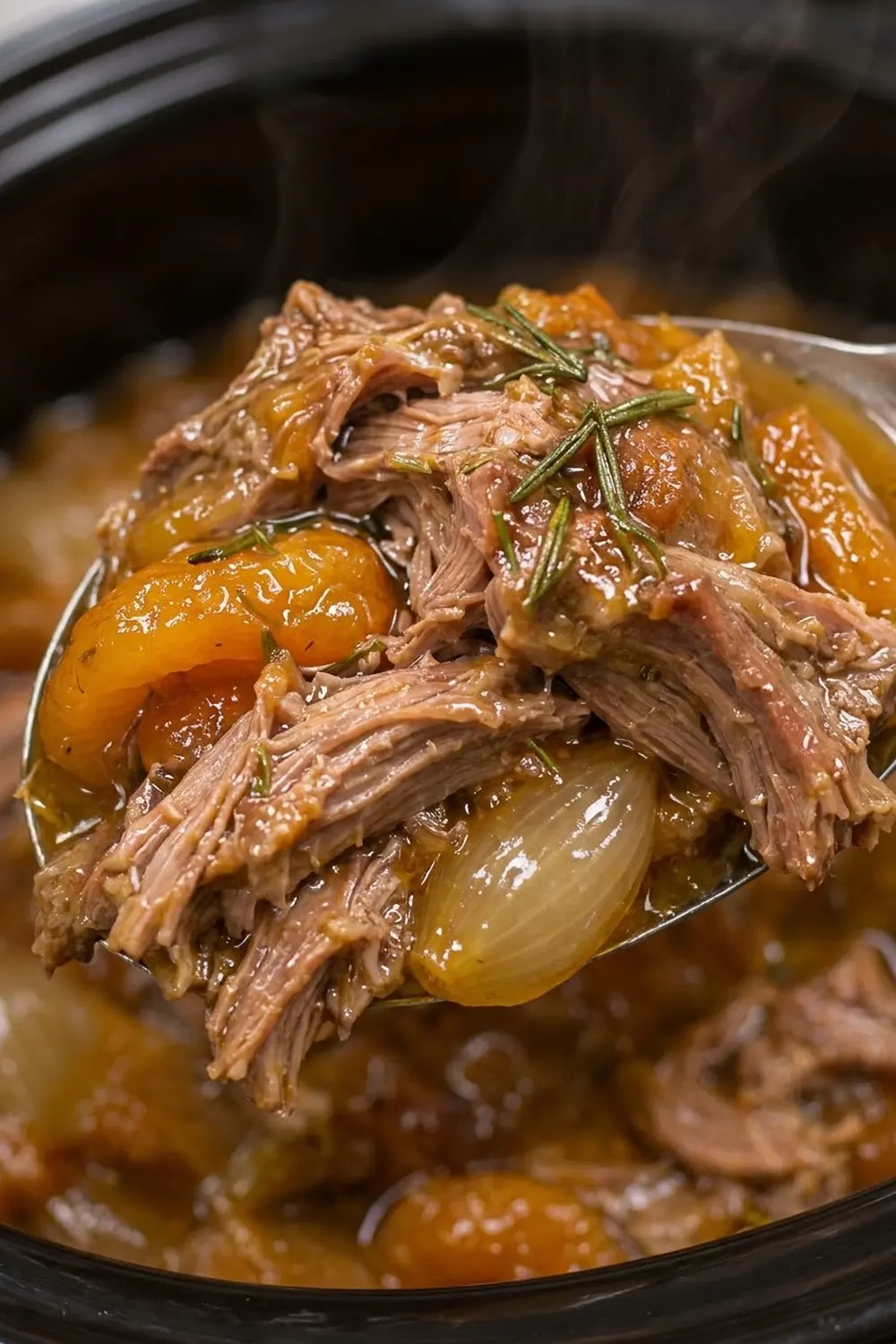
This slow cooker apricot beef roast shows how much flavor a few ingredients can produce when you give them time. You layer the beef, broth, garlic, rosemary, shallots and apricots, and the slow cooker does the rest. You end up with tender shredded beef in a glossy sweet-savory sauce that’s good enough for guests and easy enough for a Tuesday. Make it once and you’ll probably keep it in your regular rotation, especially through the colder months.
Print
Slow Cooker Apricot Beef Roast Recipe
- Total Time: 8 hours 15 minutes
- Yield: 6 1x
Description
Fall-apart chuck roast slow-cooked with dried apricots, shallots, garlic and fresh rosemary until it shreds into a glossy, sweet-savory sauce. Just 15 minutes of prep.
Ingredients
- 3 lb (1.36 kg) boneless beef chuck roast
- 1 ½ tsp (9 g) kosher salt
- ½ tsp (1 g) freshly ground black pepper
- 1 ½ cups (360 ml) low-sodium chicken or beef broth
- 1 tbsp (21 g) honey
- 1 tbsp (15 ml) apple cider vinegar
- 1 tsp (1 g) dried parsley
- ½ tsp (0.5 g) dried thyme
- 6 cloves garlic, minced (about 2 tbsp / 18 g)
- 2 tbsp (6 g) chopped fresh rosemary, plus extra for garnish
- 8 medium shallots (about 300 g), peeled and halved lengthwise
- 1 ½ cups (225 g) whole dried apricots
Instructions
- Add the meat. Pat the chuck roast dry with paper towels and rub the salt and pepper all over it. Lay it in the center of the slow cooker insert with the fattiest side facing up, so the fat bastes the meat as it renders. Press it down gently so it sits flat. The roast should fill most of the bottom with a little space around the edges. Don’t trim off all the fat at this stage. That marbling is what keeps the finished beef tender and juicy.
- Add the sauce. In a measuring cup, whisk the broth, honey, cider vinegar, dried parsley and dried thyme until the honey dissolves completely and no streaks remain. Pour it slowly over the roast so it coats the top before pooling around the sides. You’ll see a shiny golden layer of liquid come about a third of the way up the meat. Don’t add more broth than this. The roast and shallots release a lot of juice, and too much liquid dilutes the sauce.
- Add the seasoning. Scatter the minced garlic evenly over the top of the roast, then sprinkle the chopped rosemary over it. Use the back of a spoon to press the seasoning lightly into the meat so it doesn’t all slide off into the broth. You should smell the rosemary immediately. A common mistake is piling all the garlic in one spot. Spread it across the whole surface so every part of the roast gets flavor as the juices drip down.
- Add the veg. Tuck the halved shallots and dried apricots around the roast and over its top. Push some down into the broth along the sides, since the fruit and shallots sitting in liquid soften fastest. Leave a few apricots on top, where they’ll steam and turn glossy. The pot should look full and colorful, with pink shallots and bright orange fruit all around the meat. Don’t chop the shallots small. Halves hold up through the long cook, while thin slices dissolve completely.
- Cover and cook. Set the lid firmly in place and cook on LOW for 8 hours or on HIGH for 5 hours. About halfway through, the lid will fog up and you’ll smell garlic and rosemary all through the house. Don’t lift the lid to check. Every peek lets out heat and steam and can add 15 to 20 minutes to the cooking time. The roast needs that steady, uninterrupted low heat to break down properly.
- Reveal the dinner. When the time is up, remove the lid. The roast should be deep brown, sitting in a bubbling amber sauce, with plump apricots and soft, translucent shallots. Push a fork into the thickest part. It should slide in and twist with almost no resistance. If it still feels firm or springs back, cover the pot and cook for another 45 to 60 minutes. Tough beef almost always means it needs more time, not less.
- Pull apart. Use two forks to pull the beef apart right in the insert, working along the grain into bite-size strands. Remove any large pieces of fat that haven’t rendered. Gently stir the shredded meat into the sauce so it soaks up the juices for 5 to 10 minutes on the WARM setting. Don’t over-shred the beef into mush. Leaving some chunky pieces gives a better texture, and stirring too hard will break up the softened apricots.
- Ready to serve. Taste the sauce and add up to ½ tsp (3 g) more salt if needed. Scoop the beef out with a large spoon so each serving gets shreds of meat, a couple of apricots, a few shallot halves and plenty of sauce. Top with a little fresh rosemary. The sauce should be glossy and thin enough to spoon over everything. If it seems greasy, skim the fat off the surface with a ladle before serving.
Notes
- Season ahead if you can. Salting the roast the night before and refrigerating it uncovered seasons the meat more deeply.
- Choose a well-marbled roast. Look for white streaks of fat running through the meat. Lean roasts come out dry.
- Keep the liquid modest. About 1 ½ cups is plenty. The roast produces its own juices, so more broth just thins the sauce.
- Don’t add extra sweetness. The apricots get sweeter as they cook. Taste at the end before adding any more honey.
- Thicken the sauce if you like. Stir 1 tbsp (8 g) cornstarch into 2 tbsp (30 ml) cold water, add it to the pot, and cook on HIGH uncovered for 15 minutes.
- Prep the night before. Peel the shallots, mince the garlic and mix the broth, then refrigerate them separately so morning assembly takes 5 minutes.
- No slow cooker? Use a covered Dutch oven at 300°F (150°C) for 3 ½ to 4 hours, checking that the liquid hasn’t dropped too low.
- Prep Time: 15 minutes
- Cook Time: 8 hours on LOW (or 5 hours on HIGH)
- Category: Dinner