Description
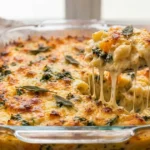
Tender shells, caramelized butternut squash, kale and creamy white beans baked under a bubbling, golden cheese crust. This vegetarian comfort food feeds a crowd.
Ingredients
Scale
- 1 medium butternut squash (about 2 lb / 900 g), peeled and cut into ¾-inch cubes (about 4 cups)
- 3 tbsp (45 ml) olive oil, divided
- 1 tsp (6 g) kosher salt, divided
- ½ tsp black pepper
- 1 large bunch curly kale (about 7 oz / 200 g), stems removed, roughly chopped (about 6 packed cups)
- 2 cloves garlic, minced
- 1 lb (454 g) medium pasta shells
- 4 tbsp (56 g) unsalted butter
- ¼ cup (32 g) all-purpose flour
- 3½ cups (840 ml) whole milk, warmed
- 1½ cups (170 g) shredded white cheddar
- ½ tsp (3 g) kosher salt
- ¼ tsp ground nutmeg
- 1 can (15 oz / 425 g) cannellini beans, drained and rinsed
- 1 cup (250 g) whole-milk ricotta
- ½ cup (120 ml) heavy cream
- 2 cups (200 g) shredded low-moisture mozzarella
- ½ cup (55 g) shredded white cheddar
- 10 to 12 fresh sage leaves
Instructions
- Roast the squash. Heat the oven to 425°F (220°C). Toss the squash cubes with 2 tablespoons of oil, ½ teaspoon of salt and the pepper, then spread them in a single layer on the baking sheet. Roast for 25 to 30 minutes, flipping once halfway through. They’re ready when a fork slides in easily and the edges are deep brown and a little charred, as in the second panel. Don’t crowd the pan. Cubes that touch will steam and stay pale. Lower the oven to 375°F (190°C) afterward.
- Wilt the kale. While the squash roasts, heat the remaining tablespoon of oil in a skillet over medium heat. Add the garlic and cook for 30 seconds, until it smells fragrant. Add the kale and the remaining ½ teaspoon of salt, then toss for 3 to 4 minutes until the leaves are dark green, glossy and about half their original volume. Stop before the kale turns olive-drab or browns, because overcooked kale tastes bitter and dull. Set it aside.
- Cook the shells and make the sauce. Boil the shells in well-salted water for 2 minutes less than the package says, then drain. In the same pot, melt the butter over medium heat, whisk in the flour and cook for 1 minute until it smells slightly toasty. Slowly whisk in the warm milk and simmer for 4 to 5 minutes until the sauce coats a spoon. Turn off the heat, stir in the cheddar, salt and nutmeg, then return the pasta to the pot. Don’t let the sauce boil after adding the cheese, or it may turn grainy.
- Transfer the pasta to the dish. Grease the 9×13-inch dish lightly. Tip the steaming pot over the dish and use a wooden spoon to scrape the sauce-coated shells in, as shown in the first panel. The pasta should look loose and glossy, with sauce sliding off in ribbons. If it looks thick and clumpy, stir in 2 to 3 tablespoons of warm milk first. A stiff pasta at this point will turn dry in the oven.
- Add the vegetables, beans, ricotta and cream. Arrange the roasted squash, wilted kale and drained beans over the pasta, then drop the ricotta in spoonfuls. Pour the heavy cream evenly over the top, as in the second panel. This extra liquid keeps the bake creamy. Make sure the beans are well drained and patted dry, because canning liquid makes the sauce watery and slightly starchy-tasting.
- Stir to combine. Hold the dish steady and fold everything together gently with the wooden spoon, reaching all the way to the corners. You want orange squash and green kale spread evenly, with streaks of ricotta still visible, just like the third panel. Fold rather than stir hard. Aggressive mixing breaks the shells and mashes the squash into the sauce. Smooth the top into an even layer.
- Top with cheese and sage. Toss the mozzarella and remaining cheddar together, then scatter them evenly over the whole surface, all the way to the edges, as shown in the fourth panel. Press the sage leaves lightly into the cheese, spacing them across the top. An even layer of cheese is important because bare spots dry out and thick clumps stay pale. The cheese should almost hide the pasta.
- Bake until golden. Bake uncovered at 375°F (190°C) for 25 to 30 minutes. It’s done when the sauce bubbles at the sides of the dish, the top is golden with dark amber spots and the sage leaves are crisp. For extra browning, broil for 1 to 2 minutes, watching closely. Don’t pull it early. A pale top means the cheese hasn’t browned or developed its full flavor yet.
- Rest and serve. Let the bake rest on a trivet for 10 minutes. This gives the sauce time to thicken so each scoop holds together and pulls up long strands of cheese, as in the final panel. Use a large serving spoon and dig straight down to the bottom so every portion gets crust, squash and kale. Serving straight from the oven gives you runny, soupy portions.
Notes
- Shred your own cheese. Pre-shredded cheese is coated in anti-caking starch, which makes it melt less smoothly.
- Warm the milk. Adding cold milk to the roux can cause lumps, so warm it for 2 minutes in the microwave first.
- Salt the pasta water well. Use about 1 tablespoon (18 g) of kosher salt per 4 quarts of water. It seasons the pasta from the inside.
- Cut the squash evenly. Cubes that are all about ¾ inch roast at the same rate, so none burn while others stay hard.
- Make it ahead. Assemble the casserole through step 7, cover and refrigerate for up to 24 hours. Add 10 to 15 minutes to the baking time.
- Dry the kale well. Wet leaves splatter and steam, so spin or pat them dry after washing.
- Use a sheet pan underneath. A full 9×13 can bubble over, and a pan on the rack below catches the drips.
- Prep Time: 25 minutes
- Cook Time: 55 minutes
- Category: Dinner