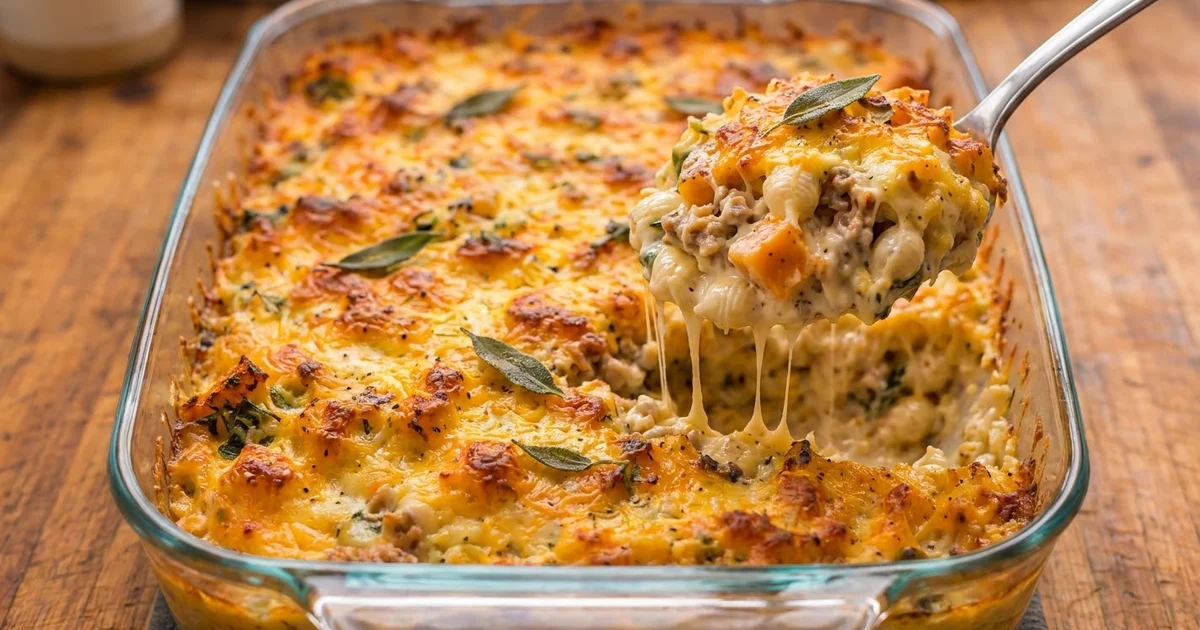
This is the kind of casserole that makes the whole house smell like dinner. Small pasta shells are tossed with browned ground turkey, sweet roasted butternut squash, wilted spinach, ricotta and cream. Then the dish gets a thick blanket of shredded cheese and bakes until golden and bubbling.
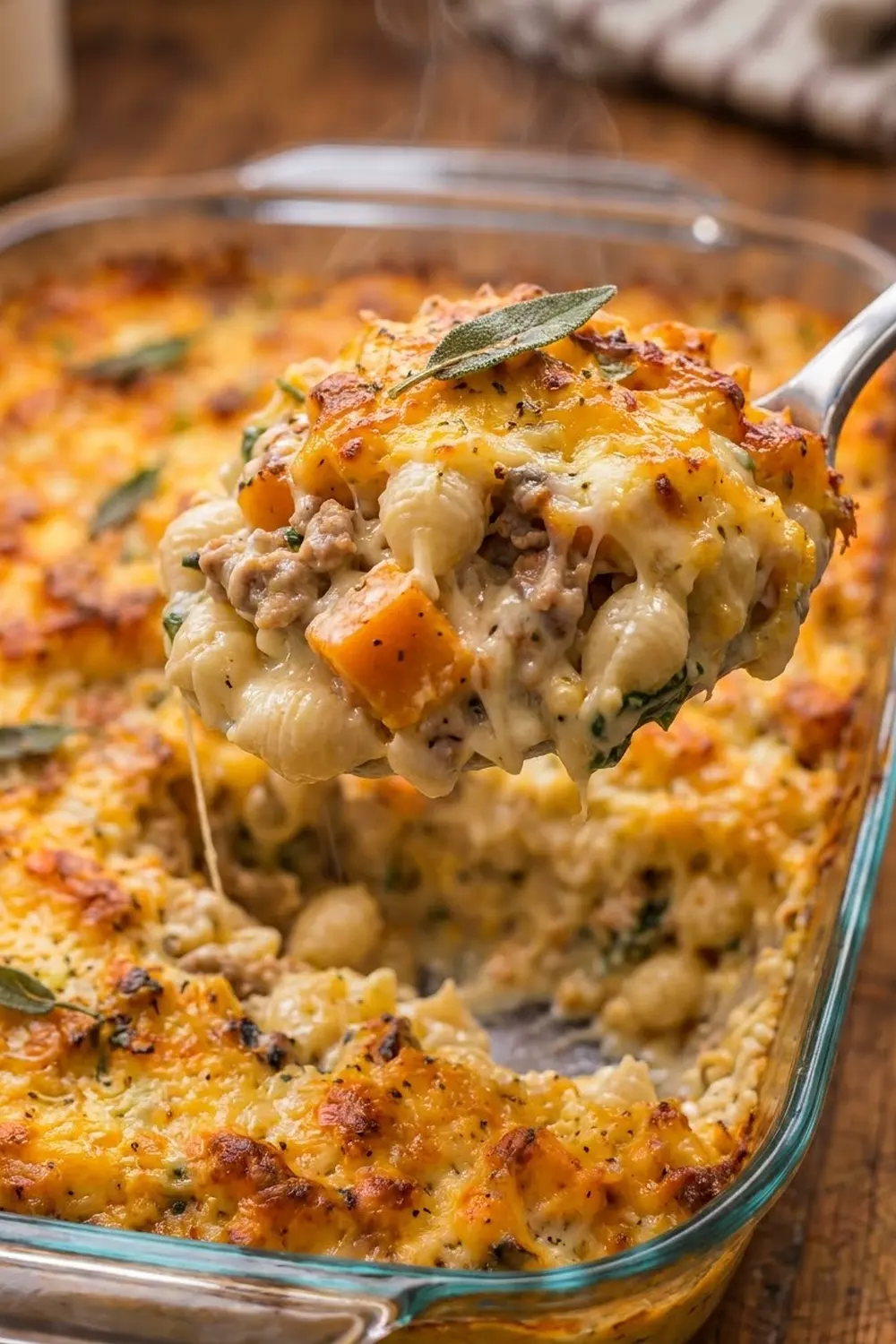
Each spoonful is creamy and tender, with little pockets of sauce caught inside the shells. The squash adds soft, caramelized sweetness, the spinach adds an earthy green note, and the turkey makes the dish hearty. On top, the cheese bakes into a golden-orange crust with crisp, browned edges, plus a few sage leaves that crackle when you serve.
It’s also a very forgiving recipe for home cooks. Each part is simple: roast, brown, boil and stir. You mix everything right in the baking dish, so there’s no separate sauce to make and no layering to fuss over.
It works well for Sunday dinners, potlucks and feeding a crowd. It also reheats well, so it’s good for meal prep and busy weeknights later in the week. Kids tend to love it because it tastes like extra-cozy mac and cheese.
Why This Recipe Works
Roasting the squash first gives you flavor instead of mush. Raw squash cubes would steam inside the casserole and come out watery and bland. Roasting them at high heat browns the edges and concentrates their sugars. It also dries out their surface, so they keep their shape when stirred into the cream.
Undercooking the pasta keeps it from going soft. The shells keep absorbing cream while they bake. If you boil them 2 minutes short of al dente, they finish cooking in the oven and come out tender, not mushy. Small shells are a smart shape here because their hollows trap sauce, ricotta and bits of turkey.
Ricotta plus cream makes a sauce without a roux. Heavy cream doesn’t break or curdle in the oven the way milk can. Stirring ricotta through it thickens the sauce and adds rich, milky pockets. Parmesan in the mix seasons it from the inside, and a mozzarella–cheddar topping gives you both stretch and a deeply browned crust.
Tips for Success
- Salt the pasta water well. The shells make up most of the dish, so seasoning them now makes a big difference to the final flavor.
- Dry the spinach well. Squeeze the wilted spinach in a clean towel or press it in a sieve, because extra water dilutes the cream sauce.
- Cut the squash evenly. Uniform ¾-inch cubes roast at the same rate, so you won’t end up with some burnt pieces and some hard ones.
- Make it ahead. Assemble the casserole through step 6, cover it and refrigerate it for up to 24 hours. Bake it covered for 20 minutes, then uncovered for 20–25 minutes.
- Use room-temperature cream. Cold cream straight from the fridge takes longer to come up to a bubble and can add 5–10 minutes to the bake.
- Taste before baking. Try a shell coated in sauce before you add the cheese, and add more salt if it tastes flat.
- Use a different dish if needed. Two 8-inch square dishes work well, and you can freeze one for later.
Variations
Italian sausage swap: Use 1 lb (454 g) of mild or hot Italian sausage instead of the turkey. The fennel and spice in the sausage add depth, and the extra fat makes the sauce even richer.
Vegetarian version: Leave out the turkey and add 8 oz (225 g) of sliced cremini mushrooms, browned in a hot skillet until golden. Mushrooms bring the savory depth the meat would otherwise give.
Kale instead of spinach: Use 6 cups of chopped kale with the stems removed, sautéed for 4–5 minutes until tender. Kale holds its texture better and adds a slightly earthy bite.
Smoky Gouda topping: Replace the cheddar with 1½ cups (170 g) of shredded smoked Gouda. The smoky flavor goes beautifully with the sweet roasted squash.
FAQ
Can I use frozen butternut squash?
Yes. Roast it from frozen at 425°F (220°C) for 30–35 minutes, spread out on a well-oiled pan. Frozen squash holds more water, so give it extra space so it browns rather than steams.
Can I use frozen spinach?
Yes. Thaw 10 oz (285 g) of frozen chopped spinach, then squeeze it very dry in a towel. It skips the wilting step but needs firm squeezing, or it will make the sauce watery.
Why did my casserole turn out dry?
Usually, the pasta was fully cooked before baking or the dish baked too long. Both let the shells soak up too much cream. Undercook the pasta by 2 minutes, and if the dish was made ahead, add 2–3 tablespoons of extra cream before baking.
Can I use milk instead of heavy cream?
Whole milk is more likely to curdle in the oven and makes a thinner sauce. If you need to swap, use half-and-half, which holds up better while still being a bit lighter.
Can I make this gluten-free?
Yes. Use gluten-free shells and cook them 3 minutes short of the package time, since they soften faster in the oven. Check that your cheeses are labeled gluten-free as well.
Storage and Reheating
Let leftovers cool for no more than 2 hours. Then cover the dish tightly, or move portions into airtight containers, and refrigerate for up to 4 days. The pasta will soak up more sauce as it sits, so it will be thicker the next day.
To reheat a single portion, add 1 tablespoon of milk or cream and microwave covered for 90 seconds to 2 minutes, stirring halfway through. For a larger amount, cover it with foil and warm it at 350°F (175°C) for 20–25 minutes. Uncover it for the last 5 minutes to re-crisp the top.
This casserole freezes well for up to 3 months. Wrap the cooled dish or individual portions tightly in plastic wrap and then foil. Thaw overnight in the fridge, then reheat in the oven as described above. Expect the squash to be slightly softer after freezing.
Serving Suggestions
A crisp green salad with a sharp lemon vinaigrette is the best partner, because the acidity cuts through the creamy sauce. Roasted broccoli or green beans add a fresh, crunchy contrast to the soft pasta.
Warm garlic bread is great for wiping up any sauce left on the plate. If you’re serving a holiday or Sunday crowd, a simple tray of sliced apples and pears makes a light, refreshing way to finish.
Final Notes
This baked shell casserole is one to keep in your regular rotation. It’s cozy and generous, and it’s easy to change with whatever you have on hand. Get the few key steps right: roast the squash, undercook the pasta and give it a full rest after baking. Then you’ll get the same creamy, golden, cheese-pulling result every time. Make it for family dinner, bring it to the next potluck, or bake it on Sunday for easy lunches all week.
Print
Baked Pasta Shells with Butternut Squash, Spinach, and Ground Turkey Recipe
- Total Time: 1 hour 20 minutes
- Yield: 8 1x
Description
Tender pasta shells, roasted butternut squash, ground turkey and spinach in a creamy ricotta sauce, baked under a bubbling golden cheese crust. A cozy casserole that feeds a crowd.
Ingredients
- 1 medium butternut squash, peeled and cut into ¾-inch cubes (about 3 cups / 450 g)
- 2 tbsp (30 ml) olive oil, divided
- 1¼ tsp kosher salt, divided
- ½ tsp black pepper, divided
- 1 lb (454 g) ground turkey (93% lean)
- 3 cloves garlic, minced (about 1 tbsp)
- 10 oz (285 g) fresh baby spinach
- 1 lb (454 g) small pasta shells
- 1 cup (245 g) whole-milk ricotta
- 1½ cups (360 ml) heavy cream
- ½ cup (50 g) finely grated Parmesan
- ¼ tsp ground nutmeg (optional)
- 1½ cups (170 g) shredded mozzarella
- 1½ cups (170 g) shredded sharp cheddar
- 8–10 fresh sage leaves
- 1 tsp olive oil
Instructions
- Roast the squash. Heat the oven to 425°F (220°C). Toss the squash cubes with 1 tbsp oil, ½ tsp salt and ¼ tsp pepper. Spread them in one layer on the baking sheet and roast for 22–25 minutes, flipping once halfway through. They’re done when a fork slides in easily and the edges are deep orange with browned spots. Don’t crowd the pan: if the cubes touch, they’ll steam and stay pale. Lower the oven to 375°F (190°C) when the squash comes out.
- Brown the turkey and wilt the spinach. Heat the remaining 1 tbsp oil in a skillet over medium-high heat. Add the turkey and ½ tsp salt. Break it into small crumbles and cook for 7–8 minutes, until no pink remains and some bits look golden. Stir in the garlic for 30 seconds, until fragrant, then move the turkey to a plate. Add the spinach to the same skillet and stir for about 2 minutes, until it’s dark green and fully wilted. Squeeze out any extra liquid, or it will thin the sauce.
- Boil the shells. Bring 4 quarts (4 L) of water and 1 tbsp kosher salt to a rolling boil. Cook the shells for 2 minutes less than the package says, usually about 7 minutes. They should still be firm in the center when you bite one. Drain them well, then tip the steaming shells straight into the baking dish. Fully cooked pasta is the most common mistake here: it keeps softening in the oven and can turn mushy.
- Add the fillings and pour in the cream. Spread the turkey, spinach and squash over the shells. Drop the ricotta into the center. Whisk the Parmesan, nutmeg, remaining ¼ tsp salt and ¼ tsp pepper into the cream, then pour it evenly over everything. You’ll see the cream pool around the shells and settle into the gaps. Pour it all over the dish instead of in one spot, so every corner gets its share of sauce.
- Stir everything together. Hold the dish steady and fold everything together gently with a wooden spoon. Keep going until the ricotta streaks through, the spinach is spread out and the squash pieces are scattered evenly. The mixture should look loose and creamy, with sauce visible around the shells. Fold rather than stir hard, so you don’t mash the soft squash into a purée. Smooth the top into an even layer so it bakes evenly.
- Add the cheese topping. Toss the mozzarella and cheddar together, then scatter them over the casserole in a thick, even layer all the way to the edges. Cover every bit of pasta, because exposed shells can dry out and turn crunchy in the oven. A loose, fluffy layer works better than a packed one, since it melts evenly and browns in lacy patches. Brush the sage leaves lightly with 1 tsp oil and set them aside.
- Bake until golden. Bake uncovered at 375°F (190°C) for 20 minutes. Lay the sage leaves on top, then bake another 8–10 minutes. It’s ready when the sauce bubbles around the edges, the cheese is golden-orange with darker browned spots, and the sage is crisp. For extra color, broil for 1–2 minutes at the end, but watch it closely. Cheese can go from golden to burnt in under a minute.
- Rest and serve. Let the casserole rest on a trivet for 10 minutes. This gives the sauce time to thicken and cling to the pasta, so each scoop holds together on the plate. When you dig in with a large serving spoon, the cheese should stretch in long strands and the inside should look creamy, not runny. If you serve it straight from the oven, the sauce will look loose and run to the bottom of the plate.
Notes
- Salt the pasta water well. The shells make up most of the dish, so seasoning them now makes a big difference to the final flavor.
- Dry the spinach well. Squeeze the wilted spinach in a clean towel or press it in a sieve, because extra water dilutes the cream sauce.
- Cut the squash evenly. Uniform ¾-inch cubes roast at the same rate, so you won’t end up with some burnt pieces and some hard ones.
- Make it ahead. Assemble the casserole through step 6, cover it and refrigerate it for up to 24 hours. Bake it covered for 20 minutes, then uncovered for 20–25 minutes.
- Use room-temperature cream. Cold cream straight from the fridge takes longer to come up to a bubble and can add 5–10 minutes to the bake.
- Taste before baking. Try a shell coated in sauce before you add the cheese, and add more salt if it tastes flat.
- Use a different dish if needed. Two 8-inch square dishes work well, and you can freeze one for later.
- Prep Time: 25 minutes
- Cook Time: 55 minutes
- Category: Dinner