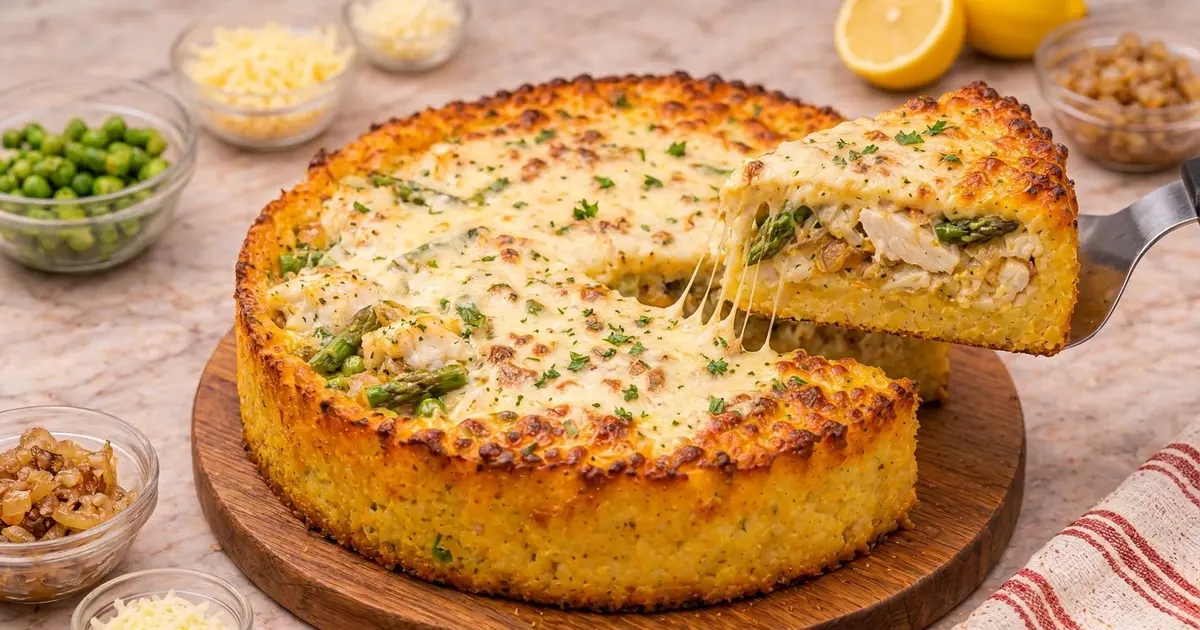
This potato crust fish pie is part quiche and part fish pie. Instead of pastry, the shell is made from tender boiled potatoes pressed firmly into a springform pan. You fill it with flaky cod, asparagus, peas and soft caramelized onions, pour over a parsley-and-lemon custard, and finish with a generous layer of shredded cheese.
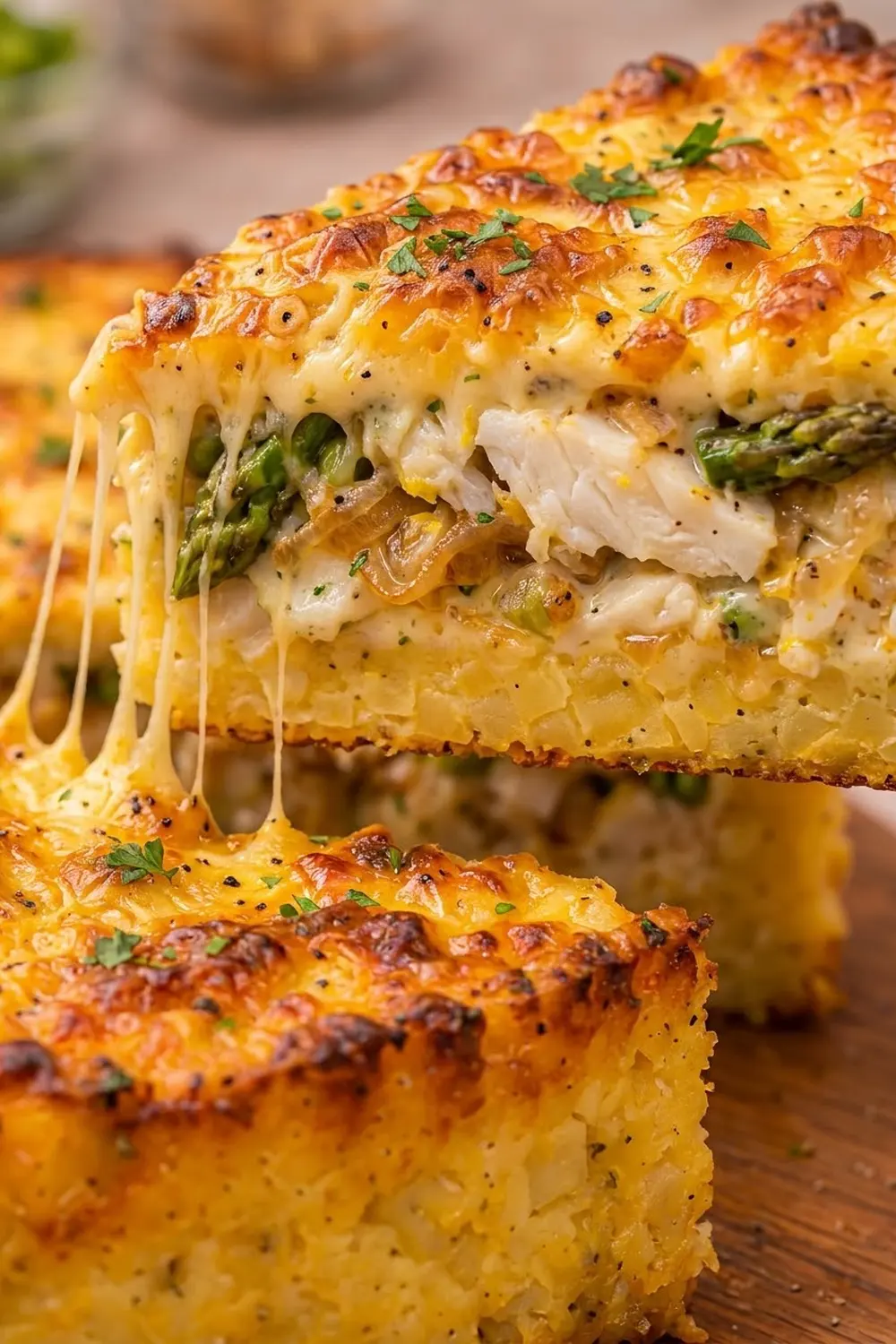
Out of the oven, the edges are crisp and golden and the top is bubbly and browned in spots. When you cut a wedge, melted cheese stretches away from the slice. Inside, the custard is just set around large flakes of cod, and the asparagus still has a little bite. The onions add a mellow sweetness, and the lemon zest brightens every forkful.
For home cooks, this is a relaxed project. Nothing needs rolling, chilling or blind-baking, and every component is simple: boil, sauté, whisk, layer and bake. Because it’s assembled in a springform pan, it comes out tall and impressive with almost no effort.
It’s naturally gluten-free and makes a lovely weekend dinner, Easter brunch or make-ahead meal for guests. Leftover slices also reheat well for lunches through the week.
Why This Recipe Works
The potato crust holds together because of starch and egg. Yukon Gold potatoes are boiled just until tender, drained well and left to steam dry for a few minutes. That keeps excess water out of the crust. Tossing them with butter and an egg yolk while warm creates a sticky mixture that you can press into a firm shell. In the hot oven, the outer surface fries in its own butter and turns crisp.
Cooking each filling ingredient briefly before assembly prevents a watery pie. Caramelizing the onions drives off their moisture and concentrates their sweetness. Gently poaching the cod first means it releases its liquid into the poaching pan, not into your custard. The asparagus and peas only need a quick blanch, which keeps them bright green after baking.
The custard ratio matters too. Four eggs to 1½ cups of dairy sets into a silky, sliceable custard rather than a rubbery omelet. The cheese on top works as both a seasoning and a lid. It browns into a savory crust while protecting the custard below from drying out.
Tips for Success
- Dry the potatoes well. Steam-drying for a few minutes after draining is the single biggest factor in a crisp crust.
- Press firmly. A loosely packed crust can crack when you slice it. Spend an extra minute compacting the base and walls.
- Pat the fish dry. After poaching, blot the cod with paper towels so its liquid doesn’t dilute the custard.
- Take your time with the onions. If you rush them over high heat, they’ll scorch instead of turning sweet.
- Shred your own cheese. Pre-shredded cheese contains anti-caking starch and melts less smoothly.
- Make it ahead. You can boil the potatoes, cook the onions and poach the fish up to a day ahead and keep them refrigerated. Assemble and bake when you’re ready.
- Tent the top if it browns too fast. If the cheese is dark by the 35-minute mark, lay foil loosely over the pan.
- Look for the slight jiggle. The custard keeps setting while it rests, so take it out before it’s completely firm.
Variations
Smoked fish pie: Replace half the cod with flaked hot-smoked salmon or smoked haddock. The smokiness goes very well with the cheese and caramelized onions, and you’ll want to reduce the custard salt to ½ tsp.
Leek and spinach: Use 2 sliced leeks instead of the onions, and 2 packed cups (60 g) of wilted, well-squeezed spinach in place of the peas. You’ll get a softer, more delicate green flavor.
Shrimp and fish: Swap 6 oz (170 g) of the cod for peeled raw shrimp, chopped into bite-size pieces. They cook through in the oven, so add them raw.
Herby dill version: Use 2 tbsp chopped dill instead of the parsley and stir 1 tbsp Dijon mustard into the custard. That gives the pie a classic fish-pie tang.
FAQ
Can I use frozen fish?
Yes. Thaw it overnight in the fridge, then press it gently between paper towels before poaching. Frozen fish holds more water, so drying it well is important to keep the custard from turning loose.
Why did my crust fall apart?
The potatoes were most likely overcooked or too wet, or the crust wasn’t pressed firmly enough. The egg yolk binds it, so don’t leave it out. The pre-bake also helps the walls hold their shape before the heavy filling goes in.
Can I use leftover mashed potatoes?
Smooth mashed potatoes work if they’re fairly stiff. Mix in the egg yolk and press them in the same way. The crust will be smoother and slightly softer than one made with cubes, and it will lose some of the craggy edges that crisp up so well.
Is this pie gluten-free?
As written, yes. It contains no flour or breadcrumbs. If you’re cooking for someone with celiac disease, check the cheese labels.
My pie leaked from the springform. How do I prevent that?
Make sure the potato crust has no gaps along the bottom edge, and don’t overfill the custard. Baking on a rimmed sheet catches any drips, and wrapping the outside of the pan’s base in foil adds extra insurance.
Storage and Reheating
Let leftovers cool completely, then cover tightly or move the slices to airtight containers. Refrigerate within 2 hours of baking. The pie keeps for up to 3 days in the fridge.
To reheat, put slices on a baking sheet and warm them at 350°F (175°C) for 12–15 minutes, until hot all the way through. The oven re-crisps the crust and the cheese. A microwave works in a pinch at 50% power for about 2 minutes, but the crust will soften.
You can freeze it, though the custard’s texture will become a little less silky. Wrap individual slices in plastic wrap and then foil, and freeze for up to 2 months. Thaw overnight in the refrigerator and reheat in the oven as above.
Serving Suggestions
A crisp green salad with lemon vinaigrette is the easiest partner, because its acidity cuts through the rich custard and cheese. Buttered green beans or roasted cherry tomatoes add color and freshness without competing with the pie.
For a brunch spread, serve it with a bowl of mixed fruit to keep the meal light. Lemon wedges on the side are always welcome too, since a squeeze over the fish brightens each slice.
Final Notes
Bringing this potato crust fish pie to the table is very satisfying: it’s tall and golden, and every slice pulls away with strings of melted cheese. It looks like a special-occasion dish, but it’s built from everyday ingredients and simple techniques. Once you’ve made it, you’ll find it’s easy to adapt. You can change the fish, swap in seasonal vegetables or try a different cheese. Take your time with the onions, press the crust firmly, and let it rest before slicing.
Print
Potato Crust Fish Pie with Asparagus and Peas Recipe
- Total Time: 2 hours 5 minutes
- Yield: 8 slices 1x
Description
A golden potato crust filled with flaky cod, asparagus, peas and caramelized onions, set in a silky custard and topped with bubbling cheese. It’s an impressive gluten-free pie that’s easy to make.
Ingredients
- 2 lb (900 g) Yukon Gold potatoes, peeled and cut into 1-inch (2.5 cm) cubes
- 2 tbsp (28 g) unsalted butter, melted
- 1 large egg yolk
- 1 tsp (6 g) fine sea salt, plus 1 tbsp (18 g) for the cooking water
- ½ tsp freshly ground black pepper
- 1 tbsp (14 g) softened butter, for greasing the pan
- 1 lb (450 g) skinless cod fillets
- 2 tbsp (30 ml) olive oil
- 2 medium yellow onions (about 300 g), thinly sliced
- 2 garlic cloves, minced (about 2 tsp)
- 8 oz (225 g) asparagus, woody ends trimmed, cut into 1½-inch (4 cm) pieces
- ¾ cup (100 g) frozen peas
- ½ tsp fine sea salt
- 4 large eggs
- 1 cup (240 ml) heavy cream
- ½ cup (120 ml) whole milk
- 2 tbsp (8 g) finely chopped fresh parsley
- 1 tsp finely grated lemon zest (from about ½ lemon)
- ¾ tsp fine sea salt
- ¼ tsp freshly ground black pepper
- 2 cups (200 g) shredded cheese: half low-moisture mozzarella, half mild white cheddar
- 1 tbsp chopped fresh parsley, for garnish
Instructions
- Boil the potatoes and add them to the pan. Heat the oven to 400°F (200°C) and grease the springform with the softened butter. Cover the potato cubes with cold water, add 1 tbsp salt, bring to a boil, then simmer for 10–12 minutes. They’re ready when a knife slides in easily but the cubes still hold their shape. Drain, let them steam dry for 3 minutes, then toss with the melted butter, egg yolk, salt and pepper. Tip them into the pan while they’re still warm. Don’t overboil them: waterlogged potatoes make a soggy, fragile crust.
- Press the potatoes into a crust. Using your hands (gloves help with the heat) or the back of a measuring cup, press the potatoes firmly over the base and about 2 inches (5 cm) up the sides. Aim for a wall around ½ inch (1.25 cm) thick. The surface should look compact and slightly textured, with no gaps where the base meets the side. Bake the empty crust for 15 minutes until it’s dry to the touch and starting to color. Watch for thin spots at the rim, which can tear or burn.
- Cook the filling and spread it in the crust. While the crust bakes, cook the onions in olive oil over medium-low heat for 18–20 minutes, stirring often, until soft and amber. Add the garlic for the final minute. Poach the cod in barely simmering salted water for 6–8 minutes, until it’s opaque and flakes easily, then drain. Blanch the asparagus and peas for 1 minute. Lower the oven to 350°F (175°C). Spread the onions, flaked cod, asparagus and peas evenly in the crust. Don’t pile the fish into one place, or some slices will get none.
- Pour in the custard. Whisk the eggs, cream, milk, parsley, lemon zest, salt and pepper until smooth and evenly pale yellow, with green flecks throughout. Pour it slowly over the filling, aiming around the pan so it seeps into the gaps rather than pooling in the middle. It should come to about ¼ inch (6 mm) below the crust’s rim. Don’t overfill: custard that spills over the potato wall will run down the outside, glue the springform shut and leave the edges soggy.
- Top with cheese. Scatter the shredded mozzarella and cheddar evenly over the custard, all the way to the crust’s edge. The cheese should cover the surface completely, with just a few green flecks showing through. Set the pan on the rimmed baking sheet. Avoid packing the cheese down. Loose shreds melt into a lacy layer that browns well, while pressed cheese can turn into a greasy sheet.
- Bake, rest and slice. Bake at 350°F (175°C) for 45–50 minutes. It’s done when the top is deep golden with darker spots and the center jiggles only slightly when you nudge the pan. A knife inserted halfway between the edge and the center should come out clean. Rest the pie for 15 minutes, run a thin knife around the edge, release the springform and garnish with parsley. Don’t cut it straight from the oven, or the custard will run out of the slices.
Notes
- Dry the potatoes well. Steam-drying for a few minutes after draining is the single biggest factor in a crisp crust.
- Press firmly. A loosely packed crust can crack when you slice it. Spend an extra minute compacting the base and walls.
- Pat the fish dry. After poaching, blot the cod with paper towels so its liquid doesn’t dilute the custard.
- Take your time with the onions. If you rush them over high heat, they’ll scorch instead of turning sweet.
- Shred your own cheese. Pre-shredded cheese contains anti-caking starch and melts less smoothly.
- Make it ahead. You can boil the potatoes, cook the onions and poach the fish up to a day ahead and keep them refrigerated. Assemble and bake when you’re ready.
- Tent the top if it browns too fast. If the cheese is dark by the 35-minute mark, lay foil loosely over the pan.
- Look for the slight jiggle. The custard keeps setting while it rests, so take it out before it’s completely firm.
- Prep Time: 35 minutes
- Cook Time: 1 hour 15 minutes
- Category: Dinner