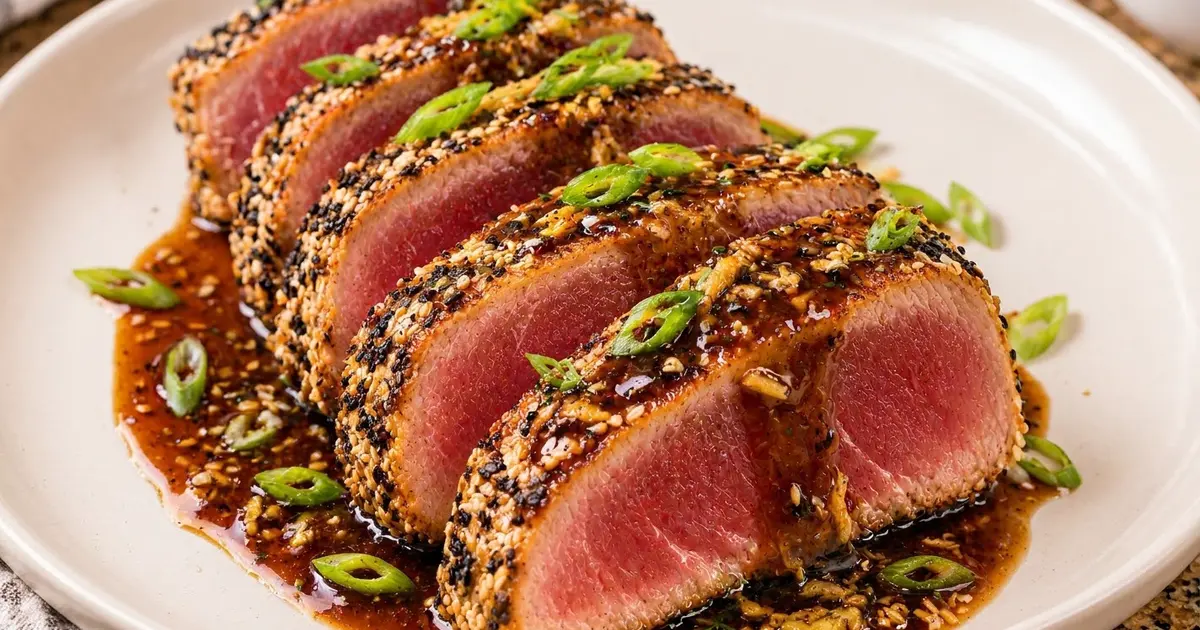
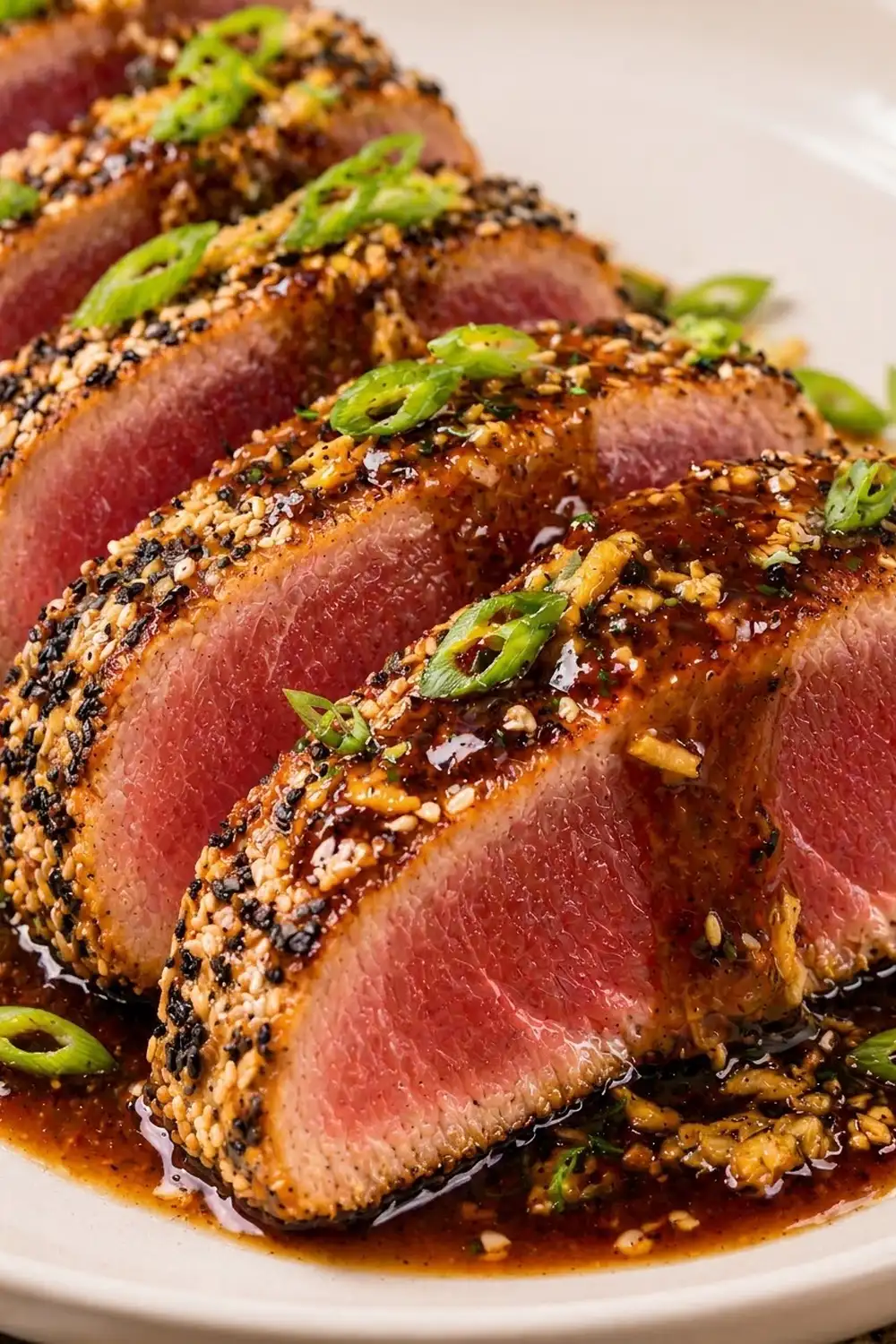
This sesame-crusted seared tuna looks like a restaurant dish but comes together in less than half an hour. Thick tuna steaks are pressed into white and black sesame seeds, seared hard for just a minute or two per side, and sliced to show a ruby-red center. Then they get a glossy soy, garlic and ginger sauce spooned over the top and a handful of fresh scallions.
Each bite starts with the crunch of toasted sesame and a little heat from cracked pepper, then turns into cool, buttery, almost silky tuna. The sauce is salty, gently sweet and fragrant with garlic and ginger. It clings to the crust and pools on the plate, so every slice picks some up. The smell of toasting sesame alone is worth making it for.
It’s great for home cooks because there’s almost nothing to it. There’s no marinating, no oven and no tricky technique. You just need a very hot pan and a timer. Most of the work is a five-minute sauce and a quick coating station.
It works well for a fast weeknight dinner, a date night at home, or an impressive appetizer when you’re feeding a crowd. It’s naturally high in protein and dairy-free. With tamari instead of soy sauce, it’s easy to make gluten-free too.
Why This Recipe Works
A dry surface and a ripping-hot pan. Patting the tuna completely dry lets the seeds stick and lets the crust brown instead of steam. A very hot pan toasts the sesame in seconds. The heat only reaches a few millimeters into the fish, so you get that sharp line between the golden crust and the rare center.
Two colors of sesame plus cracked pepper. White sesame seeds toast to a nutty gold. Black sesame seeds stay crisp and add a slightly deeper, earthier flavor. Mixing them gives you the speckled look and a crust with more character than either seed on its own. Coarse black pepper adds gentle heat so the crust doesn’t taste flat.
A sauce thickened just enough to cling. A small cornstarch slurry turns the soy, honey and vinegar into a light glaze. It coats the back of a spoon and drapes over the slices instead of running straight off. The garlic and ginger simmer only briefly, so they stay bright and punchy rather than turning bitter.
Tips for Success
- Buy the right tuna. Look for firm, deep-red steaks with no fishy smell, labeled sushi-grade or sashimi-grade, because the center is served rare.
- Choose thick steaks. Steaks at least 1 inch (2.5 cm) thick give you a crust and a rare center. Thin steaks cook through before the seeds brown.
- Cook in batches if needed. In a 10-inch pan, sear two steaks at a time so the pan stays hot.
- Watch the seeds, not just the clock. Sesame goes from golden to burnt in about 20 seconds, so lower the heat slightly if they darken too fast.
- Make the sauce ahead. The sauce keeps for up to 5 days in the fridge. Rewarm it gently with a teaspoon of water.
- Cook it longer if you prefer. For medium-rare, sear 2 minutes per side. Cooking past medium makes tuna dry and chalky.
- Wipe your knife. Clean the blade between slices for neat, picture-perfect cuts.
- Open a window. Searing creates some smoke, so turn on the hood fan before the oil goes in.
Variations
Spicy sesame tuna: Add ½ tsp (1 g) red pepper flakes to the sauce and 1 tsp sriracha after it thickens. The heat cuts through the rich tuna and plays nicely against the honey.
Citrus glaze: Replace the rice vinegar with 2 tbsp (30 ml) fresh orange juice and add ½ tsp grated orange zest. The sauce becomes brighter and fruitier, which works well in warmer months.
Salmon instead of tuna: Use 6 oz (170 g) skin-off salmon fillets and sear for 3–4 minutes per side until medium. Salmon is richer and more forgiving if you prefer fish that isn’t rare.
Tuna rice bowls: Slice the tuna over steamed rice with cucumber and shredded carrot, then spoon the sauce over everything. It turns the recipe into a filling one-bowl meal that’s great for lunch.
FAQ
Is it safe to eat tuna rare?
Yes, as long as you buy high-quality tuna sold as sushi-grade or sashimi-grade from a trusted fishmonger. These fish are handled and frozen to make them safe to eat raw or rare. Pregnant people, young children and anyone with a weakened immune system should check with a doctor or cook the tuna through.
Can I use frozen tuna steaks?
Absolutely. Many good-quality tuna steaks are sold frozen. Thaw them overnight in the fridge in their packaging, never on the counter. Pat them extra dry before coating, because thawed fish releases more moisture.
Why are my sesame seeds falling off?
Usually the fish was too wet, the seeds weren’t pressed in firmly, or the steaks were moved too soon in the pan. Dry the tuna well and press hard when coating. Leave each side alone until it’s set. A thin brush of beaten egg white before coating helps if the problem continues.
Can I make this without honey?
Yes. Maple syrup or brown sugar work in the same 2 tbsp amount. Maple keeps the glaze glossy, while brown sugar gives a slightly deeper, caramel flavor. Either one balances the saltiness of the soy.
Can I serve it cold?
Yes. Seared tuna is lovely chilled, especially as an appetizer. Sear and cool the steaks, refrigerate them whole for up to 4 hours, then slice and sauce them just before serving. The crust softens a little but stays flavorful.
Storage and Reheating
Seared tuna is best eaten right away, while the crust is crisp and the center is cool and rare. If you have leftovers, store the sliced tuna and the sauce separately in airtight containers in the fridge. Eat the tuna within 1 day, since rare fish doesn’t keep long.
Avoid reheating leftover tuna, because heat cooks the rare center through and makes it dry. Enjoy it cold instead, over salad greens or rice, with the sauce warmed briefly in a small pan or in the microwave in 10-second bursts. The sauce keeps for up to 5 days in the fridge.
Cooked seared tuna doesn’t freeze well, because the texture turns mushy and watery once thawed. The sauce does freeze nicely for up to 2 months in a small jar or ice cube tray. Thaw it overnight in the fridge and whisk it over low heat until smooth and glossy again.
Serving Suggestions
Steamed jasmine rice is the classic pairing. It soaks up the extra sauce and lets the tuna stay the star. For something lighter, a crisp cucumber salad dressed with rice vinegar gives you cool crunch against the warm, nutty crust.
Quickly sautéed green beans or snap peas add color and freshness and only take a few minutes in the same skillet. Soba noodles tossed with a spoonful of the sauce make the meal more filling without competing with the fish.
Final Notes
This sesame-crusted seared tuna is proof that a stunning dinner doesn’t need hours in the kitchen. Make the sauce first, dry the fish well, get your pan properly hot and trust the timer. You’ll be rewarded with a crunchy golden crust, a ruby-red center and a glossy garlic-ginger sauce that ties it all together. Once you’ve made it a couple of times, it becomes the kind of recipe you can pull off on a busy Tuesday and still feel like you’re eating somewhere special. Enjoy every bite.
Print
Sesame-Crusted Seared Tuna with Soy Garlic Ginger Sauce Recipe
- Total Time: 25 minutes
- Yield: 4 1x
Description
Golden sesame-crusted tuna with a rare, ruby-red center, finished with a glossy soy garlic ginger sauce and fresh scallions. It’s restaurant-worthy and ready in under 30 minutes.
Ingredients
- 4 sushi-grade tuna steaks, about 6 oz (170 g) each and 1 to 1¼ inches (2.5–3 cm) thick
- ½ tsp (3 g) kosher salt
- 1 tsp (2 g) coarsely cracked black pepper
- ¼ cup (36 g) white sesame seeds
- 2 tbsp (18 g) black sesame seeds
- 2 tbsp (30 ml) avocado oil or another high-smoke-point neutral oil
- ¼ cup (60 ml) soy sauce (or tamari for gluten-free)
- 2 tbsp (42 g) honey
- 1 tbsp (15 ml) rice vinegar
- 1 tsp (5 ml) toasted sesame oil
- 3 cloves garlic, finely minced (about 1 tbsp / 9 g)
- 1 tbsp (6 g) finely minced fresh ginger
- 3 tbsp (45 ml) water, divided
- 1 tsp (3 g) cornstarch
- 2 scallions, thinly sliced on a slight angle (about ¼ cup / 25 g)
- ½ tsp (1.5 g) extra sesame seeds, optional
Instructions
- Make the sauce. In a small saucepan, whisk together the soy sauce, honey, rice vinegar, sesame oil, garlic, ginger and 2 tbsp of the water. Bring it to a gentle simmer over medium heat and cook for 2 minutes. Stir the cornstarch into the remaining 1 tbsp water, whisk it into the pan and simmer for 30–60 seconds more. It’s ready when it turns glossy and coats the back of a spoon. Take it off the heat right away. The most common mistake is a hard boil, which scorches the garlic and makes the sauce gummy.
- Dry and season the tuna. Take the tuna out of the fridge about 10 minutes before cooking. Pat each steak very dry on all sides with paper towels, pressing gently, until the towel comes away with almost no moisture. Season both sides with the salt and cracked pepper. The surface should feel tacky, not wet. Don’t skip the drying step. Wet fish makes the seeds clump and slide off, and the water turns to steam in the pan, so you get a pale, soft coating instead of a crisp golden crust.
- Coat in sesame seeds. Mix the white and black sesame seeds in a shallow dish. Press each steak firmly into the seeds, first the top and bottom and then the narrow edges, until it is completely covered. Use your palm to press the seeds in so they stick. When you’re done, the steaks should look evenly speckled with no bare patches of red. A common mistake is a light dab instead of a firm press. Loose seeds fall off in the pan and burn in the oil.
- Sear the tuna. Heat the oil in the skillet over medium-high to high heat for 2–3 minutes, until it shimmers and the first wisp of smoke appears. Lay the steaks in, away from you, without crowding the pan. You should hear an immediate, loud sizzle. Sear for 60–90 seconds per side for rare, until the seeds are golden-brown. Then use tongs to hold each steak on its edges for about 10 seconds each. Don’t move the fish while it sears, and don’t overcook it. The gray band should be no more than ⅛ inch (3 mm) deep.
- Rest and slice. Move the steaks to a cutting board and let them rest for 2 minutes. Use a very sharp knife to cut them against the grain into slices about ½ inch (1.25 cm) thick. Use long, single strokes instead of sawing. Each slice should show a thin golden crust, a narrow cooked edge and a deep pink-red center. Dull knives and back-and-forth sawing are the usual problems. They crush the tender fish and knock the crust loose, which leaves you with ragged slices.
- Plate, sauce and garnish. Fan the slices in an overlapping row on a serving plate, leaning them against each other so the red centers face up. Warm the sauce briefly if it has thickened, then spoon it slowly over the slices so it drips down the sides and pools around the base. It should look glossy and full of flecks of garlic and ginger. Scatter the scallions over the top. Don’t flood the plate with sauce. Too much will soften the crust, so serve any extra on the side.
Notes
- Buy the right tuna. Look for firm, deep-red steaks with no fishy smell, labeled sushi-grade or sashimi-grade, because the center is served rare.
- Choose thick steaks. Steaks at least 1 inch (2.5 cm) thick give you a crust and a rare center. Thin steaks cook through before the seeds brown.
- Cook in batches if needed. In a 10-inch pan, sear two steaks at a time so the pan stays hot.
- Watch the seeds, not just the clock. Sesame goes from golden to burnt in about 20 seconds, so lower the heat slightly if they darken too fast.
- Make the sauce ahead. The sauce keeps for up to 5 days in the fridge. Rewarm it gently with a teaspoon of water.
- Cook it longer if you prefer. For medium-rare, sear 2 minutes per side. Cooking past medium makes tuna dry and chalky.
- Wipe your knife. Clean the blade between slices for neat, picture-perfect cuts.
- Open a window. Searing creates some smoke, so turn on the hood fan before the oil goes in.
- Prep Time: 15 minutes
- Cook Time: 10 minutes
- Category: Dinner