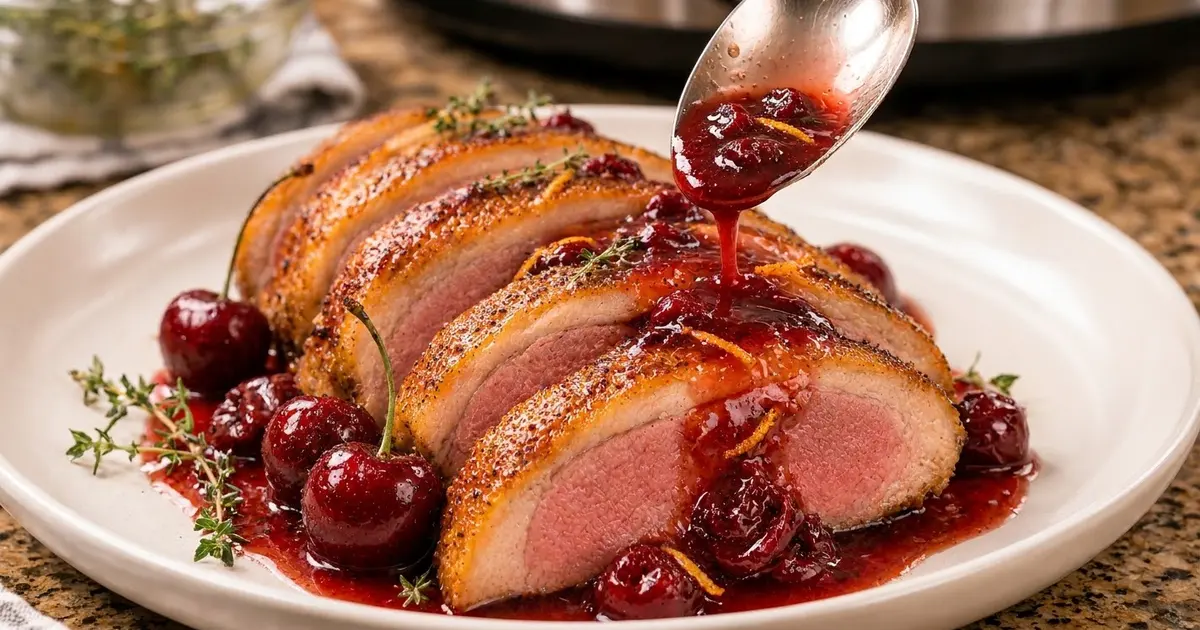
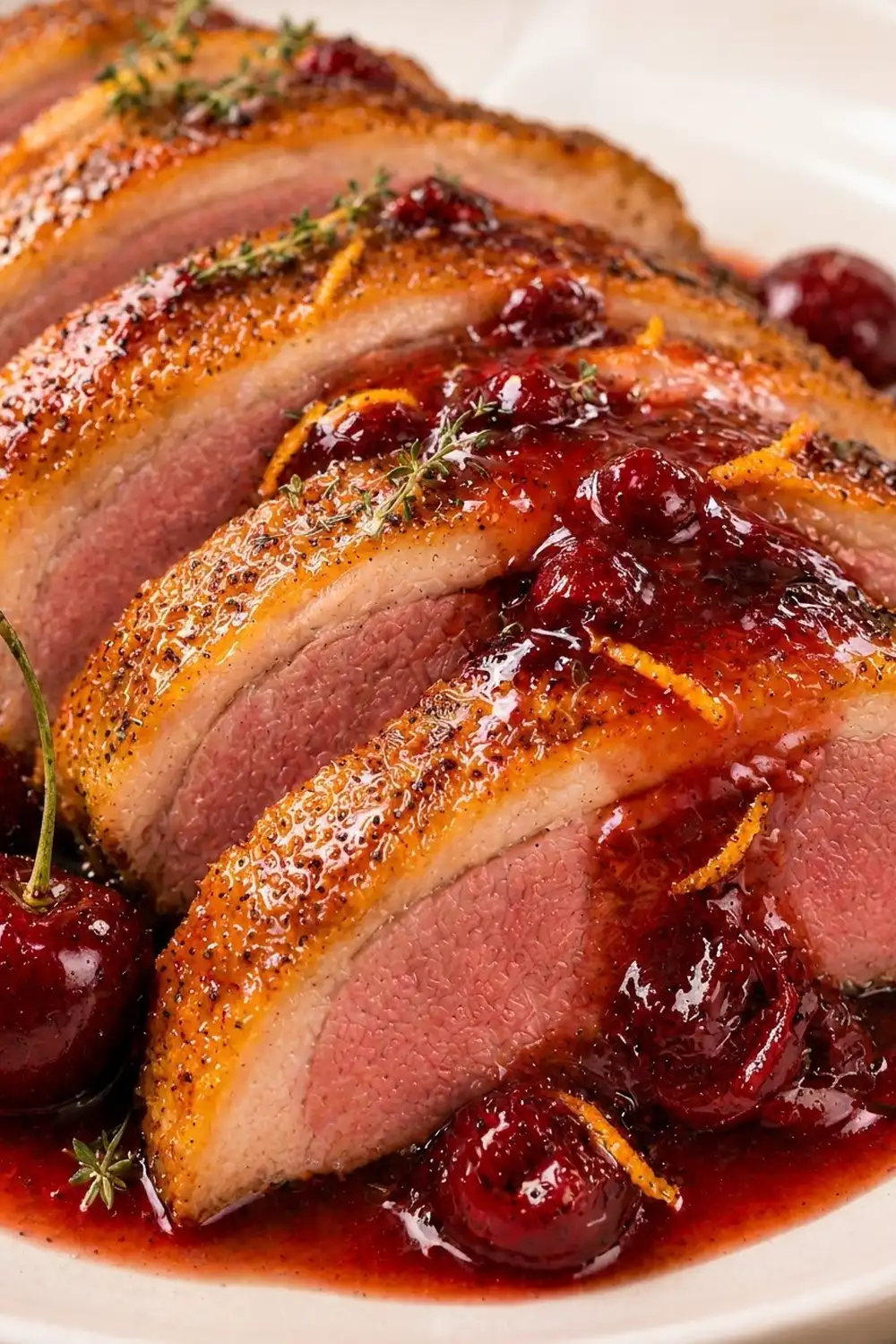
Pan-seared duck breast with cherry sauce looks like a restaurant special, but it’s one of the easiest impressive dinners you can make at home. You get a thick fan of rosy slices, each topped with a strip of crackling golden skin. Over the top goes a glossy ruby sauce full of soft, sweet cherries.
The flavor is rich without being heavy. When the skin renders properly, it shatters like a thin cracker, and the meat underneath stays tender and juicy, more like a good steak than chicken. The sauce brings bright fruit, a little tang from orange zest and vinegar, and an earthy note from fresh thyme. Your kitchen will smell like caramelized duck fat and warm cherries, which is reason enough to make it.
It’s also very practical for a home cook. You need one skillet, about 45 minutes, and a short list of ingredients. Most of the cooking time is hands-off while the fat slowly renders. The pan sauce is built right on top of the browned bits the duck leaves behind, so nothing goes to waste.
This recipe is great for date nights, holidays and small dinner parties. It’s naturally gluten-free and dairy-light, since there’s just one tablespoon of butter to finish the sauce. It’s a good pick for anyone who eats low-carb or simply wants a special-occasion main that doesn’t tie them to the stove all evening.
Why This Recipe Works
A cold-pan start renders the fat properly. Duck breast has a thick layer of fat under the skin. Put it in a hot pan and the skin sears before that fat can melt, which leaves it flabby and chewy. Starting the duck skin-side down in a cold skillet and raising the heat slowly melts the fat gradually. The skin ends up thin, crisp and deeply browned, and the meat warms gently instead of seizing.
Scoring and dry skin make crispness easier. A shallow crosshatch cut through the skin (but not into the meat) gives the fat an escape route and stops the breast from curling. Patting the skin very dry and salting it ahead of time pulls out surface moisture. Moisture causes steaming, and steaming is the enemy of crispness.
The sauce is built on duck fat and fond. Instead of making the cherry sauce separately, you cook the shallot in a spoonful of the rendered fat. Then you deglaze with orange juice and stock to lift every browned bit off the pan. A little vinegar balances the sweetness of the cherries, and a pat of cold butter whisked in at the end gives the sauce the glossy, spoonable finish you see in the photo.
Tips for Success
- Salt ahead if you can. Salting the duck uncovered in the fridge for 4–24 hours dries the skin even more, so it crisps better.
- Bring the duck out early. Let it sit at room temperature for 20 minutes before cooking so the center cooks evenly.
- Don’t crowd the pan. The breasts should not touch. If your skillet is small, use two pans so they don’t steam.
- Save the duck fat. Strain it into a jar and refrigerate it for up to 3 months. Use it to roast potatoes or vegetables.
- Use a thermometer, not a timer. Duck breasts vary a lot in thickness, so temperature is the only reliable guide.
- Make the sauce ahead. The cherry sauce keeps for 3 days in the fridge. Rewarm it gently and add the butter just before serving.
- Warm the plates. Ten minutes in a 200°F (95°C) oven keeps the slices and sauce from cooling too fast.
Variations
Port and cherry sauce: Swap the orange juice for ¼ cup (60 ml) ruby port plus ¼ cup (60 ml) extra stock. The port gives a deeper, wine-like sweetness that’s classic with duck and makes the sauce look even darker.
Tart cherry version: Use sour (Morello) cherries and raise the sugar to 3 tbsp (38 g). The sauce turns out sharper and brighter, which cuts nicely through the richness of the skin.
Spiced holiday version: Add a small cinnamon stick and 1 star anise pod with the cherries and remove them before thickening. The warm spices make this a natural fit for a festive table.
Chicken or pork instead of duck: Use the same sauce on pan-seared skin-on chicken thighs, cooked to 175°F (80°C), or pork tenderloin medallions, cooked to 145°F (63°C). The fruit works with both, though you won’t get duck’s rich crackling skin.
FAQ
Is it safe to eat duck breast pink?
Yes. Duck breast is red meat in the kitchen, more like beef than chicken, and it’s traditionally served medium-rare at 130–135°F (54–57°C). If you prefer it more cooked, take it to 145°F (63°C), but expect it to be firmer. Whole duck and duck legs are a different case and are cooked much longer.
Why isn’t my duck skin crispy?
Usually the pan started out too hot, the skin was wet, or the breasts were moved too early. A cold start, dry skin and patience over medium-low heat fix it. If the skin is still soft when the meat is nearly done, give it 1 more minute skin-side down over medium-high heat.
Can I use canned or jarred cherries?
Yes. Drain them well and use about 1½ cups (225 g). They’re already soft and sweetened, so cut the simmering time to 3–4 minutes and the sugar to 1 tbsp.
Where do I buy duck breast?
Many large grocery stores carry vacuum-packed duck breasts in the meat or freezer section. Butchers and specialty markets often have them too. Thaw frozen breasts overnight in the fridge and pat them very dry before scoring.
Can I make this without the orange?
Yes. Replace the orange juice with extra stock plus 1 tsp lemon juice, and leave out the zest. You’ll lose a little brightness, but the cherries and thyme still carry the sauce.
Storage and Reheating
Store leftover duck and sauce in separate airtight containers in the refrigerator for up to 3 days. Keeping them apart helps the skin hold some texture and stops the meat from soaking up too much liquid.
To reheat, put the duck skin-side down in a dry skillet over medium-low heat for 3–4 minutes to re-crisp the skin, then flip it for just 30 seconds. Warm the sauce in a small saucepan over low heat, adding a splash of stock if it has thickened. Avoid the microwave for the duck. It turns the meat grey and the skin rubbery.
The cherry sauce freezes well for up to 3 months. Thaw it overnight in the refrigerator and whisk while reheating. Cooked duck breast can be frozen for up to 2 months, though it’s best sliced cold for salads afterward rather than served as a main again.
Serving Suggestions
Potatoes roasted in the reserved duck fat are the classic partner. Their crisp edges and fluffy centers soak up the cherry sauce. A creamy root vegetable purée, such as celery root or parsnip, gives you a smooth, mild base that sets off the rich meat.
For something green, try sautéed green beans or a lightly dressed arugula salad. Their freshness and slight bitterness balance the sweet sauce. Wild rice also works well, adding a nutty, chewy contrast that holds up to the fruit.
Final Notes
This is one of those recipes that feels fancy but rewards patience more than skill. Go low and slow on the skin, trust your thermometer, and give the duck a proper rest. Once you’ve seen that crackling golden skin and glossy cherry sauce on the plate, it may become your go-to for special nights at home. Enjoy every bite, and don’t forget to save that duck fat.
Print
Pan-Seared Duck Breast with Cherry Sauce Recipe
- Total Time: 45 minutes
- Yield: 4 1x
Description
Crackling golden skin, rosy medium-rare slices, and a glossy cherry-orange sauce make this pan-seared duck breast an easy, restaurant-worthy dinner at home.
Ingredients
- 4 boneless, skin-on duck breasts (about 7 oz / 200 g each; 1¾ lb / 800 g total)
- 1½ tsp (9 g) kosher salt
- 1 tsp (2 g) freshly cracked black pepper
- 1 tbsp (15 ml) rendered duck fat, from the pan
- 1 medium shallot, finely minced (about 3 tbsp / 30 g)
- 2 cups (300 g) pitted dark sweet cherries, fresh or frozen
- ½ cup (120 ml) fresh orange juice
- ½ cup (120 ml) low-sodium chicken stock
- 2 tbsp (25 g) granulated sugar
- 1 tbsp (15 ml) red wine vinegar
- 4 sprigs fresh thyme, plus extra for garnish
- Finely grated zest of 1 orange (about 1 tbsp), plus thin strips for garnish
- 1 tsp (3 g) cornstarch mixed with 1 tbsp (15 ml) cold water
- 1 tbsp (14 g) cold unsalted butter
- ¼ tsp (1.5 g) kosher salt, or to taste
- A handful of fresh whole cherries with stems (optional, for garnish)
Instructions
- Score and season the duck. Pat the breasts very dry with paper towels. Trim any fat that hangs past the edges of the meat. Use a sharp knife to cut a crosshatch pattern into the skin, with cuts about ¼ inch (6 mm) apart, slicing through the fat but stopping just short of the pink meat. Season both sides with 1½ tsp salt and 1 tsp cracked pepper, rubbing some into the cuts. Let the duck sit for 10 minutes while you prep the sauce ingredients. The most common mistake is cutting too deep. If you cut into the meat, juices leak out during cooking and those spots dry out.
- Render the skin in a cold pan. Lay the breasts skin-side down in a cold, dry skillet, then set it over medium-low heat. Within 3–4 minutes you’ll hear a gentle, steady sizzle. Cook without moving them for 12–15 minutes, until the skin is deep golden-amber and much thinner. Every 5 minutes, carefully pour the excess fat into a heatproof bowl. You should have about ½ cup (120 ml) by the end. Don’t turn the heat up to rush it. Loud spattering and smoke mean the skin is burning before the fat has melted.
- Flip and finish cooking. Turn the breasts meat-side down and cook for 2–4 minutes over medium heat. They’re done when an instant-read thermometer in the thickest part reads 130–135°F (54–57°C) for medium-rare. The meat should feel springy, like a medium-rare steak. Briefly tip the breasts onto their sides with tongs if the edges still look pale. Don’t wait for the thermometer to say 140°F (60°C). Carryover heat will raise it another 5 degrees, and well-done duck turns livery and tough.
- Rest the duck. Move the breasts skin-side up to a cutting board and let them rest for 8–10 minutes. Leave them uncovered so steam doesn’t soften the crisp skin you worked for. During this rest the juices settle back into the meat, so your slices stay rosy and moist instead of bleeding onto the plate. Use this time to make the sauce in the same skillet. Don’t wipe the pan out. The dark browned bits stuck to the bottom are where most of the sauce’s flavor comes from.
- Start the cherry sauce. Pour off all but 1 tbsp of fat from the skillet and set it over medium heat. Add the minced shallot and cook for 1–2 minutes, stirring, until it’s soft, translucent and fragrant. Add the cherries, orange juice, stock, sugar, vinegar and thyme sprigs, scraping up the fond with a wooden spoon. Bring to a lively simmer and cook for 6–8 minutes, until the cherries soften and slump and the liquid turns a deep ruby red. Keep the heat moderate. If it boils too hard, the cherries can split into mush.
- Thicken and finish the sauce. Stir the cornstarch slurry, pour it in and simmer for 1 minute. The sauce will turn glossy and thick enough to coat a spoon, and it should run off in a slow ribbon. Take the pan off the heat. Remove the thyme stems, then stir in the grated orange zest and swirl in the cold butter until it melts completely. Taste and add about ¼ tsp salt. If the sauce gets too thick, loosen it with 1–2 tbsp of stock. Adding butter over high heat can make it split and turn greasy, so always do it off the heat.
- Slice, sauce and serve. Slice each breast on a slight diagonal into pieces about ½ inch (1.25 cm) thick. Slice skin-side up with a sharp knife, using one long stroke so the skin stays attached. Fan the slices on a warm plate so the pink centers show. Spoon the warm cherry sauce generously over the meat and let it pool around the plate. Garnish with orange zest strips, small thyme sprigs and a few whole cherries. Serve right away. Sauce left sitting on the skin for too long will soften it.
Notes
- Salt ahead if you can. Salting the duck uncovered in the fridge for 4–24 hours dries the skin even more, so it crisps better.
- Bring the duck out early. Let it sit at room temperature for 20 minutes before cooking so the center cooks evenly.
- Don’t crowd the pan. The breasts should not touch. If your skillet is small, use two pans so they don’t steam.
- Save the duck fat. Strain it into a jar and refrigerate it for up to 3 months. Use it to roast potatoes or vegetables.
- Use a thermometer, not a timer. Duck breasts vary a lot in thickness, so temperature is the only reliable guide.
- Make the sauce ahead. The cherry sauce keeps for 3 days in the fridge. Rewarm it gently and add the butter just before serving.
- Warm the plates. Ten minutes in a 200°F (95°C) oven keeps the slices and sauce from cooling too fast.
- Prep Time: 15 minutes
- Cook Time: 30 minutes
- Category: Dinner