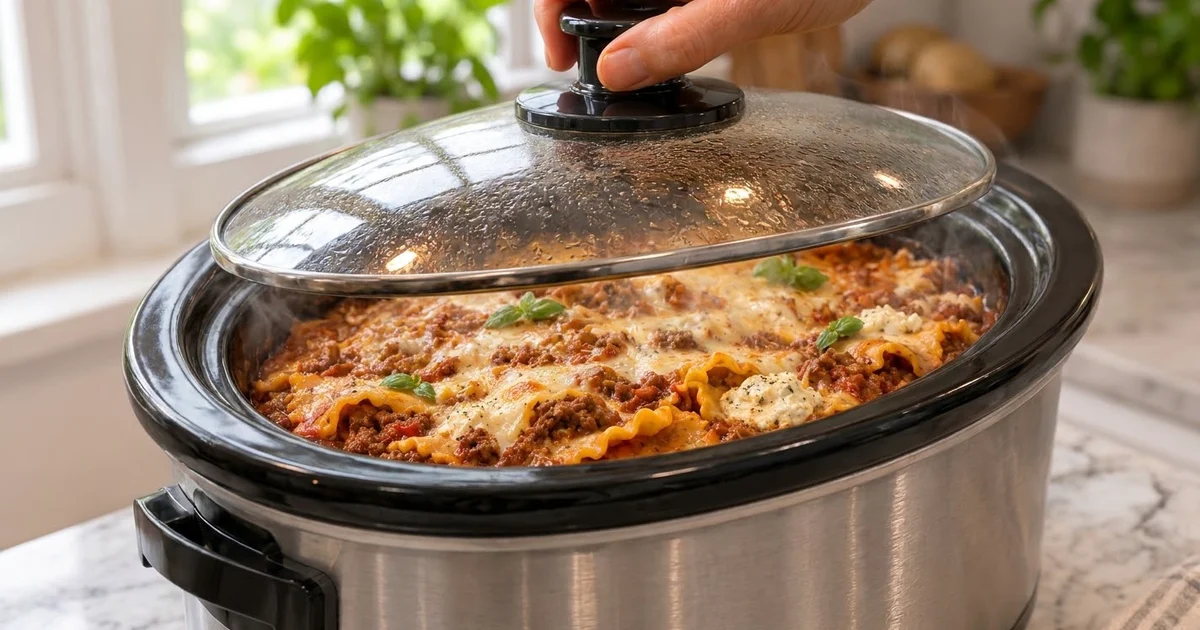
Slow cooker lasagna gives you everything you love about a classic baked lasagna without turning on the oven or boiling a pot of noodles. Ground beef simmers in a thick tomato sauce, uncooked lasagna noodles soften right in the pot, and creamy ricotta and melted mozzarella fill every layer.
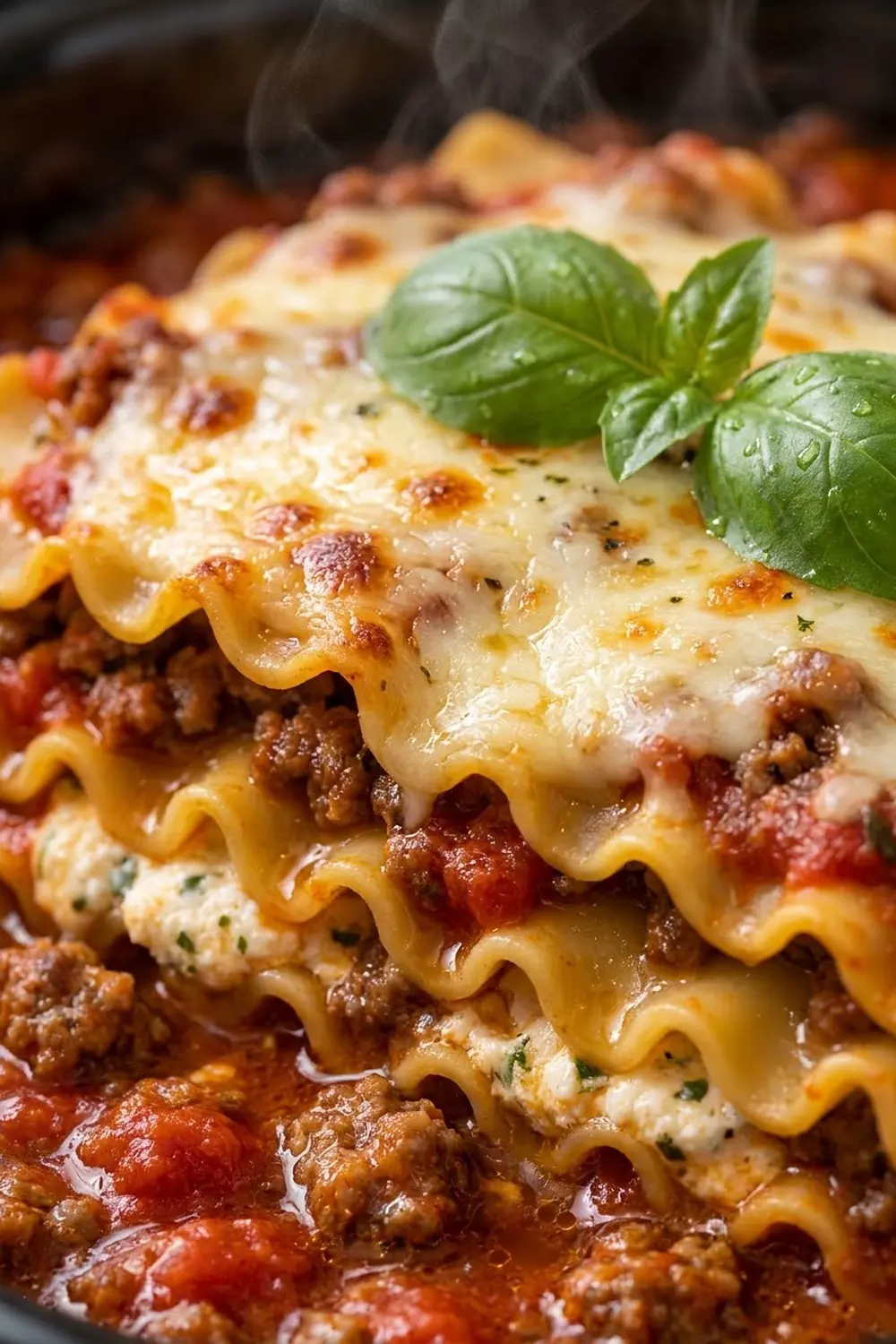
When you lift the lid, the steam smells of garlic, sweet tomatoes and browned beef. The noodles are tender and silky, the edges bubble with rich red sauce, and the top is a blanket of soft, stretchy cheese with small pockets of herb-flecked ricotta. Every scoop holds together but stays soft enough to melt in your mouth.
This recipe is great for home cooks because the slow cooker does most of the work. You brown the beef, stir the sauce together, layer everything up and walk away for about four hours. There’s no oven to preheat and no hot noodles to handle.
It’s a good fit for busy weekdays when you can start dinner after lunch, Sunday meal prep, potlucks and family gatherings. One batch feeds eight people, and the leftovers reheat beautifully.
Why This Recipe Works
Browning the beef first is a step you shouldn’t skip. Raw ground beef added straight to a slow cooker turns out gray, steamed and greasy. Searing it in a skillet builds deep, savory flavor, and it lets you drain off the extra fat before it can pool between the noodles.
The sauce is a little looser than you’d use in the oven, on purpose. Uncooked noodles need liquid to soften. A jar of marinara thinned with crushed tomatoes and ½ cup of water gives the pasta enough moisture to cook through without turning the lasagna soupy. The sealed lid holds in steam, which is why you’ll see condensation beading on the glass. That steam helps the top layer of noodles cook evenly.
The ricotta mixture holds the lasagna together. Adding an egg and Parmesan to the ricotta makes it set slightly as it cooks, so the layers stay intact when you slice. Holding back the final cup of mozzarella until the last 30 minutes gives you a melted, lightly golden top instead of a rubbery one.
Tips for Success
- Grease the insert lightly. A thin coat of cooking spray under the first layer of sauce makes serving and cleanup easier.
- Line with foil handles for clean slices. Lay two long strips of folded foil across the insert before layering so you can lift out whole portions.
- Don’t use no-boil noodles. They’re thinner and tend to turn mushy over 4 hours. Regular noodles keep their curly-edged texture.
- Know your slow cooker. Newer models run hot, so check for doneness at 3 hours the first time you make this recipe.
- Make it ahead. Assemble the lasagna in the insert, cover and refrigerate it for up to 24 hours. Add 30–45 minutes to the cooking time when it starts out cold.
- Shred your own mozzarella. Bagged cheese has anti-caking agents that can melt less smoothly, so a freshly grated block gives you a creamier top.
- Don’t overfill. Keep the layers at least 1 inch below the rim so the sauce can bubble without spilling over.
Variations
Italian sausage lasagna: Replace half the ground beef with mild or hot Italian sausage removed from its casings. The fennel and spices in the sausage add warmth without any extra seasoning.
Spinach and ricotta boost: Stir 5 ounces (140 g) of thawed, well-squeezed frozen spinach into the ricotta mixture. It adds color and vegetables without changing the cooking time.
Mushroom and beef: Brown 8 ounces (225 g) of sliced mushrooms with the onion. They add an earthy depth and stretch the meat further.
Lighter turkey version: Use lean ground turkey and part-skim mozzarella. To make up for the milder flavor, add 1 teaspoon of dried oregano to the sauce.
FAQ
Do I really not need to boil the noodles?
Correct, you can skip boiling. The noodles soak up liquid from the sauce and soften in the moist, steamy slow cooker over about 4 hours. Just make sure every noodle is completely covered with sauce or cheese.
Why is my lasagna watery?
The usual causes are watery ricotta, high-moisture fresh mozzarella, or condensation dripping off the lid. Drain the ricotta, use low-moisture mozzarella and wipe the lid before adding the cheese topping. Letting the lasagna rest for 15 minutes also helps the sauce thicken.
Can I cook it on HIGH to save time?
You can cook it on HIGH for about 2½ hours, but the edges are more likely to scorch and the noodles can cook unevenly. LOW gives you more tender, consistent results. If you do use HIGH, check it at 2 hours.
Can I use a smaller slow cooker?
A 4- or 5-quart cooker works if you scale the recipe down by about one-third. Using the full recipe in a smaller pot makes the layers too deep, and the center may not cook through.
Can I put raw beef in to save a step?
It isn’t recommended. Raw beef releases fat and liquid into the layers and never develops browned flavor. The 10 minutes it takes to brown it makes a big difference.
Storage and Reheating
Let leftovers cool for no more than 2 hours, then move them to airtight containers. They’ll keep in the refrigerator for up to 4 days, and the flavors often taste even better the next day.
To reheat a single portion, microwave it covered for 1½–2 minutes, adding a splash of water to keep it moist. For larger amounts, put the lasagna in a covered baking dish and warm it at 350°F (175°C) for 20–25 minutes, until it’s hot in the center.
Lasagna freezes very well. Wrap individual portions tightly in plastic wrap, then foil, and freeze for up to 3 months. Thaw overnight in the refrigerator before reheating, or bake from frozen, covered, at 350°F (175°C) for about 45–50 minutes.
Serving Suggestions
A crisp green salad with a simple vinaigrette is the classic partner, because its brightness cuts through the rich cheese and beef. Warm garlic bread is good for scooping up extra sauce from the plate.
For more vegetables, serve it with roasted broccoli or green beans, whose slight char balances the soft texture of the lasagna. A bowl of sliced cucumbers tossed with vinegar also adds a cool, refreshing crunch.
Final Notes
Slow cooker lasagna is the kind of recipe that makes a busy day feel easy. With a little browning and layering in the afternoon, you can lift the lid at dinnertime to bubbling sauce, tender noodles and melted cheese, with no oven and no pot of boiling pasta. Once you’ve made it, try one of the variations, prep it ahead for a busy week, or take it to your next family get-together. I hope it becomes a regular in your kitchen.
Print
Slow Cooker Lasagna Recipe
- Total Time: 4 hours 40 minutes
- Yield: 8 1x
Description
Tender noodles, rich beef sauce and gooey melted cheese, all cooked low and slow with no oven needed. This easy slow cooker lasagna feeds a crowd with very little effort.
Ingredients
- 1 tablespoon (15 ml) olive oil
- 1½ pounds (680 g) lean ground beef (85–90% lean)
- 1 medium yellow onion, finely diced (about 1 cup / 150 g)
- 3 garlic cloves, minced (about 1 tablespoon)
- 1 jar (24 oz / 680 g) marinara sauce
- 1 can (15 oz / 425 g) crushed tomatoes
- ½ cup (120 ml) water
- 1 teaspoon (6 g) salt
- ½ teaspoon (1 g) black pepper
- 15 ounces (425 g) whole-milk ricotta cheese
- 1 large egg
- ½ cup (50 g) grated Parmesan cheese
- 1 tablespoon dried parsley
- ¼ teaspoon (1.5 g) salt
- 10 regular uncooked lasagna noodles (about 9 oz / 255 g), not no-boil
- 3 cups (340 g) shredded low-moisture mozzarella, divided
- 6–8 fresh basil leaves, for garnish
Instructions
- Brown the beef. Heat the olive oil in the skillet over medium-high heat until it shimmers. Add the ground beef and break it into small crumbles with a wooden spoon. Cook for 6–8 minutes until no pink remains and some pieces have deep brown, crispy edges. Add the onion and cook for 4 minutes until softened and translucent, then add the garlic for 30 seconds, just until fragrant. Drain off any excess fat. A common mistake is crowding the pan or stirring constantly, which steams the meat instead of browning it.
- Simmer the sauce. Stir in the marinara, crushed tomatoes, water, salt and pepper. Bring to a gentle bubble and simmer for 3 minutes so the flavors come together. The sauce should be thick but pourable, and loose enough to slowly run off the spoon. Taste it now and adjust the seasoning, because it’s hard to fix once everything is layered. Don’t reduce the sauce until it’s thick. The uncooked noodles need that liquid to soften properly in the slow cooker.
- Mix the ricotta filling. In a medium bowl, stir together the ricotta, egg, Parmesan, dried parsley and salt until smooth and evenly flecked with green. It should be thick and creamy, like spreadable frosting. Mix just until combined so it stays fluffy. If your ricotta looks watery, drain it in a fine-mesh strainer for 10 minutes first. Extra liquid here can make the finished lasagna loose and runny.
- Layer the lasagna. Spread 1 cup of meat sauce over the bottom of the slow cooker so the noodles don’t stick or scorch. Add a layer of uncooked noodles, breaking them as needed to cover the sauce. Dot on one-third of the ricotta mixture, sprinkle with ⅔ cup of mozzarella, then spoon on about 1½ cups of sauce. Repeat twice, and finish with a final layer of sauce. Make sure every noodle is fully covered, because any exposed pasta stays hard and dry.
- Slow cook with the lid on. Cover and cook on LOW for 3½ hours. Resist lifting the lid, since each peek lets out steam and adds about 15 minutes to the cooking time. The lid will bead up with condensation, and the edges will bubble gently around the sides. The lasagna is ready for cheese when a knife slides easily through the noodles in the center. Avoid cooking on HIGH, because the edges can scorch before the middle cooks through.
- Add the cheese topping. Sprinkle the remaining 1 cup of mozzarella and a few extra small spoonfuls of ricotta over the top. Replace the lid and cook for 30 more minutes, until the cheese is fully melted, glossy and lightly golden at the edges. Wipe the inside of the lid with a towel before putting it back on, so condensation doesn’t drip onto the cheese and leave it watery.
- Lift the lid, rest and garnish. Turn off the slow cooker and carefully lift the lid, tilting it away from you to let the steam escape. Leave the lid off and let the lasagna rest for 15 minutes. During this time the sauce thickens and the layers firm up enough to scoop cleanly. Scatter fresh basil leaves over the top just before serving. If you cut in right away, the lasagna will slump into a saucy pile.
Notes
- Grease the insert lightly. A thin coat of cooking spray under the first layer of sauce makes serving and cleanup easier.
- Line with foil handles for clean slices. Lay two long strips of folded foil across the insert before layering so you can lift out whole portions.
- Don’t use no-boil noodles. They’re thinner and tend to turn mushy over 4 hours. Regular noodles keep their curly-edged texture.
- Know your slow cooker. Newer models run hot, so check for doneness at 3 hours the first time you make this recipe.
- Make it ahead. Assemble the lasagna in the insert, cover and refrigerate it for up to 24 hours. Add 30–45 minutes to the cooking time when it starts out cold.
- Shred your own mozzarella. Bagged cheese has anti-caking agents that can melt less smoothly, so a freshly grated block gives you a creamier top.
- Don’t overfill. Keep the layers at least 1 inch below the rim so the sauce can bubble without spilling over.
- Prep Time: 25 minutes
- Cook Time: 4 hours (on LOW)
- Category: Dinner