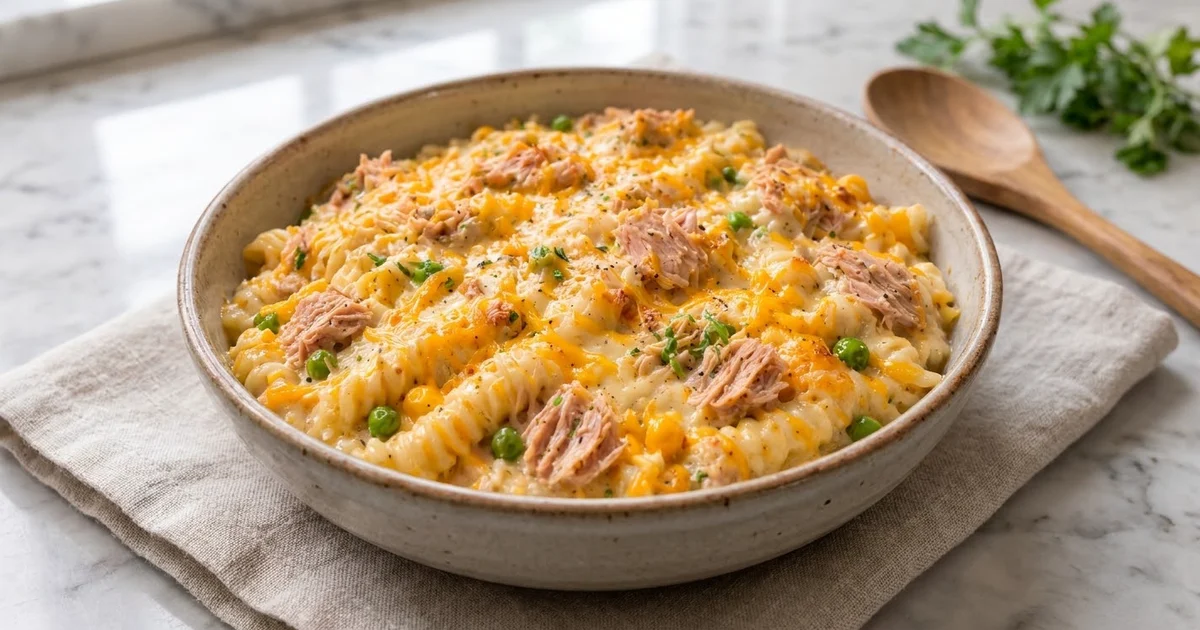
Some dinners feel like a warm blanket, and this slow cooker cheesy tuna pasta casserole is one of them. Rotini, flaked tuna and sweet green peas cook together in a velvety cheddar sauce right in the crock. You don’t need to boil pasta in a separate pot or bake anything in the oven. When you lift the lid, you’ll see a bubbling layer of melted cheese on top.
The flavor is mild, savory and very comforting. The pasta soaks up the creamy sauce as it cooks, so every spiral is coated. The tuna adds a gentle savory note, and the peas add small bursts of sweetness. Sharp cheddar gives it a tangy richness. Your kitchen will smell of warm butter, garlic and melting cheese.
It’s great for home cooks because it’s mostly hands-off and uses pantry staples. Canned tuna, dry pasta, evaporated milk and frozen peas are probably already in your cupboard and freezer. Once everything is in the crock, you can help with homework, fold laundry or simply relax.
This casserole is good for busy weeknights, budget meals and families with picky eaters, and it reheats well for packed lunches. It feeds six people comfortably and is easy to double for a potluck if you have a larger slow cooker.
Why This Recipe Works
The pasta cooks right in the sauce. Dry rotini goes straight into the seasoned broth and evaporated milk. As it softens, it releases starch, and that starch thickens the sauce on its own, with no flour roux needed. The spiral shape also traps the creamy sauce, peas and bits of tuna in its grooves.
Evaporated milk keeps the sauce smooth. Regular milk can curdle or turn grainy after hours of gentle heat. Evaporated milk has more concentrated proteins, which keeps it stable. A little cream cheese stirred in at the end adds body and a silky finish, so the casserole stays creamy instead of turning greasy.
Delicate ingredients go in last. Canned tuna is already cooked, and peas only need a few minutes. Adding them, plus most of the cheese, near the end keeps the tuna in tender flakes, keeps the peas bright green and stops the cheese from separating. A final layer of cheddar under the covered lid melts into the glossy, golden top you see in the photo.
Tips for Success
- Check the pasta early. Slow cookers vary a lot, so start testing a piece at 1 hour 20 minutes, especially if your cooker runs hot.
- Drain the tuna thoroughly. Press it with a fork in a sieve. Extra water dilutes the sauce and makes the casserole taste fishier.
- Soften the cream cheese first. Cold cream cheese leaves white streaks, so let it sit out for about 20 minutes, or microwave it for 10 seconds.
- Don’t cook on LOW. Pasta sitting in warm liquid for hours absorbs too much and falls apart. HIGH gives better texture.
- Loosen leftovers before reheating. The pasta keeps drinking up sauce, so add 2–3 tbsp (30–45 ml) of milk when you warm it up.
- Wipe the lid before the last step. Drying the lid with a towel before adding the cheese topping keeps drips from making the top watery.
- Make it ahead partially. Whisk the sauce base and shred the cheese the night before, then refrigerate them separately.
Variations
Cheesy chicken version: Swap the tuna for 2 cups (280 g) of shredded cooked chicken, such as rotisserie chicken. It goes in at the same point and gives a milder, family-friendly result.
Crunchy topping: Toss ¾ cup (45 g) of panko with 1 tbsp (14 g) of melted butter and toast it in a skillet until golden. Sprinkle it on just before serving for the crisp contrast of a baked casserole.
Extra veggies: Replace half the peas with diced steamed broccoli, or stir in 1 cup (70 g) of sautéed mushrooms along with the tuna for a more earthy flavor.
Cheese swap: Use a mix of cheddar and Monterey Jack for an extra-stretchy, milder sauce, or add ½ cup (50 g) of Gruyère for a nutty depth.
FAQ
Can I use a different pasta shape?
Yes. Short, sturdy shapes like penne, medium shells or elbow macaroni work well. Egg noodles also work but cook faster, so start checking them at about 1 hour 10 minutes. Avoid thin shapes like angel hair.
Why is my casserole too thick or dry?
Your slow cooker probably runs hot, or the pasta cooked a little too long and absorbed the liquid. Stir in warm milk or broth 2 tablespoons at a time until it’s creamy again. Next time, start checking the pasta about 15 minutes earlier.
Can I double this recipe?
You can double it in a 7- or 8-quart slow cooker. Expect the first cooking stage to take 15–30 minutes longer, and stir twice instead of once so the pasta cooks evenly.
Can I use cream of mushroom soup instead?
Yes. Replace the evaporated milk with one 10.5 oz (298 g) can of condensed cream of mushroom soup whisked into the broth, and cut the salt to ¼ tsp. The flavor will be more classic and earthy, though slightly less cheesy.
Is it okay to use canned salmon?
Yes. Use about 10 oz (284 g) of drained salmon with the skin and large bones removed. It has a richer flavor that goes nicely with the cheddar.
Storage and Reheating
Let leftovers cool for no more than an hour, then move them to airtight containers. The casserole keeps in the refrigerator for up to 3 days. Because it contains fish, don’t leave it sitting on WARM for hours after dinner.
To reheat, put single portions in a microwave-safe bowl, add 1–2 tablespoons (15–30 ml) of milk, cover and heat for 1½–2 minutes, stirring halfway. For larger amounts, warm the casserole in a covered saucepan over medium-low heat for 6–8 minutes, stirring often and adding splashes of milk until it’s creamy again.
It freezes reasonably well for up to 2 months, though the pasta will be slightly softer after thawing. Freeze it in portioned containers and thaw overnight in the refrigerator, then reheat on the stovetop with extra milk.
Serving Suggestions
A crisp green salad with a lemony vinaigrette is the perfect partner, because the bright acidity cuts through the rich cheese sauce. Steamed green beans or roasted broccoli add color and a fresh crunch alongside the soft pasta.
For a heartier meal, serve warm garlic bread or buttered dinner rolls for scooping up the extra sauce. Sliced cucumbers and tomatoes with a pinch of salt (about ⅛ tsp) also make an easy, refreshing side that kids usually enjoy.
Final Notes
This slow cooker cheesy tuna pasta casserole is old-fashioned comfort food made easier. With a handful of pantry ingredients, one crock and very little hands-on time, you’ll have a creamy, cheesy dinner that tastes like it took much more effort. Lifting that steamy lid to find bubbling cheddar, tender spirals and bright peas is a small weeknight win. Make it once and it will probably become one of your regular dinners.
Print
Slow Cooker Cheesy Tuna Pasta Casserole Recipe
- Total Time: 2 hours 20 minutes
- Yield: 6 1x
Description
Tender rotini, flaky tuna and sweet peas cook in a velvety cheddar sauce right in your slow cooker. It’s a cozy, budget-friendly dinner with almost no hands-on work.
Ingredients
- 12 oz (340 g) dry rotini pasta
- 3 cups (720 ml) low-sodium chicken broth
- 1 can (12 fl oz / 354 ml) evaporated milk
- 2 tbsp (28 g) unsalted butter, melted
- 1 tsp (3 g) garlic powder
- 1 tsp (3 g) onion powder
- ¾ tsp (4 g) fine salt
- ½ tsp (1 g) ground black pepper
- 4 oz (113 g) cream cheese, cubed and softened
- 2 cans (5 oz / 142 g each) tuna in water, well drained
- 1 cup (140 g) frozen peas (no need to thaw)
- 2 cups (200 g) shredded sharp cheddar, divided
- 1 tbsp (4 g) chopped fresh parsley or chives
Instructions
- Prepare the slow cooker and sauce base. Lightly grease the inside of the crock with butter or nonstick spray, especially along the bottom edges, where cheesy sauce tends to stick. In a large measuring cup, whisk together the broth, evaporated milk, melted butter, garlic powder, onion powder, salt and pepper until the spices are fully dispersed with no floating clumps. Pour it into the crock. A common mistake is skipping the greasing step. Cheese sauce caramelizes against hot ceramic and leaves a stubborn ring that’s hard to clean later.
- Add the dry pasta. Pour the uncooked rotini into the liquid and stir so every piece is submerged. Press down any spirals sitting above the surface with your spatula, because exposed pasta stays hard and chalky while the rest cooks. The liquid should just cover the pasta. Don’t add extra liquid “just in case”. It thins the sauce and leaves you with soupy casserole instead of a creamy one.
- Cook covered on HIGH. Put the glass lid on and cook on HIGH for 1 hour 30 minutes to 1 hour 45 minutes, stirring once at the 45-minute mark to stop the pasta from clumping. You’ll see condensation on the lid and gentle bubbles around the edges. It’s ready when the rotini is just tender with a slight bite and most of the liquid has thickened into a sauce. Avoid lifting the lid often, since each peek can add 10–15 minutes to the cooking time.
- Stir in the cream cheese, cheddar, tuna and peas. Add the cubed cream cheese and 1½ cups (150 g) of the cheddar, then stir until melted and silky. Gently fold in the drained tuna and frozen peas, leaving some tuna in larger flakes for texture. The sauce should look thick, glossy and pale gold. Over-stirring at this point is the most common mistake, because it shreds the tuna into mush and breaks up the softened pasta.
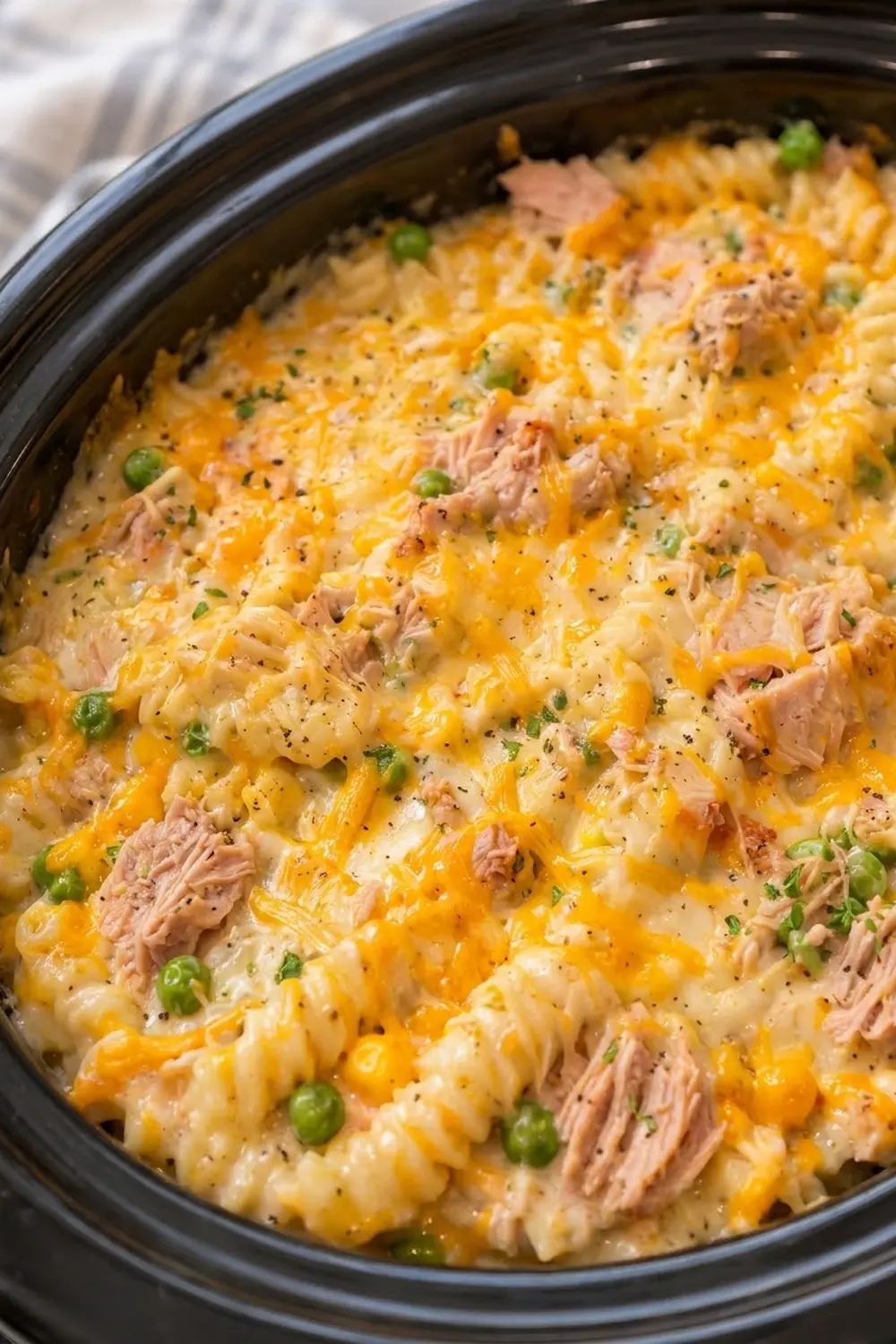
- Top with cheese and finish cooking. Smooth the surface, then scatter the remaining ½ cup (50 g) of cheddar evenly over the top. Cover and cook on HIGH for 15–20 minutes more, until the peas are heated through and the cheese on top has melted into a bubbly orange layer. You’ll smell the rich, toasty aroma of melted cheddar. Don’t leave it on HIGH much longer, or the edges can overcook and the pasta will turn soft.
- Lift the lid, garnish and serve. Turn the cooker to WARM or off. Carefully lift the lid straight up and tilt it away from you so the condensation doesn’t drip back onto the cheese. Sprinkle with chopped parsley or chives and a little extra black pepper. Let it rest uncovered for 5 minutes so the sauce settles and clings to the pasta, then spoon it into bowls.
Notes
- Check the pasta early. Slow cookers vary a lot, so start testing a piece at 1 hour 20 minutes, especially if your cooker runs hot.
- Drain the tuna thoroughly. Press it with a fork in a sieve. Extra water dilutes the sauce and makes the casserole taste fishier.
- Soften the cream cheese first. Cold cream cheese leaves white streaks, so let it sit out for about 20 minutes, or microwave it for 10 seconds.
- Don’t cook on LOW. Pasta sitting in warm liquid for hours absorbs too much and falls apart. HIGH gives better texture.
- Loosen leftovers before reheating. The pasta keeps drinking up sauce, so add 2–3 tbsp (30–45 ml) of milk when you warm it up.
- Wipe the lid before the last step. Drying the lid with a towel before adding the cheese topping keeps drips from making the top watery.
- Make it ahead partially. Whisk the sauce base and shred the cheese the night before, then refrigerate them separately.
- Prep Time: 10 minutes
- Cook Time: 2 hours 10 minutes
- Category: Dinner